Mineral Families
Minerals are usually sorted into large families based on their chemical composition. This is called the Strunz classification.
Two other categories, which contain fewer minerals, are also part of the Strunz classification: borates and organic compounds.
Halides
The minerals in this family are mainly made of metals bonded to chlorine or fluorine.
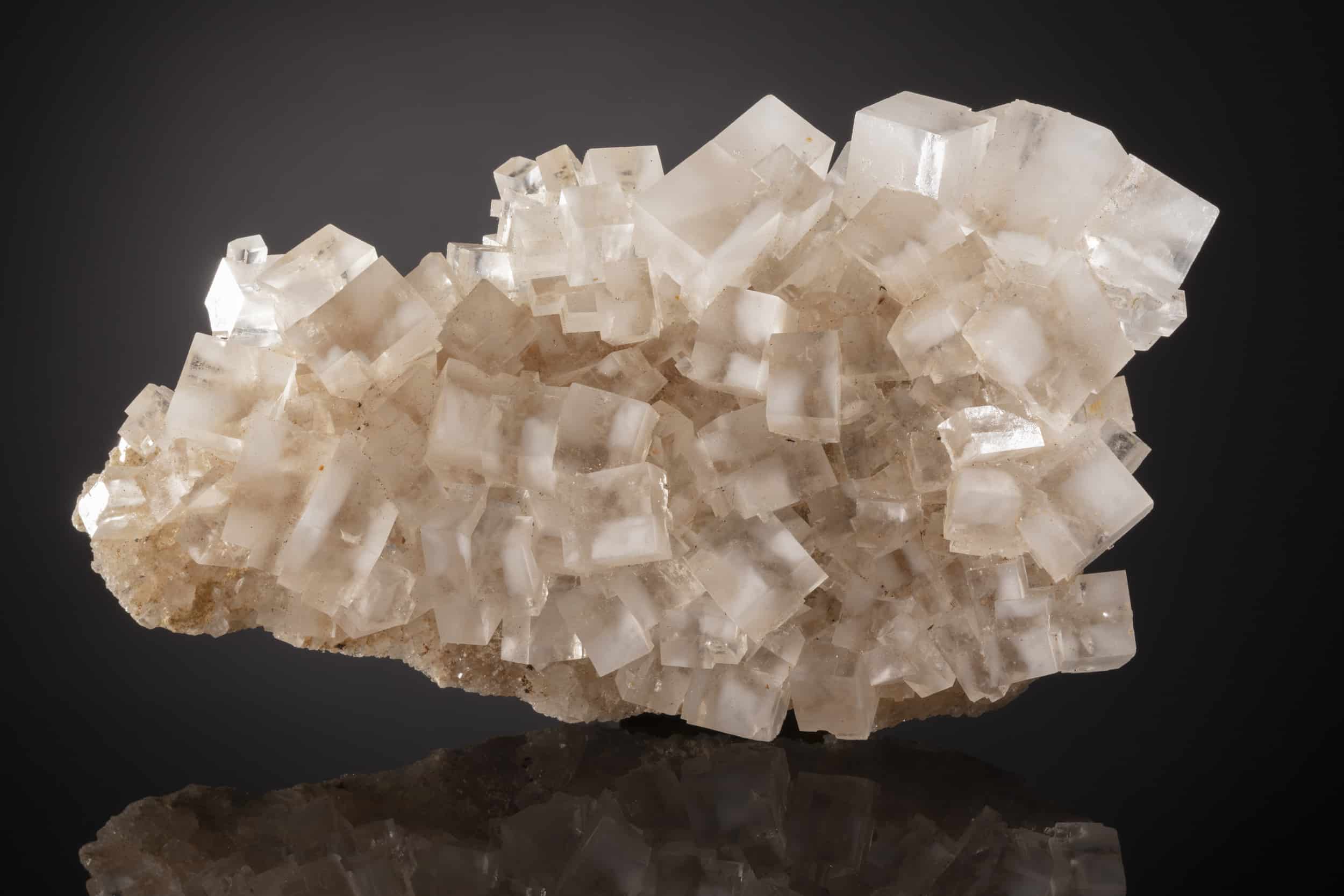
Halite
15.5 cm x 11 cm x 5.5 cm
NaCl
Origin: Germany
Halides
Frequency: Common
Hardness: 2-2.5
Streak: -
Cube-shaped crystals, usually white or translucent, that can also be pink, blue, gray or green. Halite has 3 well-defined cleavage planes at 90 degrees and breaks into cubes. The crystals dissolve in water and can be recognized by their taste.
Uses: Halite is used as a preservative, as a seasoning and for de-icing.
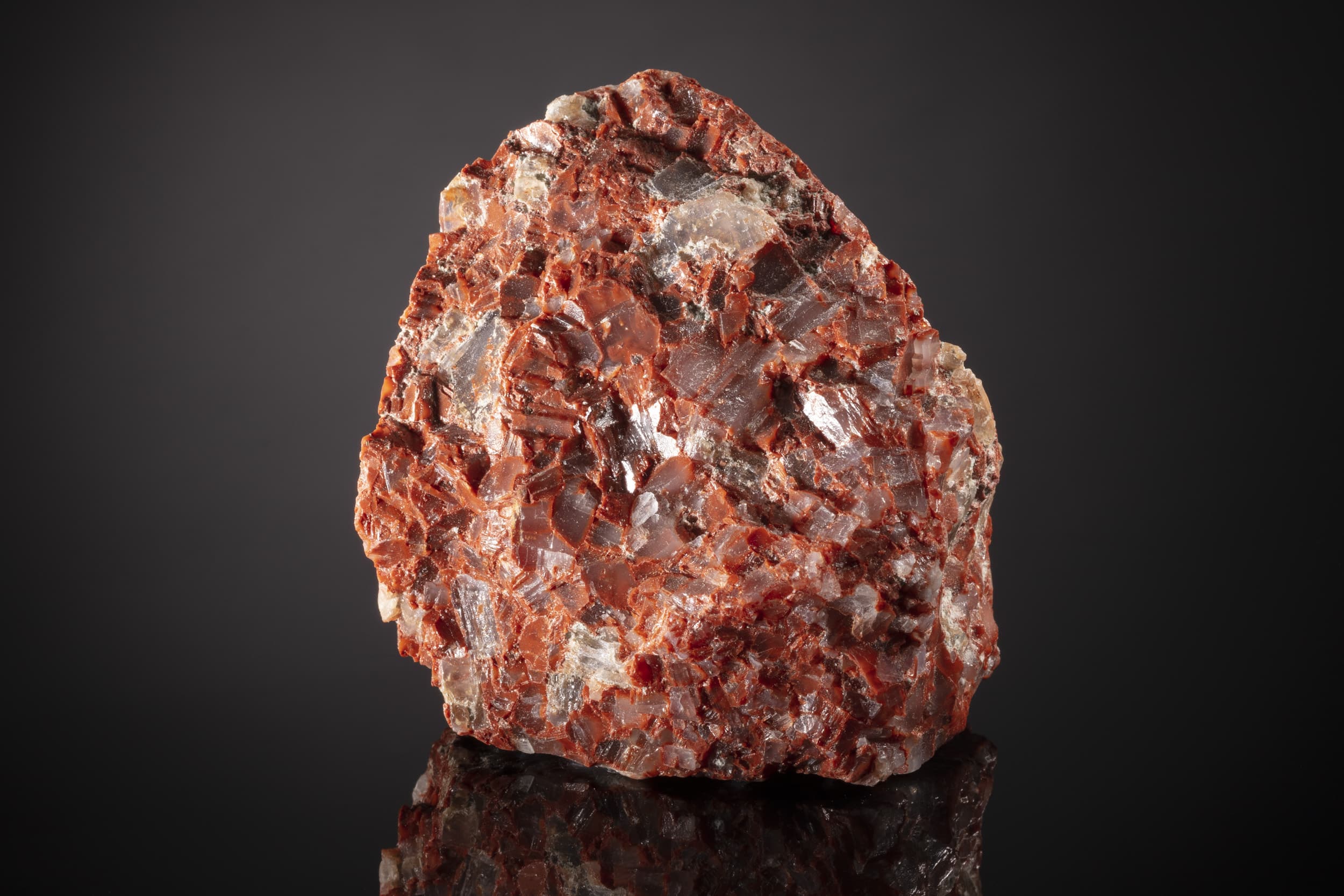
Sylvite
8 cm x 7.5 cm x 7.5 cm
KCl
Saskatchewan, Canada
Halides
Frequency: fairly common
Hardness: 1.5 to 2
Streak: white
Also called potash, sylvite is usually translucent gray or orange. Like halite (table salt), it tastes salty, but much more bitter.
Uses: a source of potassium, used in fertilizers.
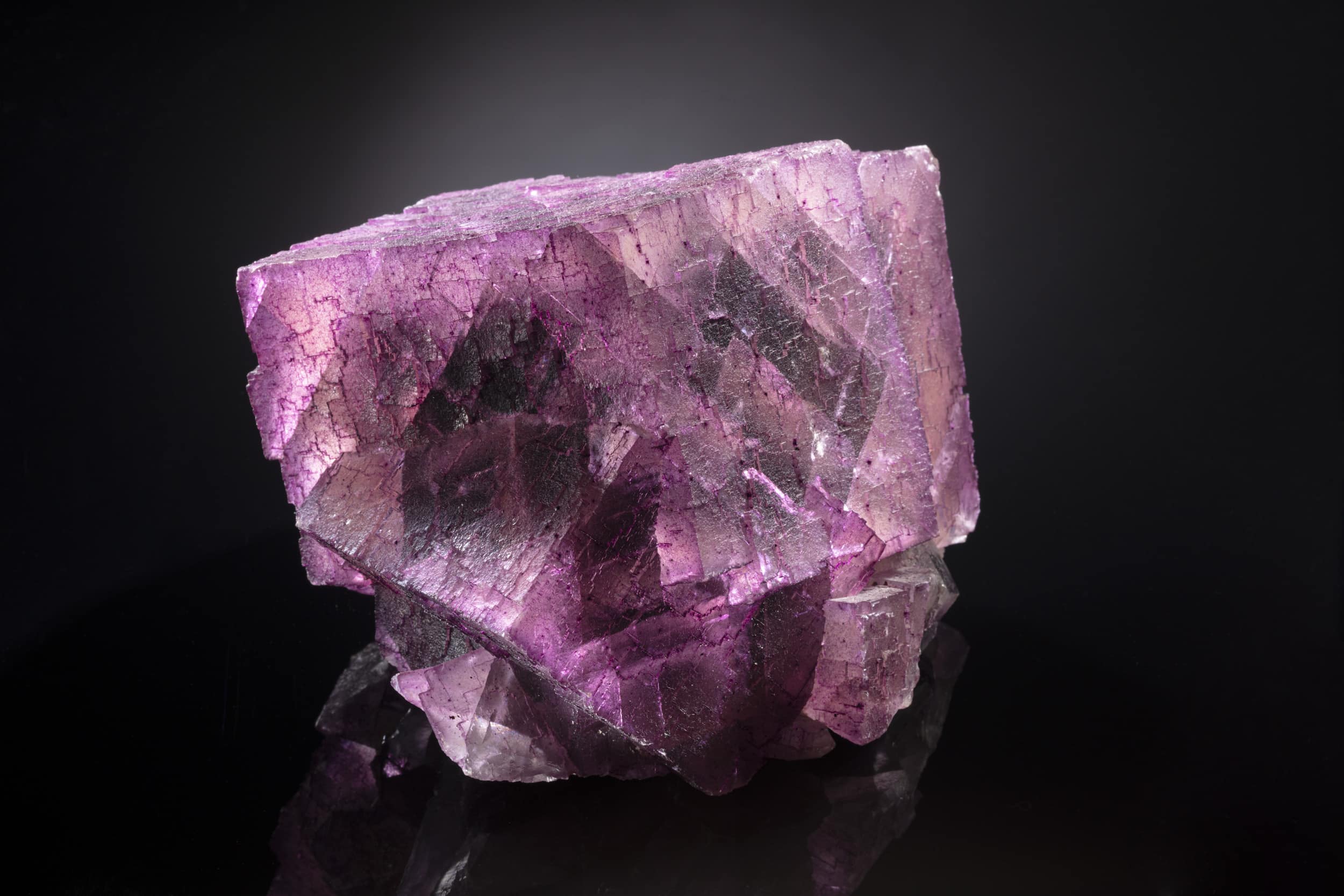
Fluorite
14 cm x 14 cm x 13.5 cm
CaF2
Origin: Illinois, USA
Halides
Frequency: Fairly common
Hardness: 4
Streak: white
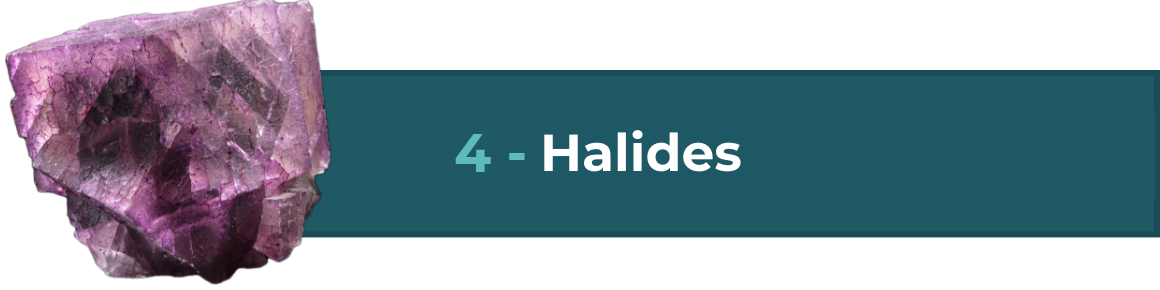
Very colorful crystals with 4 cleavage planes. Most of the time, it forms cubes. A single crystal can have several colors (purple, blue, green, pink, brown…). Although its name suggests that fluorite crystals are fluorescent, some do not have this property.
Uses: Fluorite is used in the chemical industry to produce hydrofluoric acid, and it is also important in iron and steel making.