
The Hierarchy of Matter – Crystals
To better understand crystals, let’s see how matter is organized inside a mineral.
THE ATOM
Molecule

Crystal
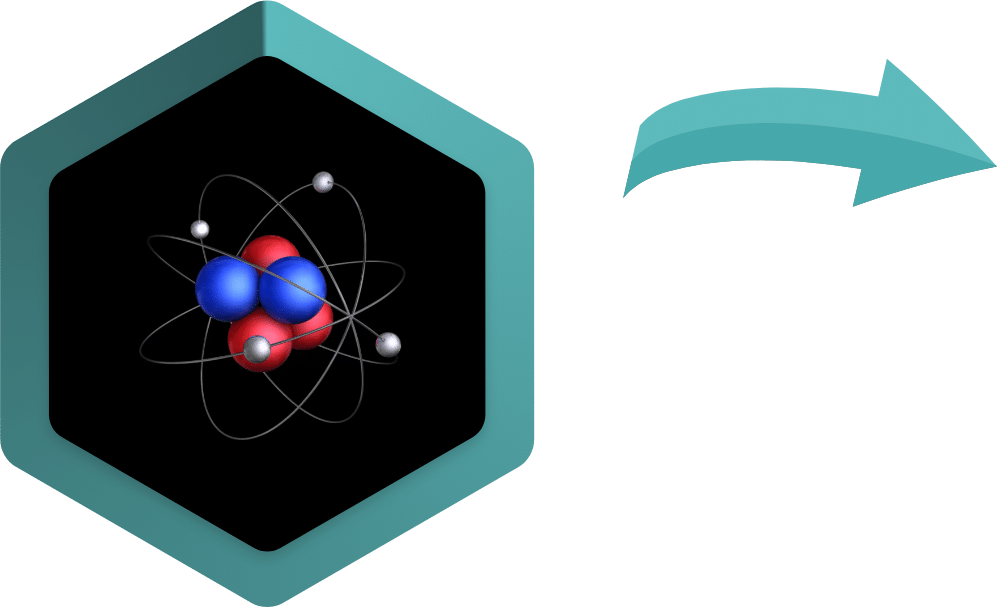
Simplified model of the atom. The central nucleus is made of protons (positive charge) and neutrons (no charge), with electrons (negative charge) orbiting around it.
The Atom
Each atom is defined by the number of protons in its nucleus. This is called the atomic number.
For example, although the number of neutrons can vary (this is called an isotope), an oxygen (O) nucleus always has 8 protons, while a copper (Cu) atom always has 29.
There are 118 different atoms (the elements), which are usually classified according to their atomic number in a periodic table, invented by the Russian chemist Dmitri Mendeleev in 1869.

Did You Know?
Earth is made mostly of iron and oxygen.
You can find the accessible version of this content on this page.

Molecule
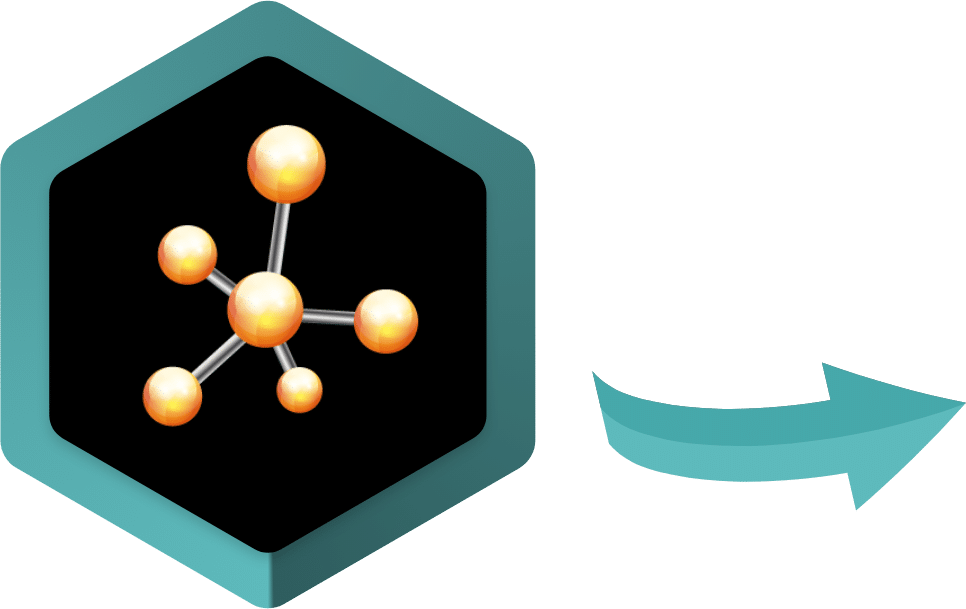
There are two main types of bonds that form molecules:

Simplified video of a water molecule (H2O).

Ionic bonds
Ionic bonds involve the transfer of an electron (-) from one atom to another. The NaCl molecule (salt) is a great example of this type of bond. Sodium (Na) transfers an electron (-) to chlorine (Cl). As a result, both atoms become ions (Na+ and Cl-).
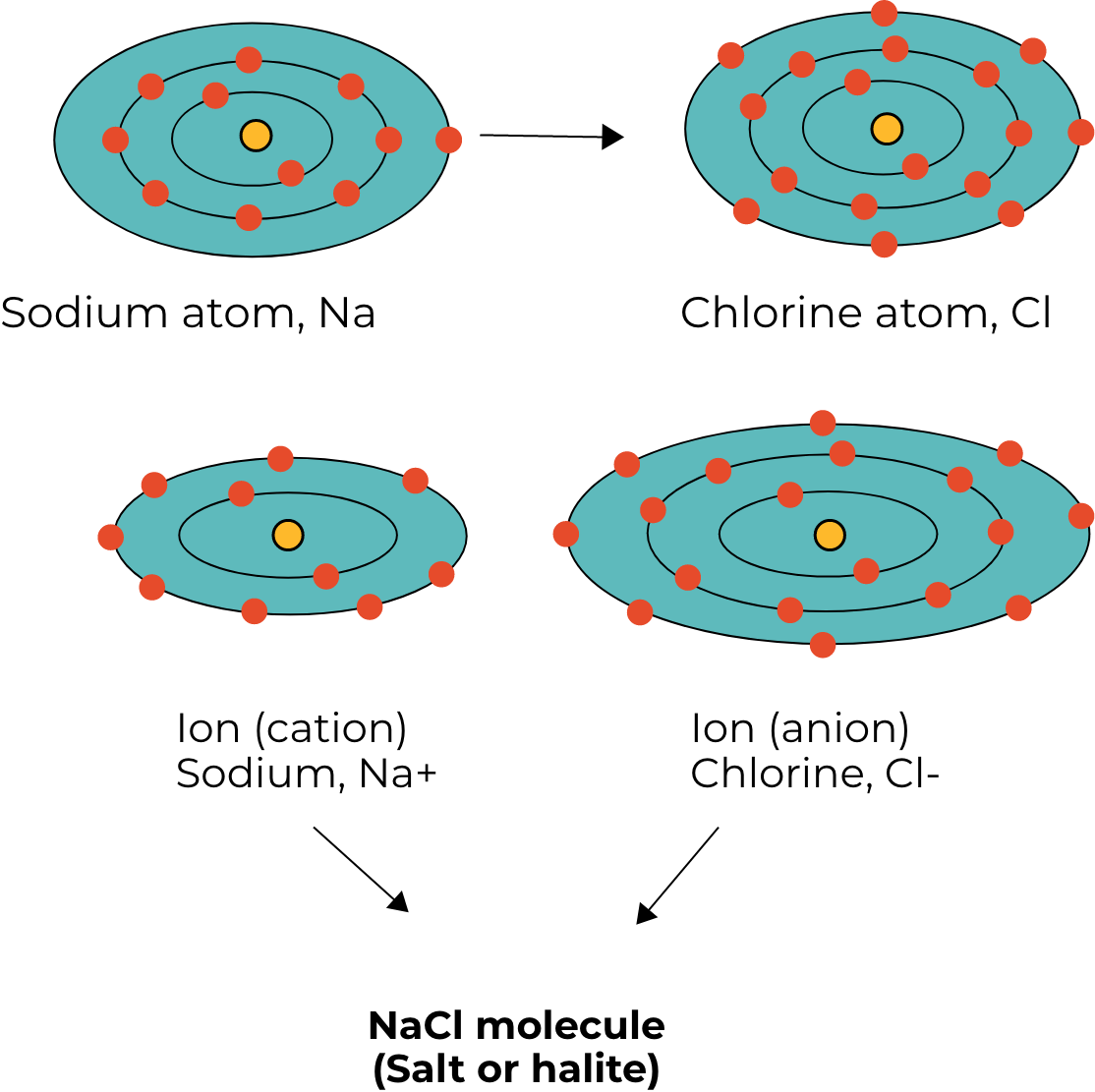
Example of an ionic bond: an electron is transferred between two atoms.
The image shows an ionic bond between a sodium ion and a chlorine ion.
Covalent bonds
Covalent bonds involve the sharing of one or more electrons between two atoms. The following diagram illustrates the case of Cl₂ (a dichlorine molecule):
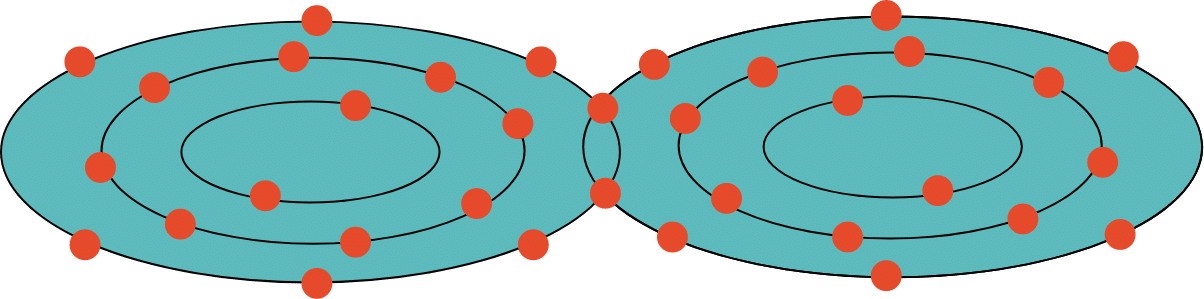
Example of a covalent bond: electrons are shared between two atoms
Crystal
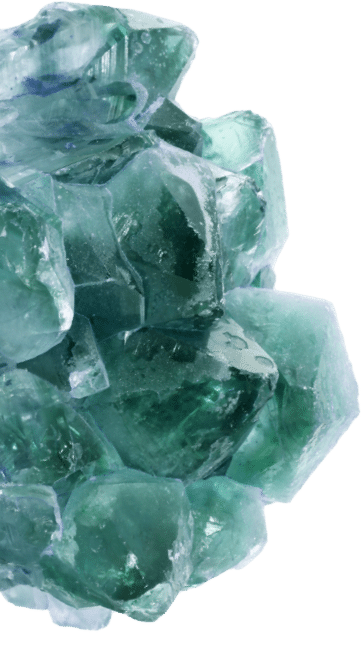
Finally, molecules can arrange themselves into a very well-defined structure and become what we call a crystal. This is a fixed molecular structure that extends in all three dimensions.
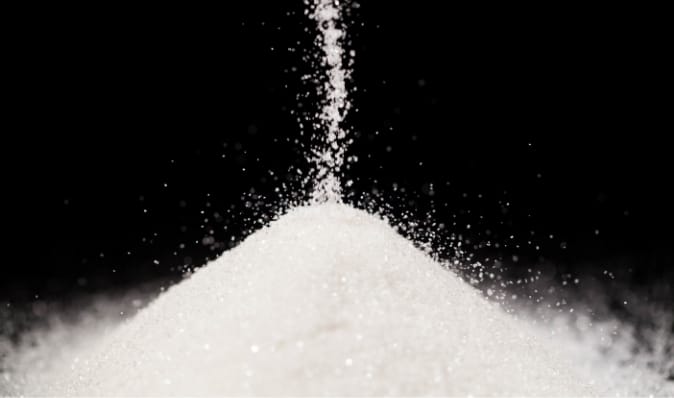
Take salt (called halite in mineralogy) as an example: its NaCl molecules are arranged in a cubic structure.
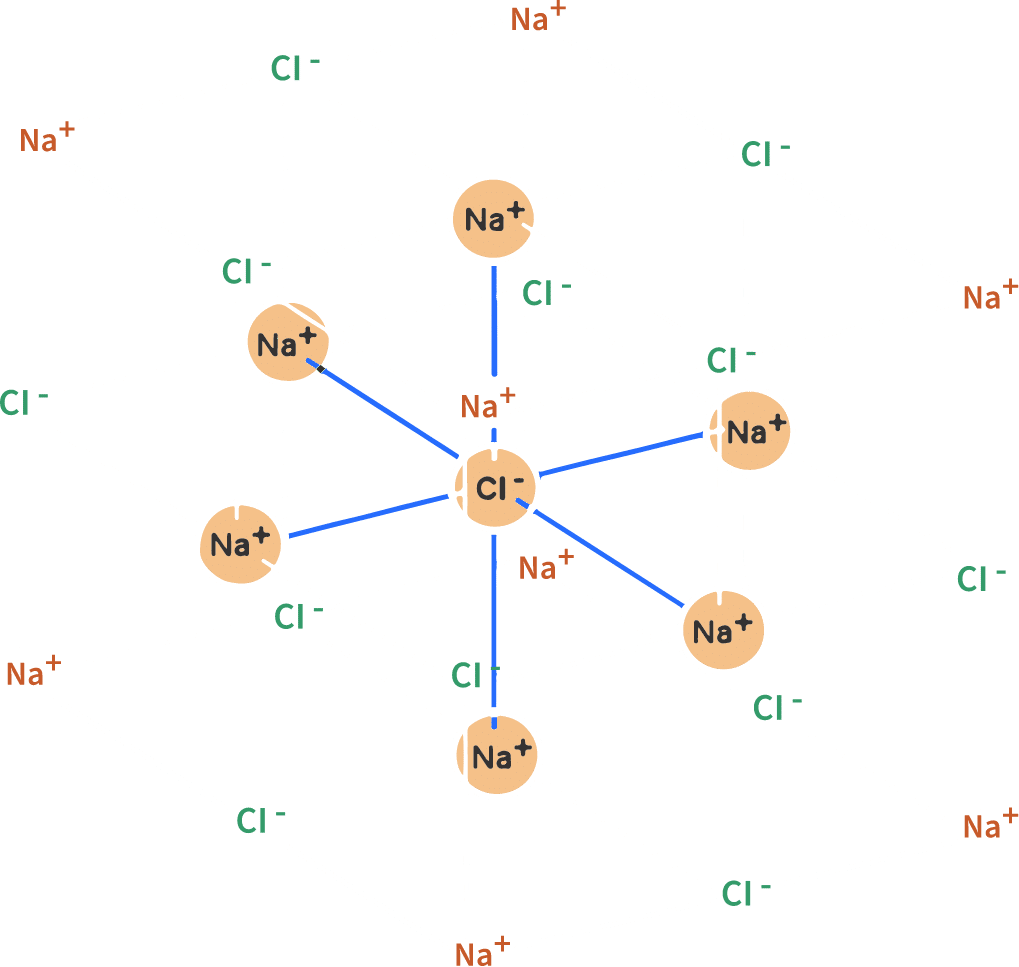
Atoms arranged in a cubic structure in a halite crystal
Halite
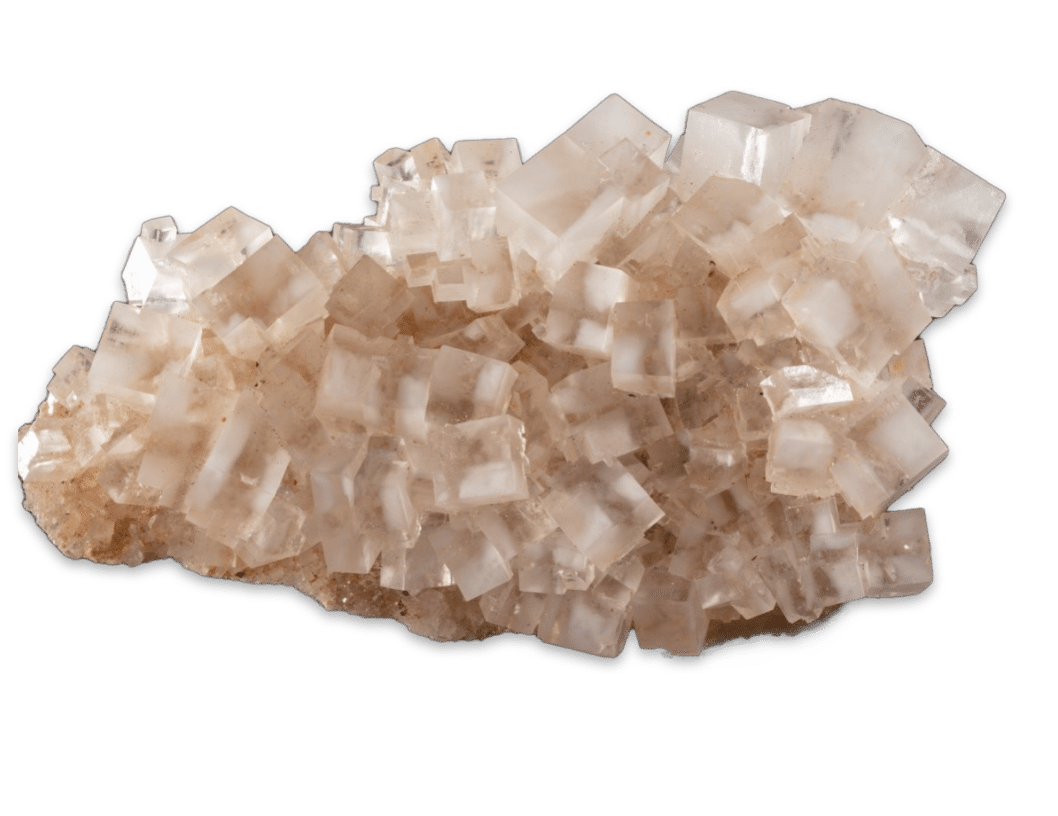
Because it happens at the atomic level, this structure exists at an incredibly tiny scale.

Halite magnified 150 x
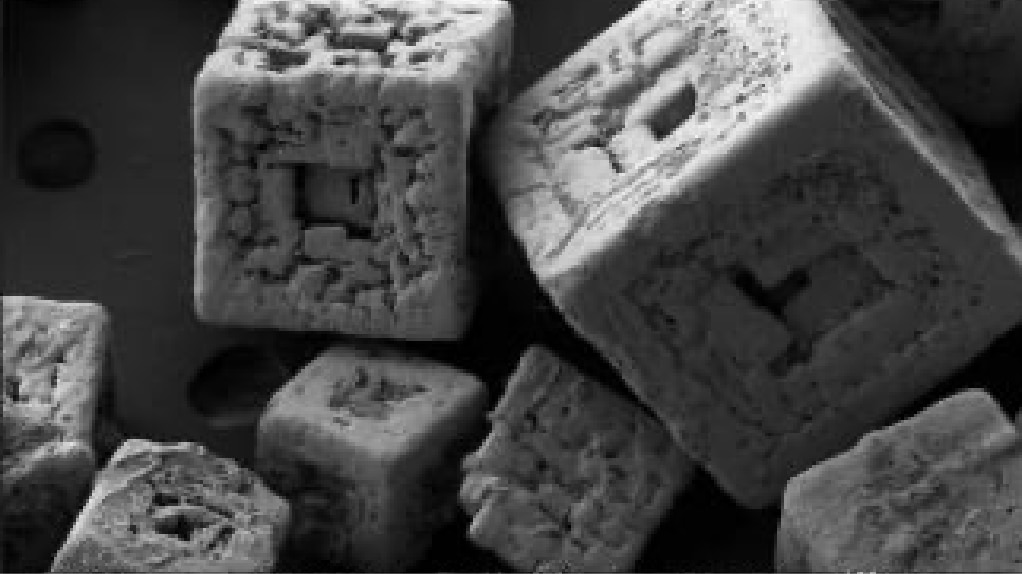
Source: Zeiss Fib-sem image by UWONanofabrication Facility
Photo of halite at high magnification, taken with a scanning electron microscope
Did You Know?
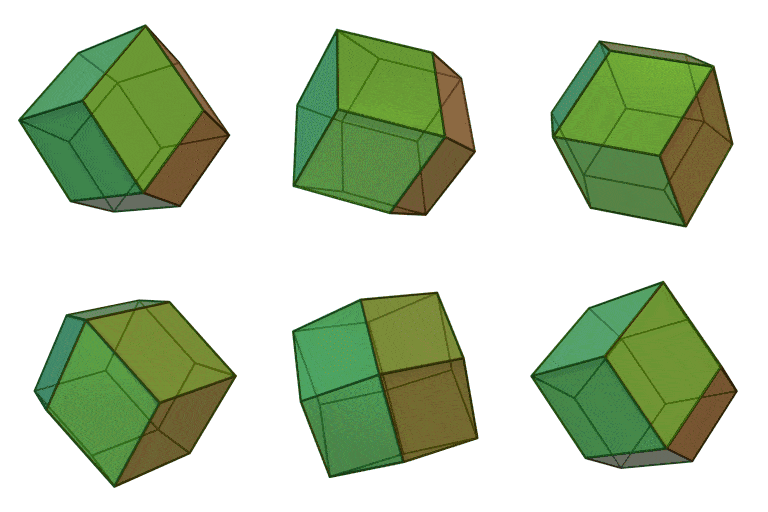
In calcite, the crystal structure is arranged in the shape of rhombohedrons.
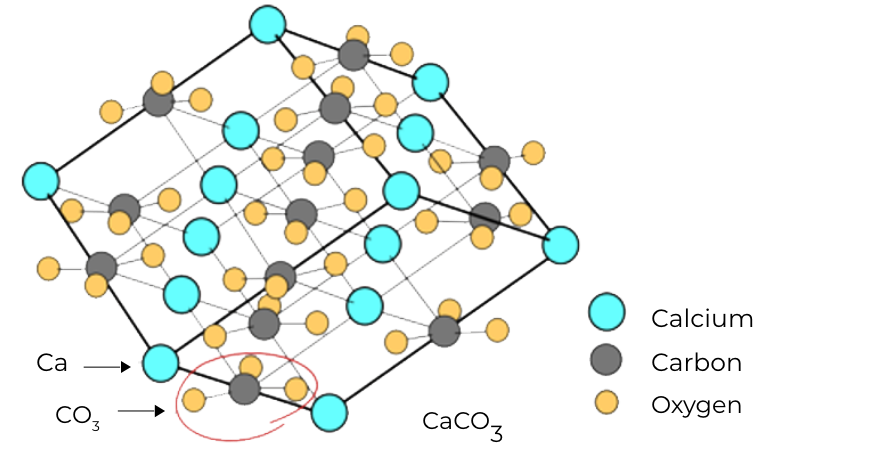
Calcite
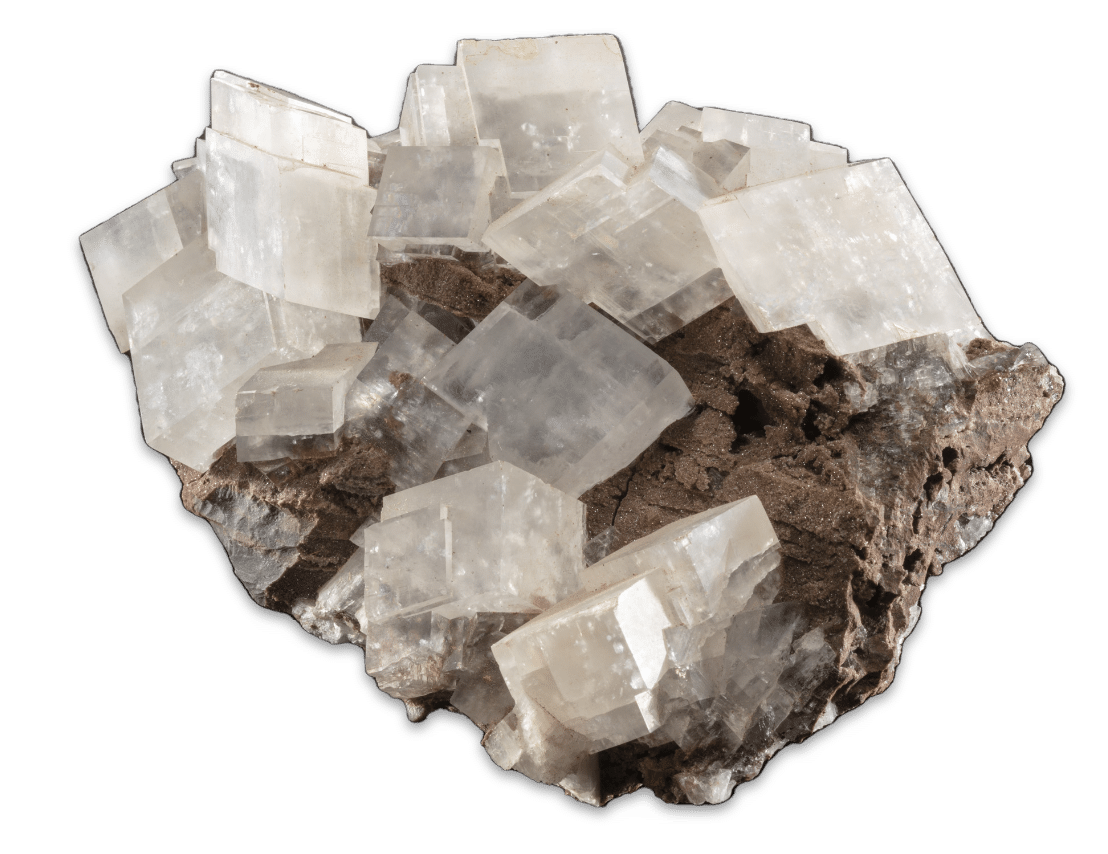
Each mineral has a defined chemical composition and a matching crystal structure.

Here are a few more examples of crystal shapes:
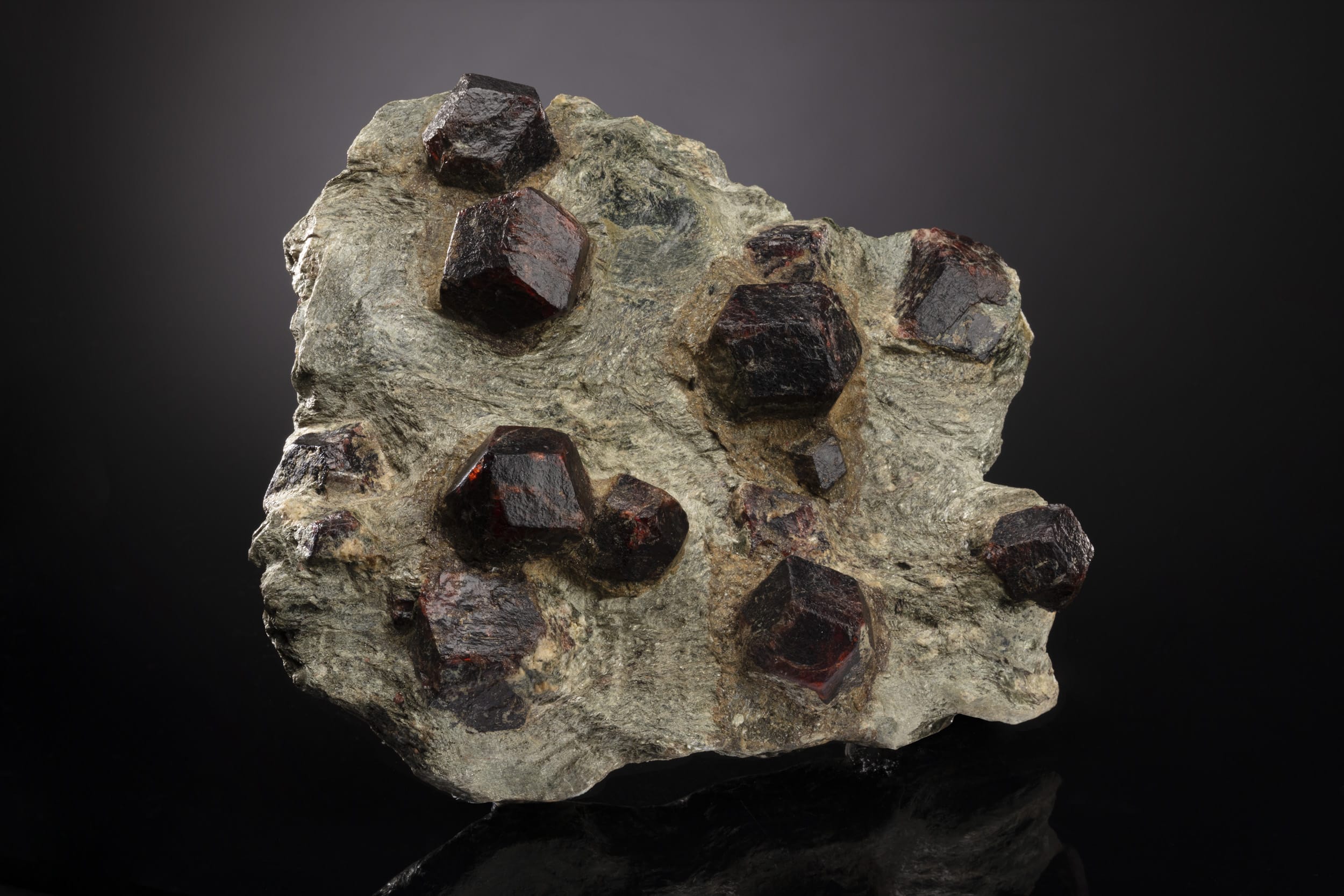
Garnet
16 cm x 15 cm x 4 cm
Ca3Al2Si3O12
Zillertal, Austria
Silicates
Frequency: common
Hardness: 7-7.5
Streak: red, reddish brown to black
Very hard crystals that usually have well-defined geometric shapes (dodecahedrons).
Uses: The finest specimens can be cut and used as semi-precious stones. They are also used as abrasives.
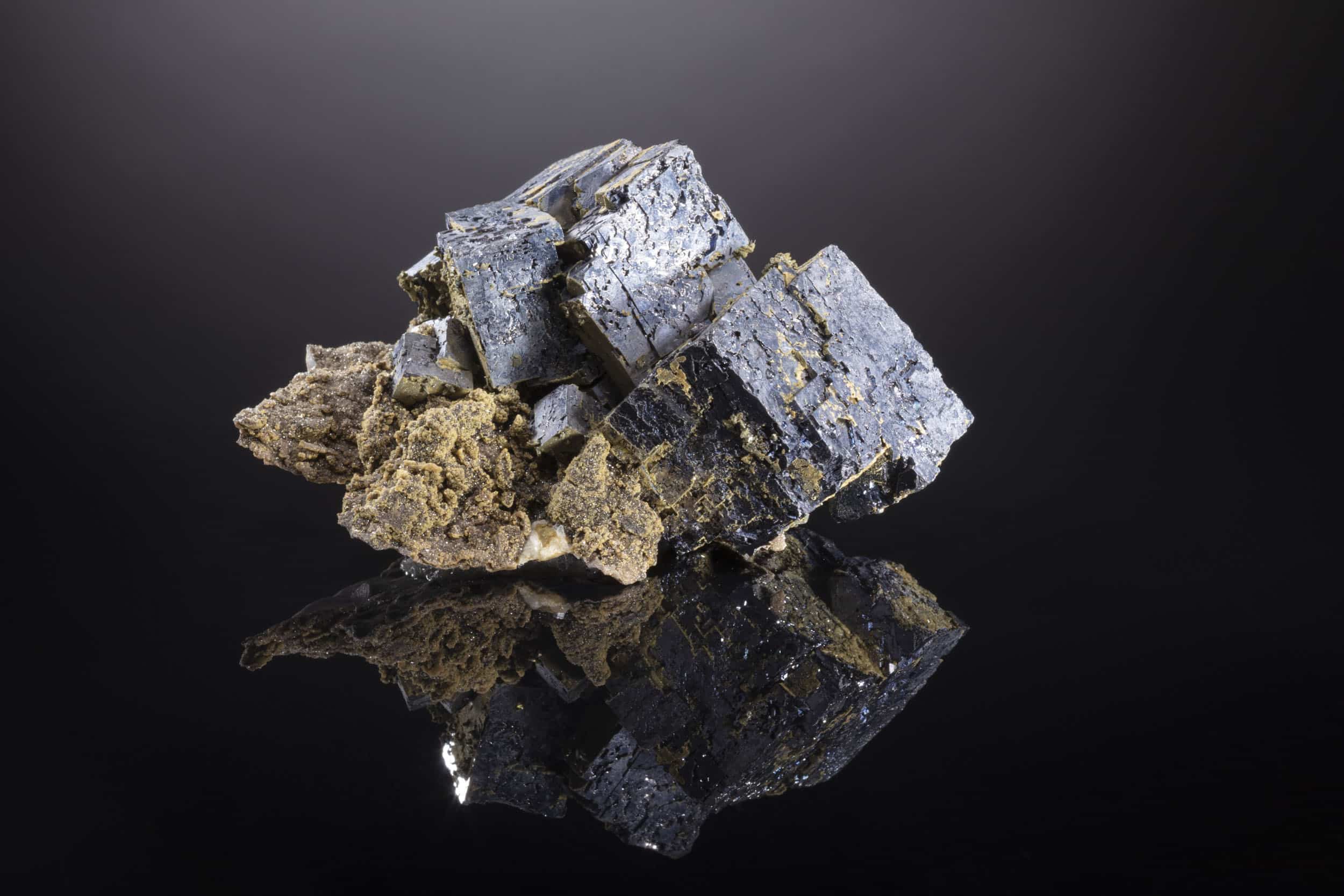
Galena
8 cm x 7.5 cm x 4.5 cm
PbS
Oklahoma, USA
Sulfides
Frequency: fairly common
Hardness: 2.5 to 2.75
Streak: gray
Metallic gray crystals that often form cubes. Galena has 3 cleavage planes at 90 degrees. It is a very dense mineral.
Uses: The main source of lead for thousands of years
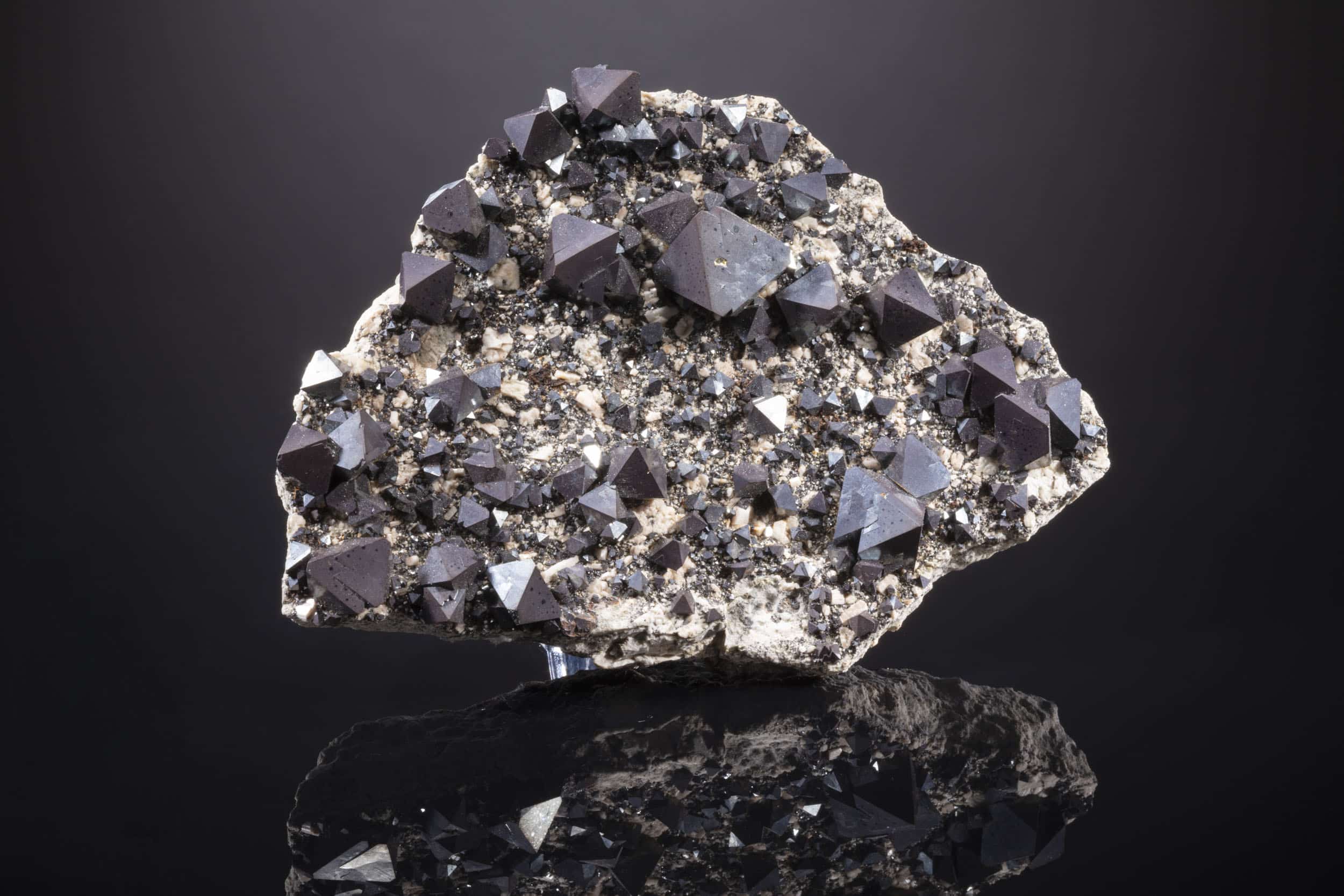
Magnetite
12 cm x 8 cm x 3 cm
Fe₂+Fe³+2O₄
Source: Potosí, Bolivia
Oxides and Hydroxides
Frequency: abundant
Hardness: 5.5 -6.5
Streak: black
A common black to gray mineral that is strongly attracted to a magnet. It often forms octahedrons.
Uses: Iron ore, used as a pigment.
Grossular garnet (Ca3Al2Si3O12) often has the shape of a dodecahedron.
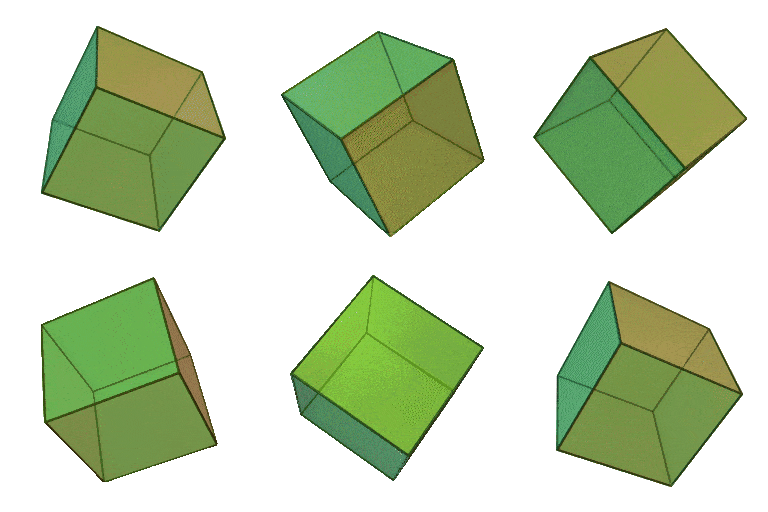
Galena (PbS) grows in the shape of a cube.
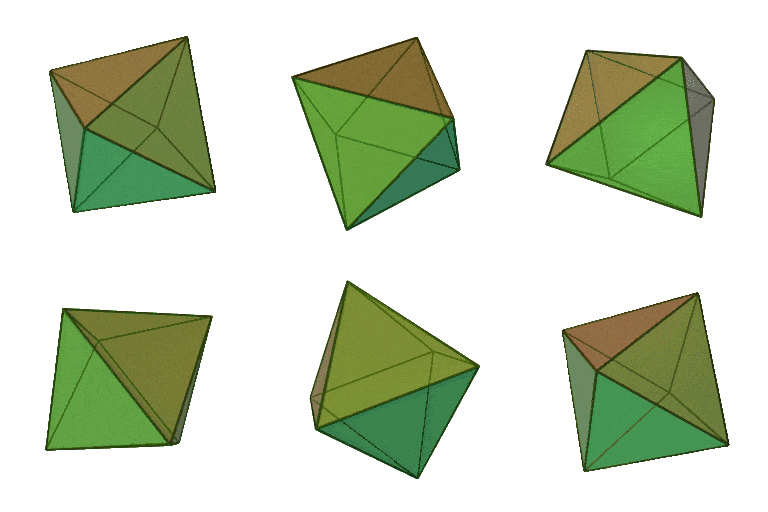
Magnetite (Fe2+Fe3+2O4) grows in the shape of an octahedron.