
Mineral Families
Minerals are usually sorted into large families based on their chemical composition. This is called the Strunz classification.
Two other categories, which contain fewer minerals, are also part of the Strunz classification: borates and organic compounds.
Silicates
A silicate is a mineral whose crystal structure is based on silica tetrahedrons, each made of one silicon atom (Si) bonded to four oxygen atoms (O). It is the largest class of minerals: silicates make up about 90% of the Earth’s crust.
Examples:
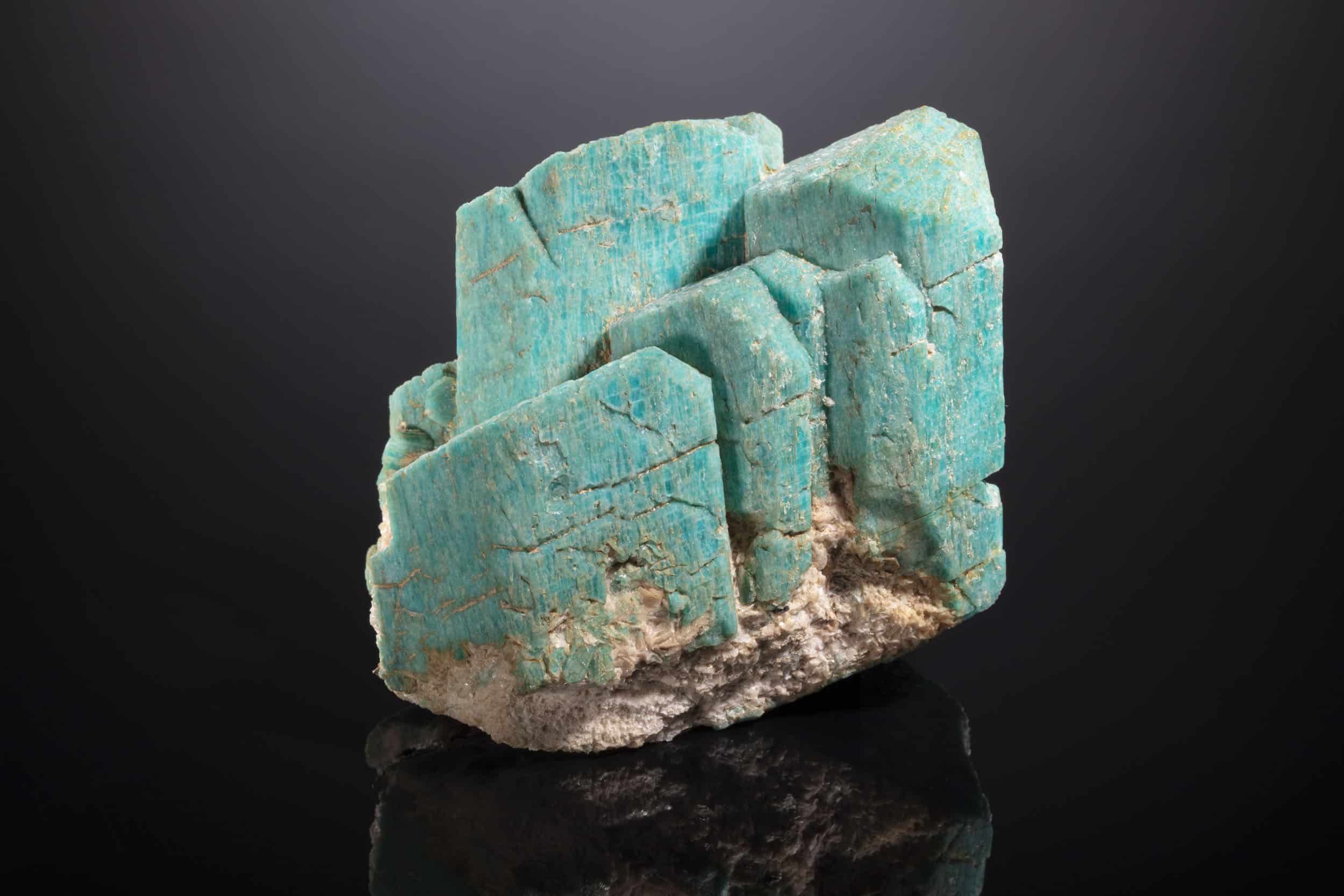
Amazonite, a variety of microcline
7.5 cm x 6.5 cm x 6 cm
KAlSi3O8
Origin: Colorado, United States
Silicates
Frequency: microcline is common, but the amazonite variety is rare
Hardness: 6 to 6.5
Streak: white
The special green color of this mineral comes from lead inserted into its structure. This mineral has two cleavage planes at 90 degrees.
Uses: An ornamental stone in jewelry, microcline is used to make glass and ceramics.
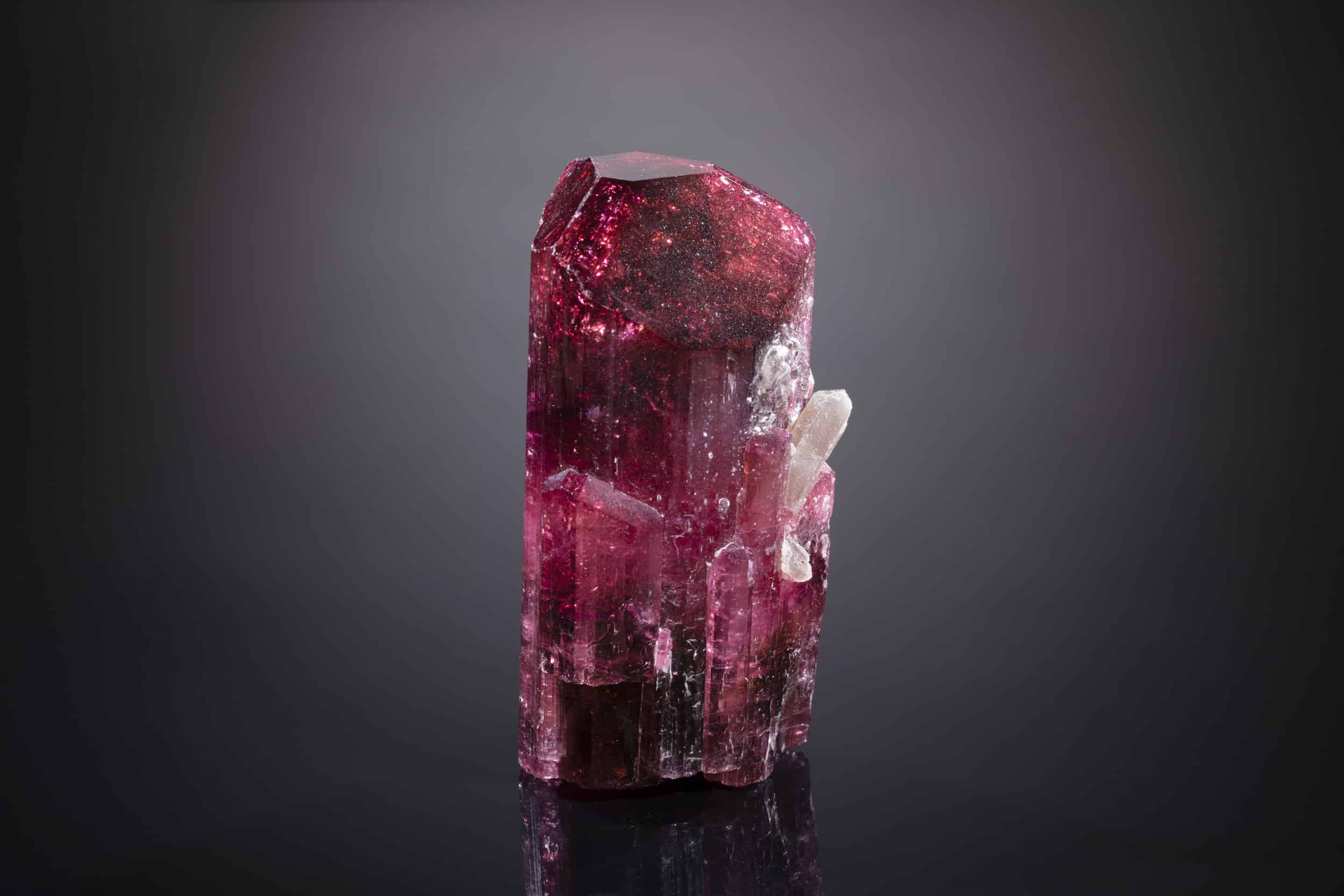
Tourmaline, elbaite variety
7.5 cm x 4 cm x 4 cm
Na(Li1.5Al1.5)Al6(Si6O18)(BO3)3(OH)3(OH)
Origin : Siberia, Russia
Silicates
Occurrence: fairly common, rare in the elbaite variety
Hardness: 7.5
Streak: white
Long rod-shaped crystals in many different colors (red, pink, green, blue, orange or colorless) with a triangular cross-section and striations.
Uses: Jewelry and collecting.
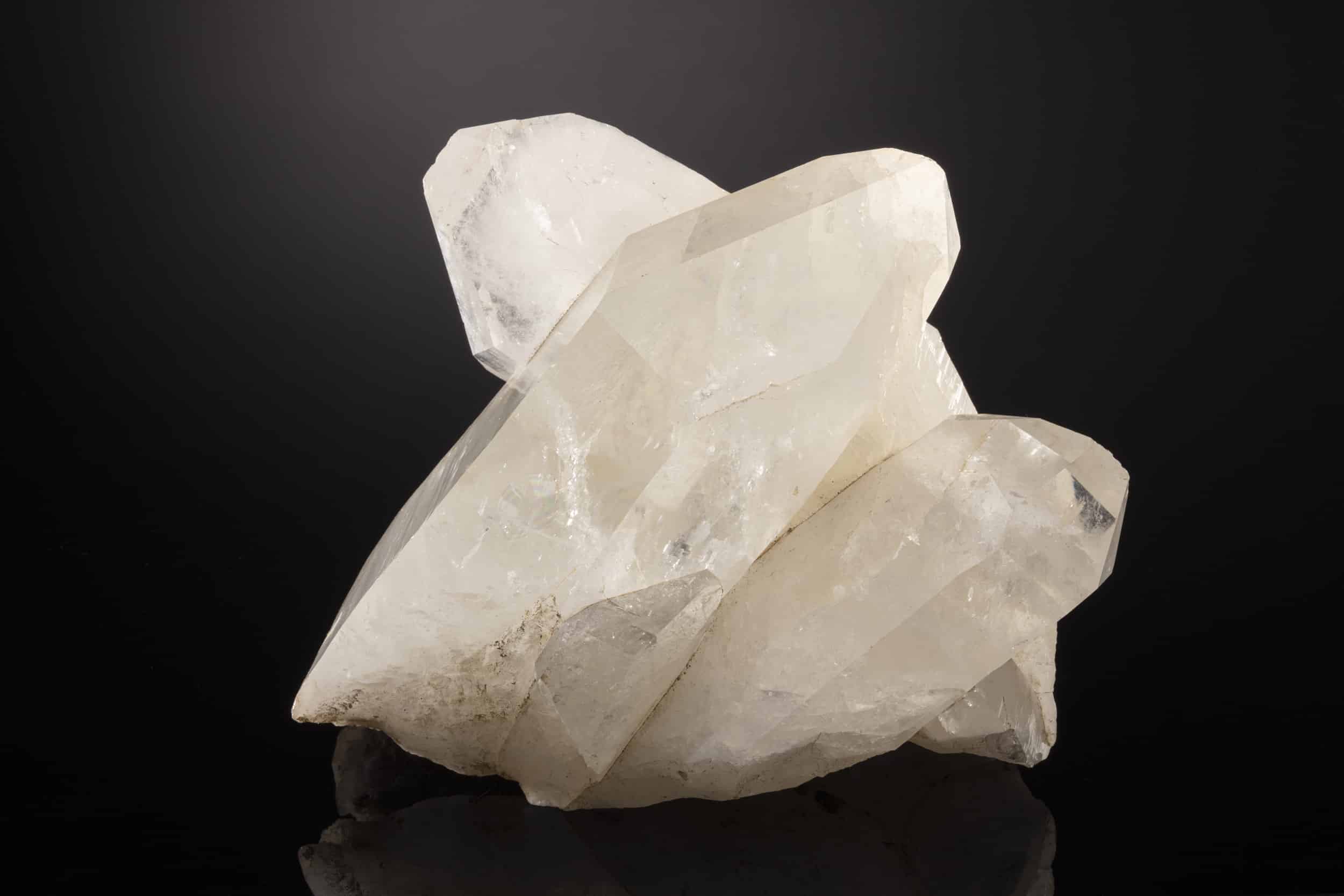
Quartz
22.5 cm x 18.5 cm x 12 cm
SiO2
Origin: Quebec, Canada
Silicates
Frequency: common
Hardness: 7
Streak: white
A very hard, common mineral found in many types of rocks. Although it is often seen in shades of white or gray, or even translucent, quartz can be found in a wide range of colors: purple (amethyst variety), yellow (citrine variety), blue, red, brown…
Uses: Used to make glass. Quartz is also used in watchmaking, as an abrasive, as a refractory material, in the oil and electronics industries, and in jewelry.
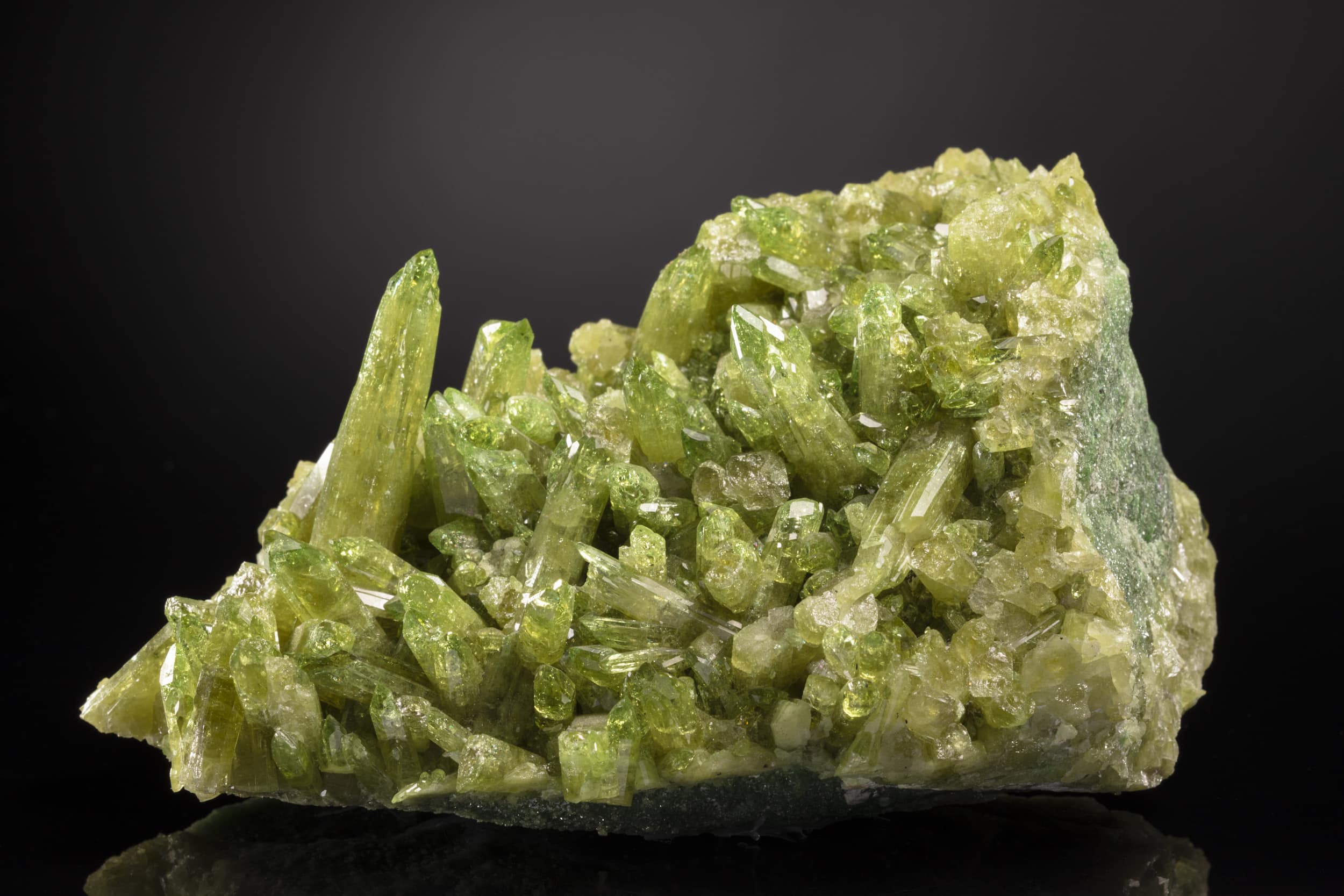
Vesuvianite
(6.5 cm x 6.6 cm x 4.5 cm)
Ca10(Mg, Fe)2Al4(SiO4)5(Si2O7)2(OH,F)
Val-des-Sources, Quebec, Canada
Donated by: Tony Gordian, 1992
Silicates
Frequency: rare
Hardness: 6.5
Streak: white
Crystals that can be very colorful (green, pink, purple, brown, yellow, blue). It used to be known as idocrase.
Uses: jewelry, collecting.