Mineral Families
Minerals are usually sorted into large families based on their chemical composition. This is called the Strunz classification.
Two other categories, which contain fewer minerals, are also part of the Strunz classification: borates and organic compounds.
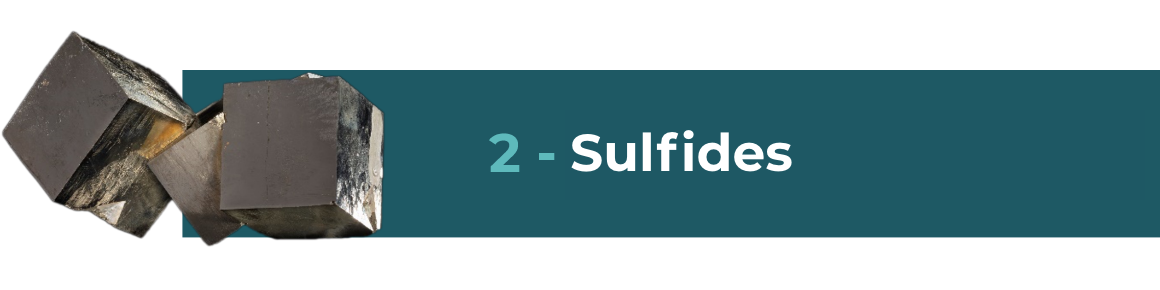
Sulfides
This category includes minerals made mainly of sulfur and metals. They usually look metallic. Most of the metals that humans mine come from this large family (copper, zinc, lead, nickel…).
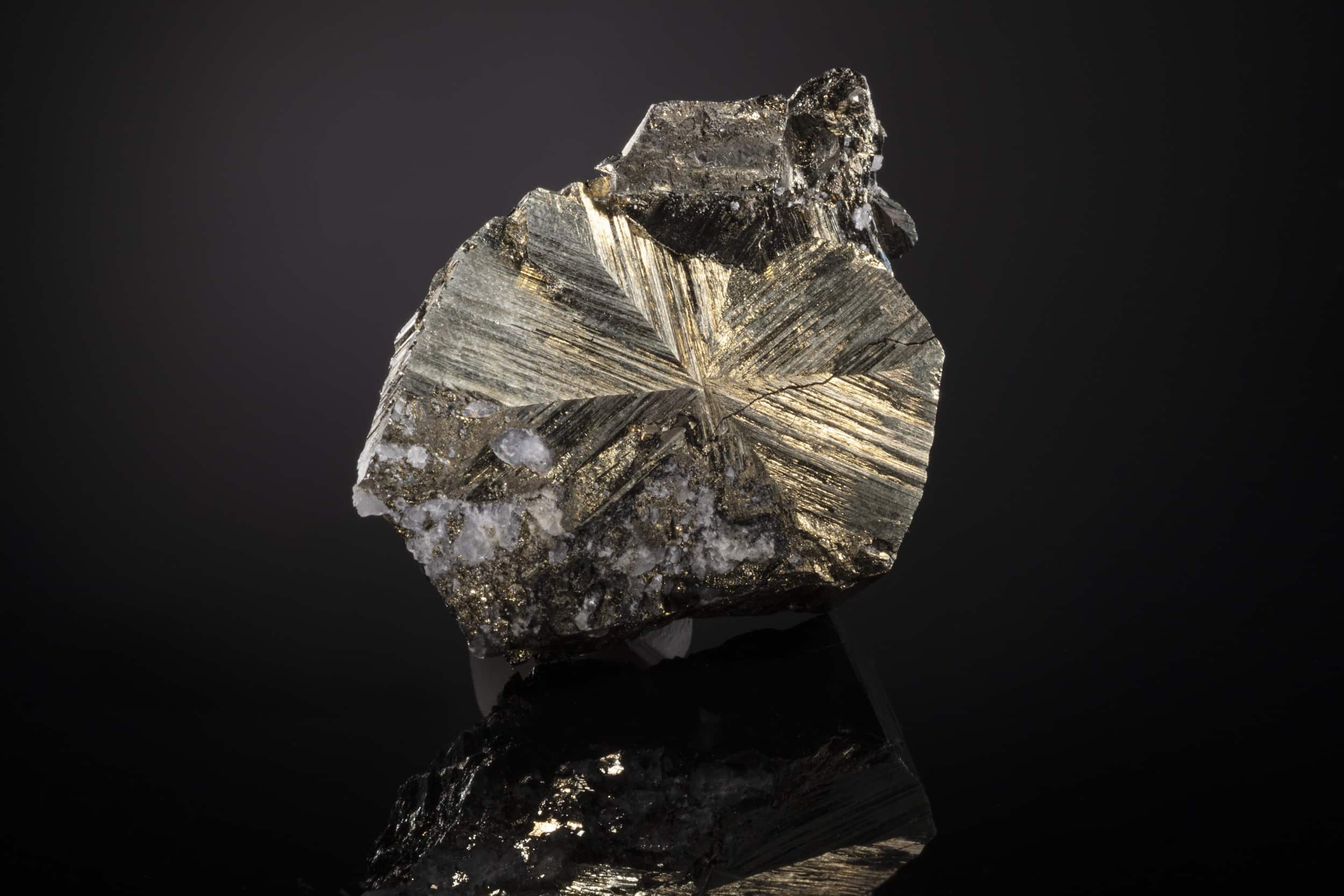
Cubanite
4 cm x 3 cm x 0.8 cm
CuFe2S3
Origin: Chibougamau, Quebec, Canada
Sulfides
Frequency: rare
Hardness: 3.5
Streak: gray-black
Yellow metallic crystals found together with copper mineralization.
Uses: none, but crystals are sought after by collectors.
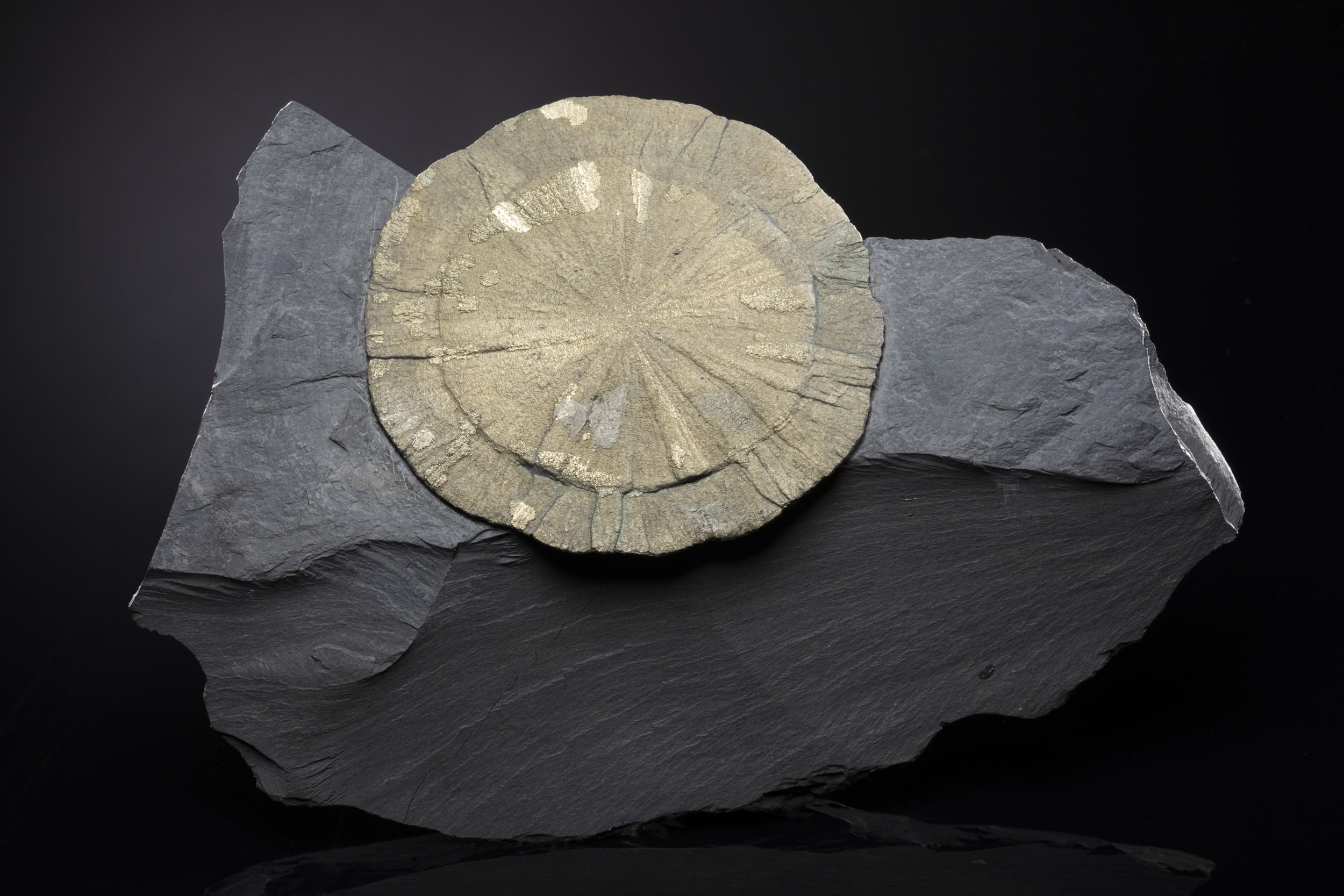
Marcasite
17 cm x 12.5 cm x 4 cm
FeS2
Origin: Illinois, USA
Sulfides
Frequency: fairly common
Hardness: 6-6.5
Streak: black
Metallic mineral that is white on a fresh break, weathering yellowish. Often found as nodules or concretions. Marcasite reacts easily with moisture in the air and breaks down.
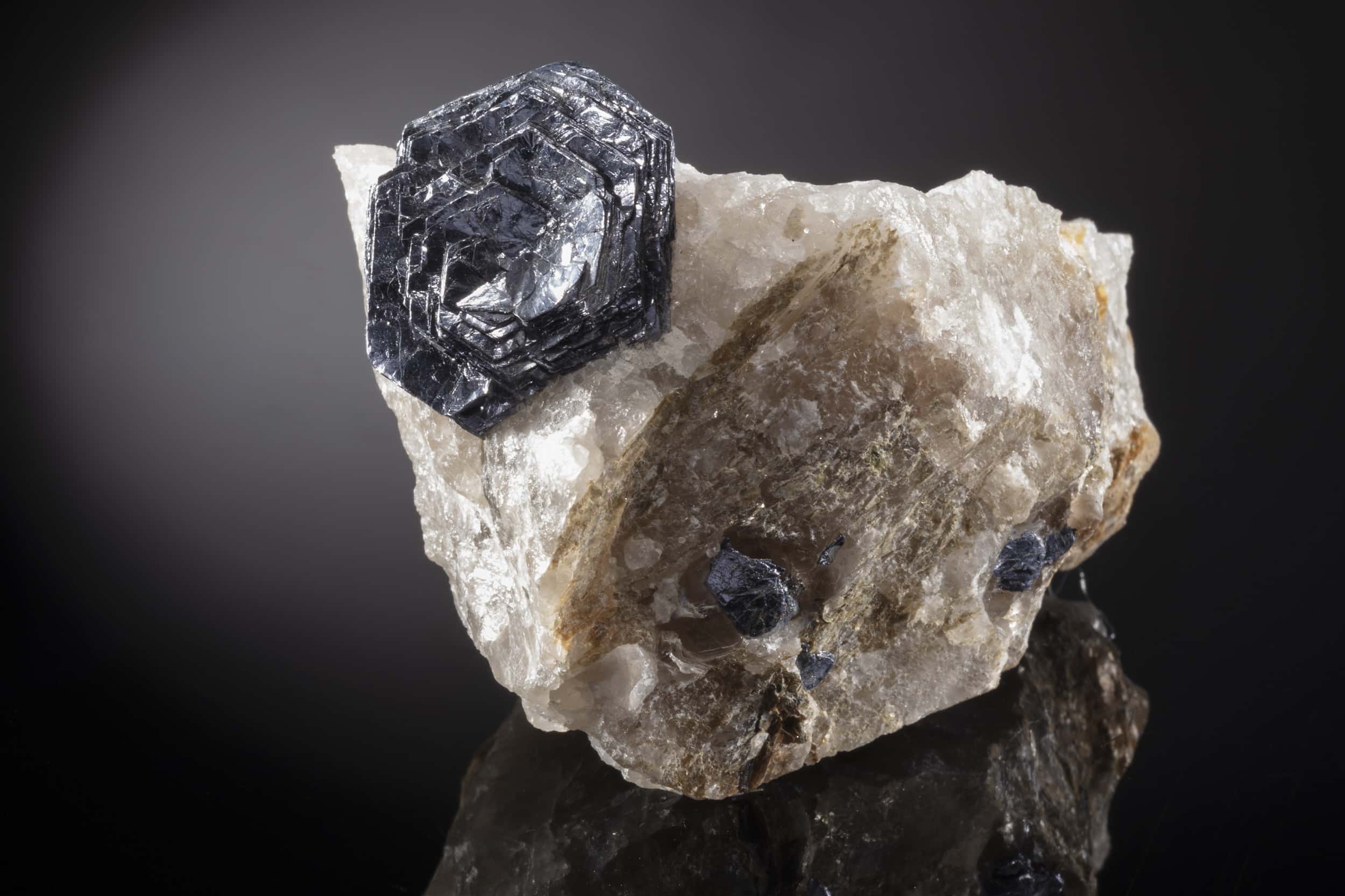
Molybdenite
3.5 cm x 3.5 cm x 1 cm (crystal)
MoS2
Sulfides
Frequency: rather rare
Hardness: 1-1.5
Streak: gray to bluish gray
A very soft metallic mineral that comes apart in sheets. This mineral is the main source of molybdenum, which is used as a lubricant and in alloys.
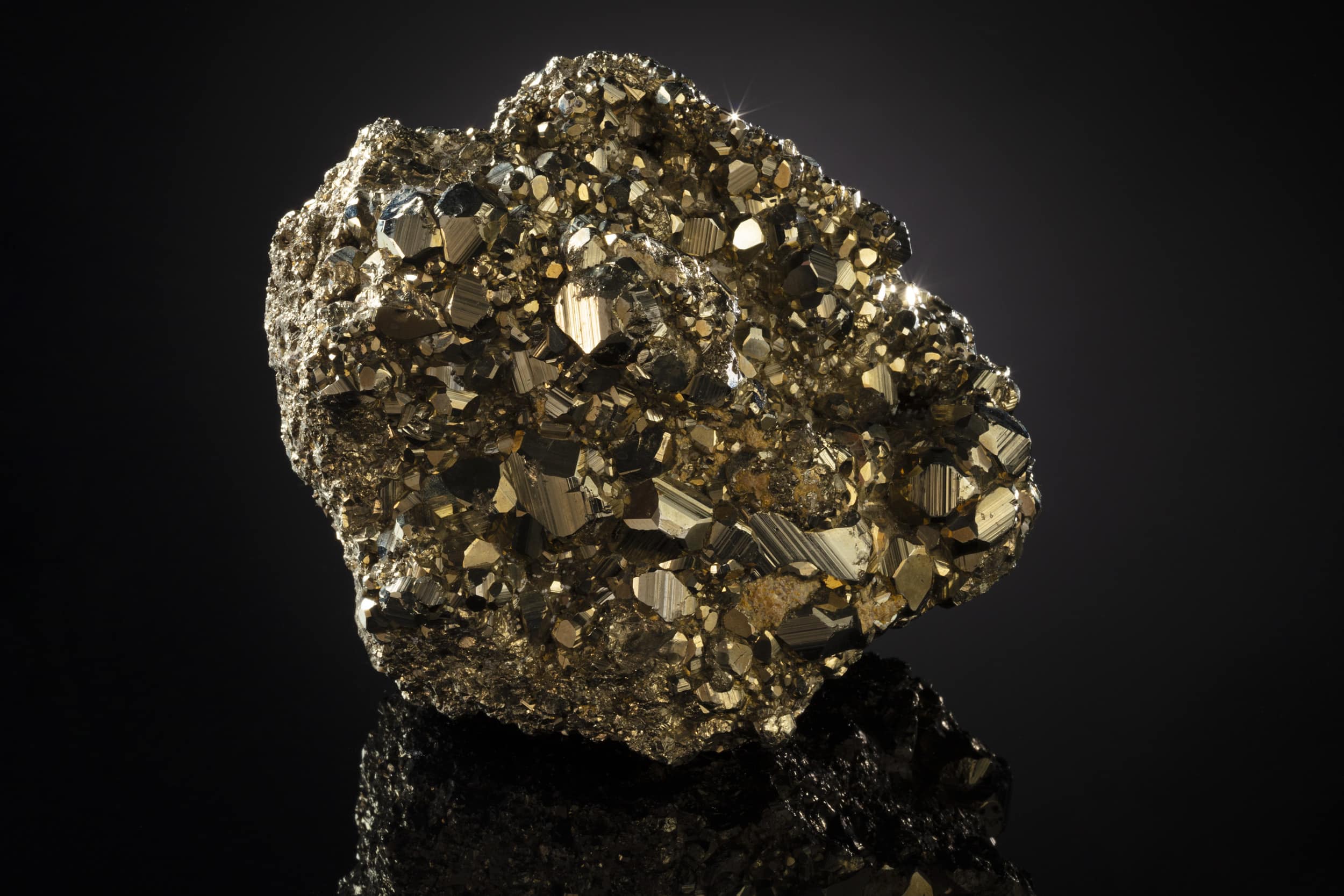
Pyrite
14.5 cm x 13 cm x 4.5 cm
FeS2
Origin: Utah, USA
Sulfides
Frequency: common
Hardness: 6 - 6.5
Streak: black
Yellow metallic mineral nicknamed “fool’s gold” because of its color. Found in many types of rock, usually as cubes. This mineral rusts very easily.
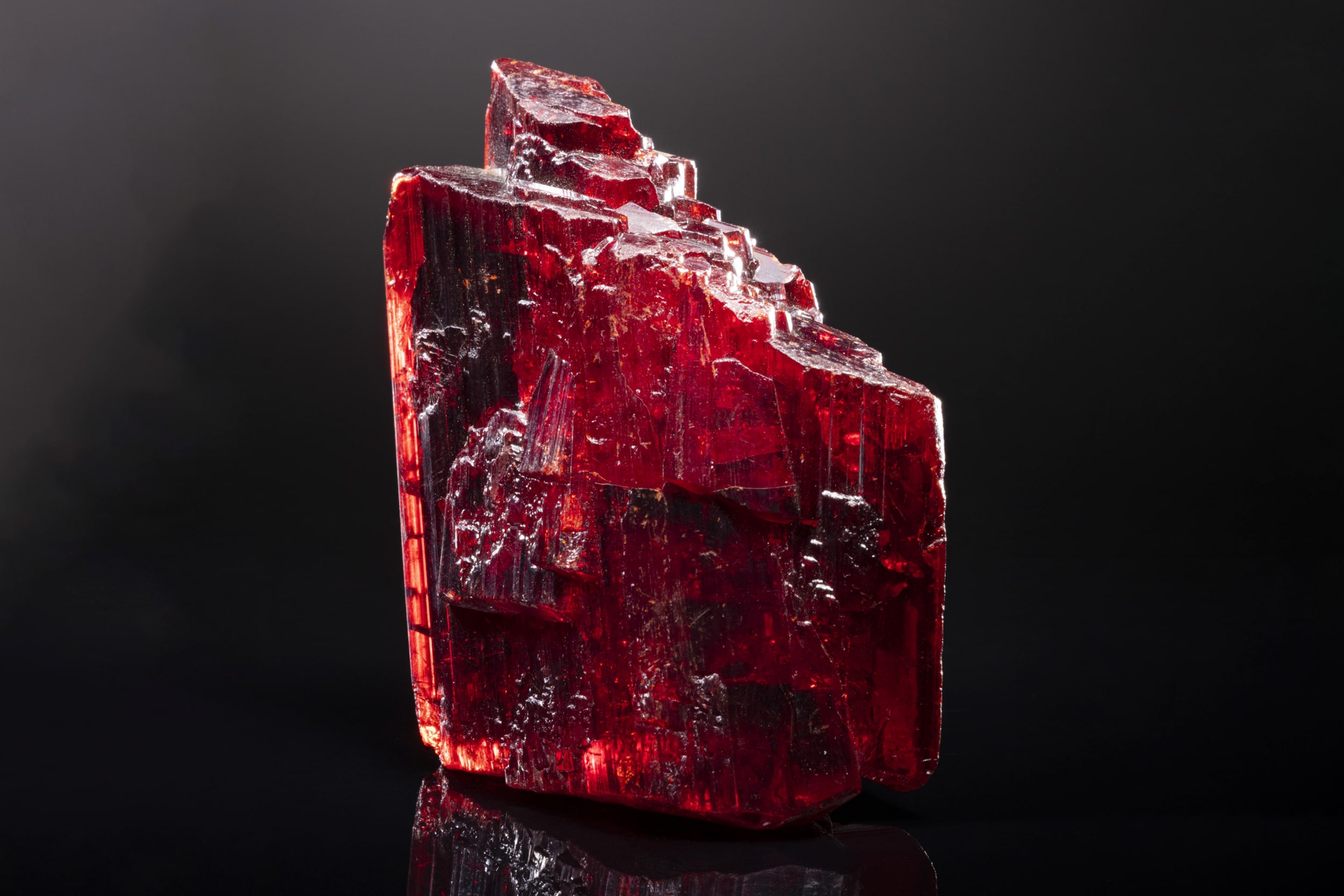
Realgar
7 cm x 5.5 cm x 3 cm
As4S4
Origin: Hunan, China
Sulfides
Frequency: rare
Hardness: 1.5 - 2
Streak: orange to red
Bright red mineral that is sensitive to light.
Uses: a rare source of arsenic, used as a pigment and once used as rat poison.
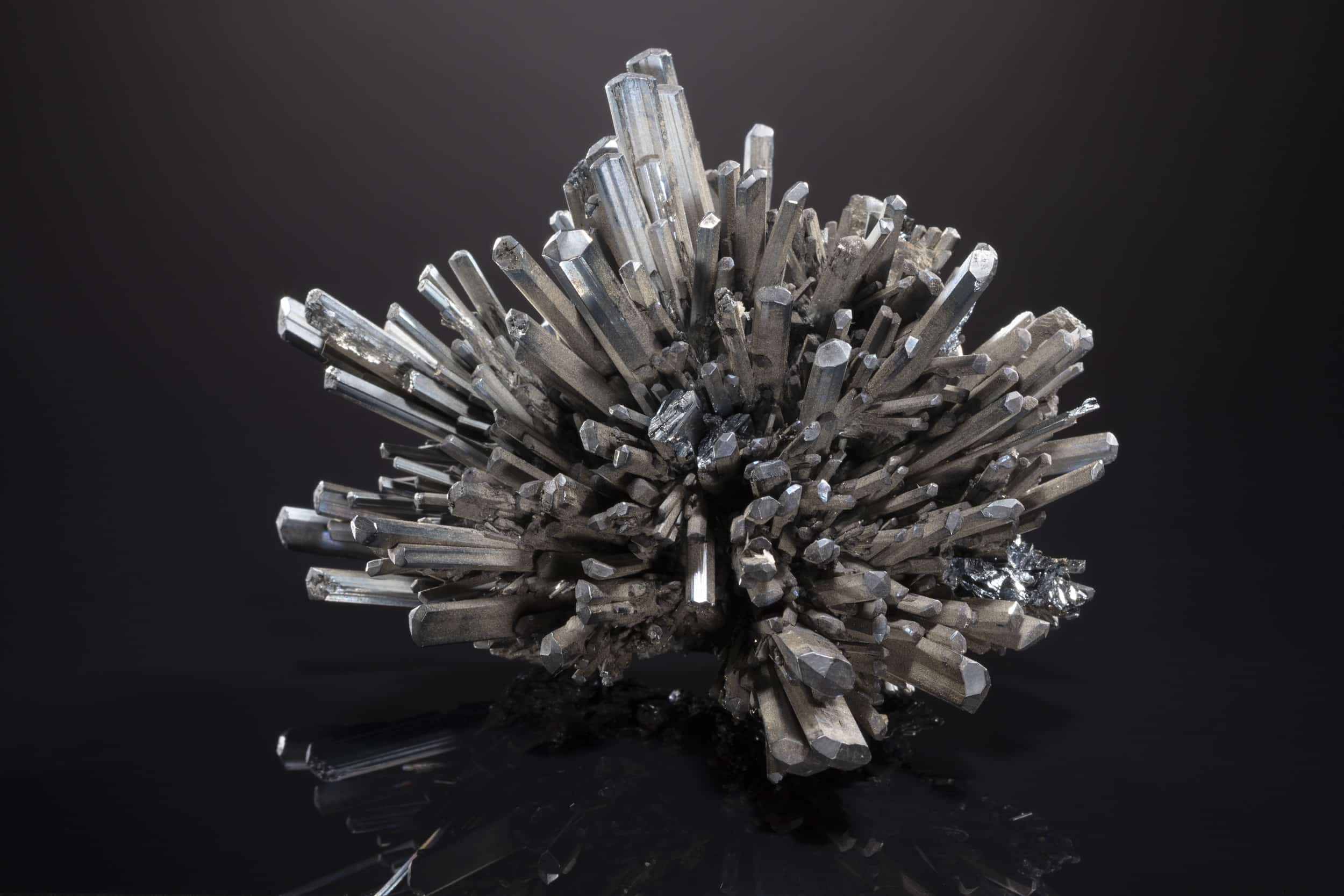
Stibnite
9 cm x 8.5 cm x 6.5 cm
Sb2S3
Cavnic, Romania
Sulfides
Frequency: fairly rare
Hardness: 2
Streak: gray
Very long metallic gray crystals. Often appears in clusters.
Uses: ore of antimony, used in alloys.