

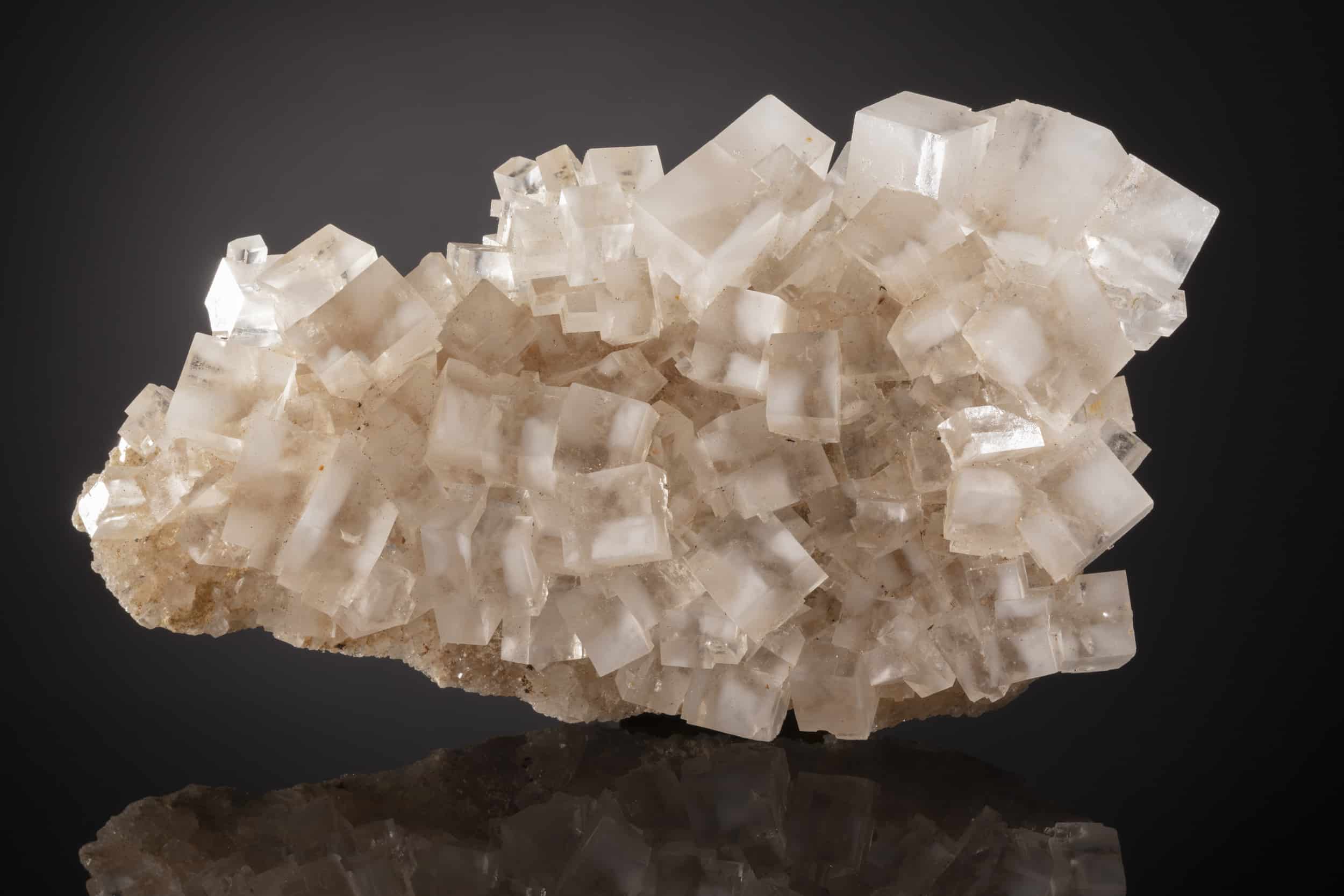
Halite
15.5 cm x 11 cm x 5.5 cm
NaCl
Origin: Germany
Halides
Frequency: Common
Hardness: 2-2.5
Streak: –
Cubic crystals, usually white or translucent, that can also be pink, blue, gray or green. Halite has 3 well-defined cleavage planes at 90 degrees and breaks into cubes. The crystals dissolve in water and can be recognized by their taste.
Uses: Halite is used as a preservative, as a seasoning and for de-icing.
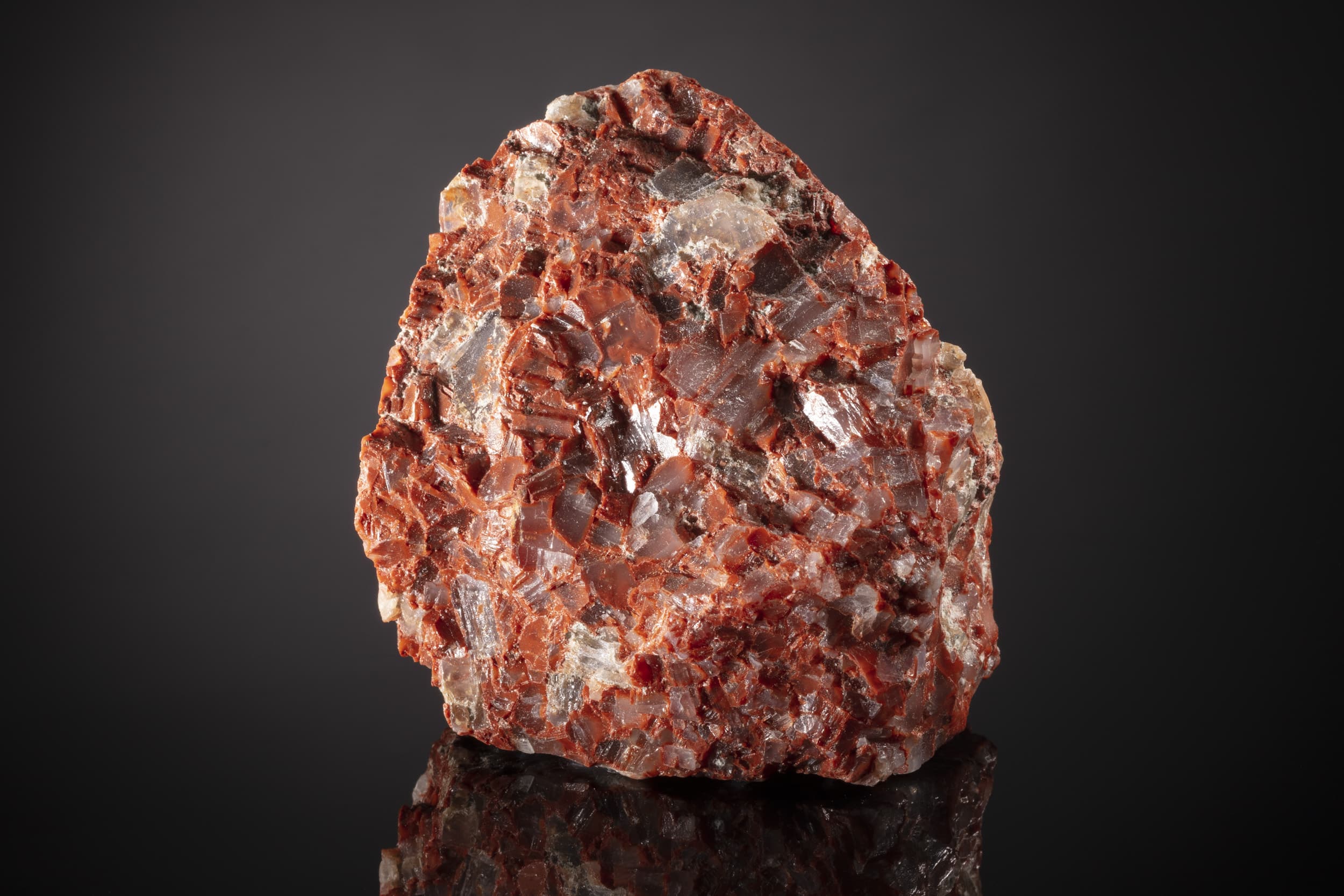
Sylvite
8 cm x 7.5 cm x 7.5 cm
KCl
Saskatchewan, Canada
Halides
Frequency: fairly common
Hardness: 1.5 to 2
Streak: white
Also called potash. Sylvite is usually translucent gray or orange. Like halite (table salt), it has a salty taste, but it is much more bitter.
Uses: a source of potassium, used in fertilizers.
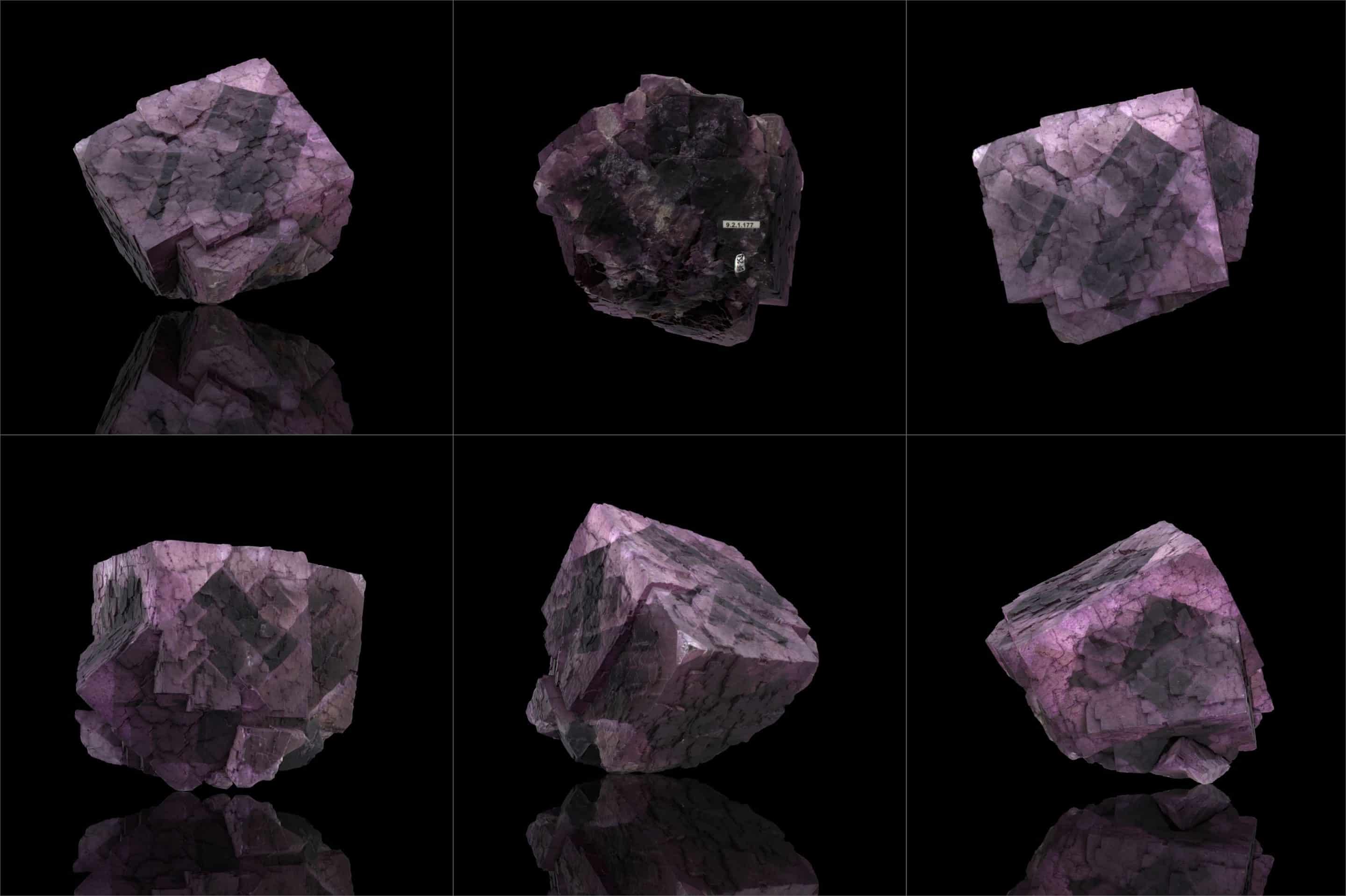
Fluorite
14 cm x 14 cm x 13.5 cm
CaF2
Origin: Illinois, USA
Halides
Frequency: Fairly common
Hardness: 4
Streak: white
Very colorful crystals with 4 cleavage planes. Most of the time, it forms cubes. A single crystal can have several colors (purple, blue, green, pink, brown…). Although its name suggests that fluorite crystals are fluorescent, some do not have this property.
Uses: Fluorite is used in the chemical industry to produce hydrofluoric acid, and it is also important in iron and steel making.