
Mineral Families
Minerals are usually sorted into large families based on their chemical composition. This is called the Strunz classification.
Two other categories, which contain fewer minerals, are also part of the Strunz classification: borates and organic compounds.
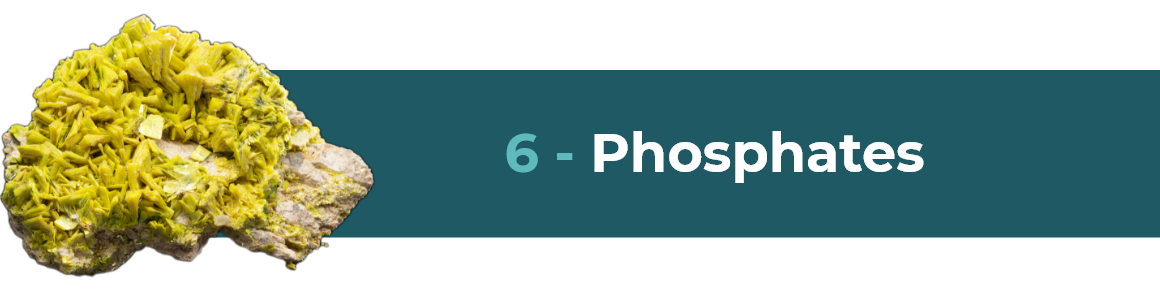
Phosphates
Minerals in this family contain the phosphate ion, PO43– , in their structure.
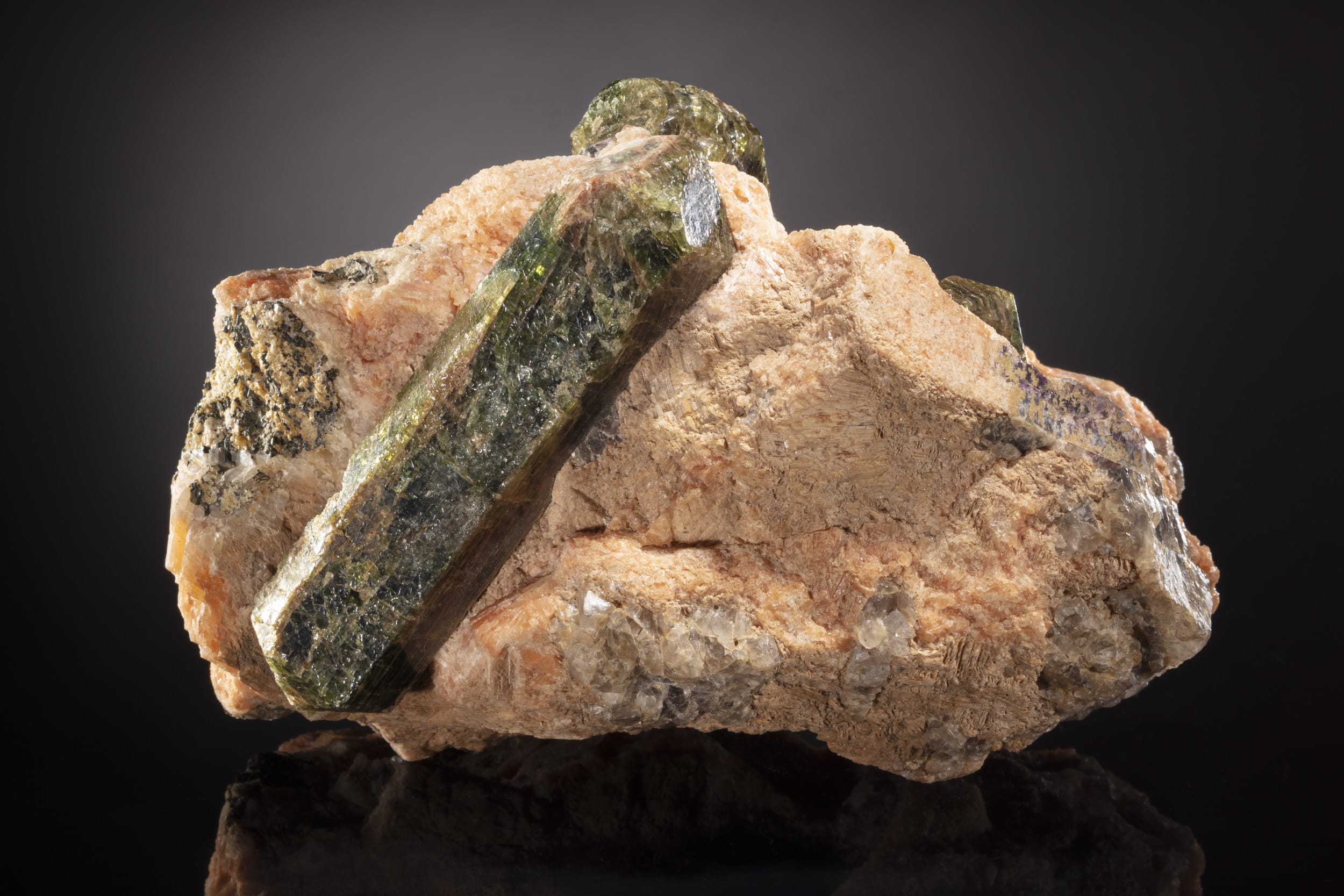
Apatite
19 cm x 12.5 cm x 9 cm
Ca5(PO4)3(OH, Cl, F)
Origin: Quebec, Canada
Phosphates
Frequency: common
Hardness: 5
Streak: white
A mineral that forms hexagonal prisms, often green or yellow, but they can also be colorless, blue, green, purple or brown.
Uses: It is used to make fertilizer, and it can also be cut for jewelry.
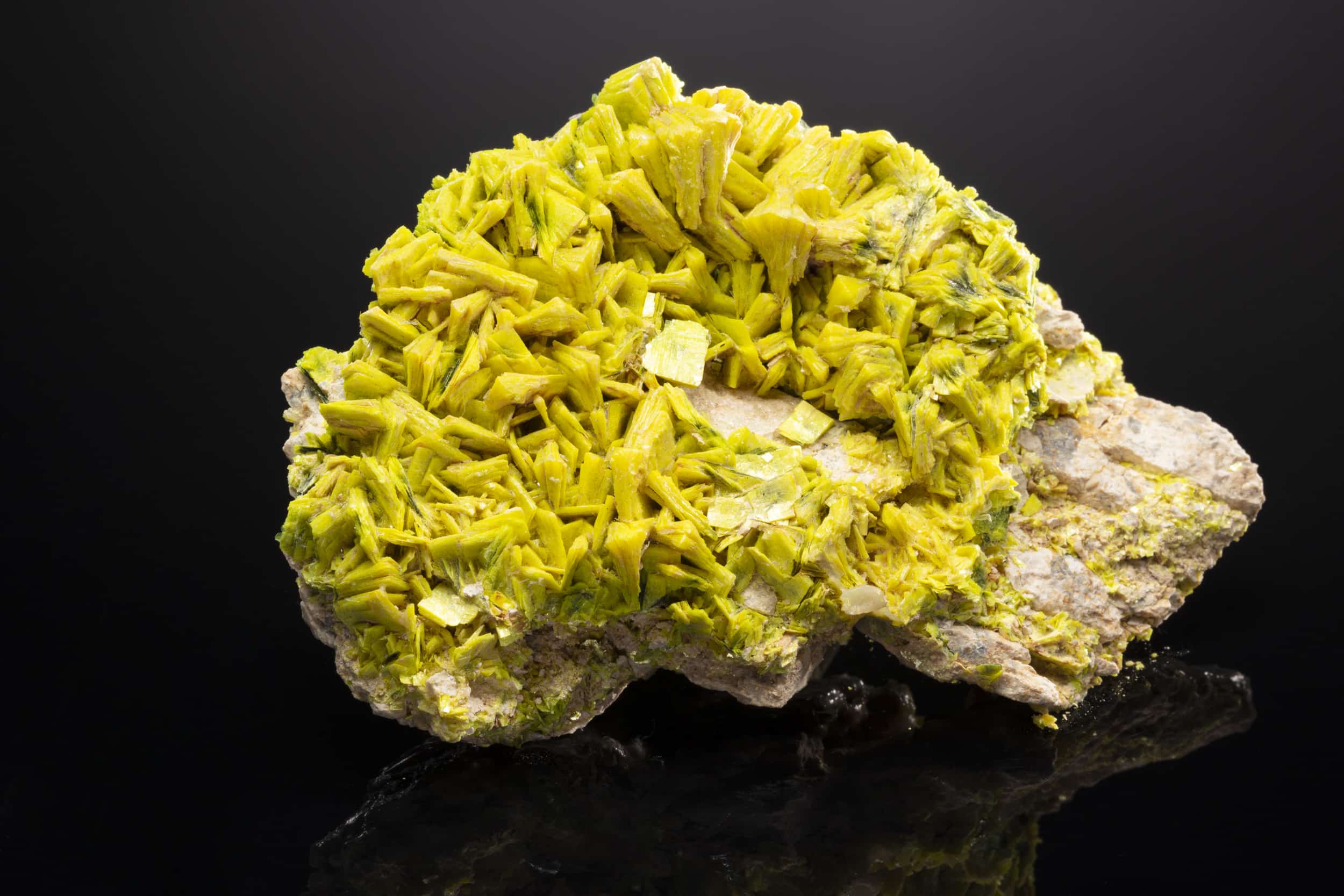
Autunite
12 cm x 8.5 cm x 4 cm
Ca(UO2)2(PO4)2 · 10-12H2O
Washington, USA
Phosphates
Frequency: rare
Hardness: 2 to 2.5
Streak: pale yellow
Very crumbly, fluorescent crystals, yellow to green in color. Usually linked to the weathering of uranium ore. Its uranium content makes it radioactive.
Uses: Can be mined for its uranium content.