

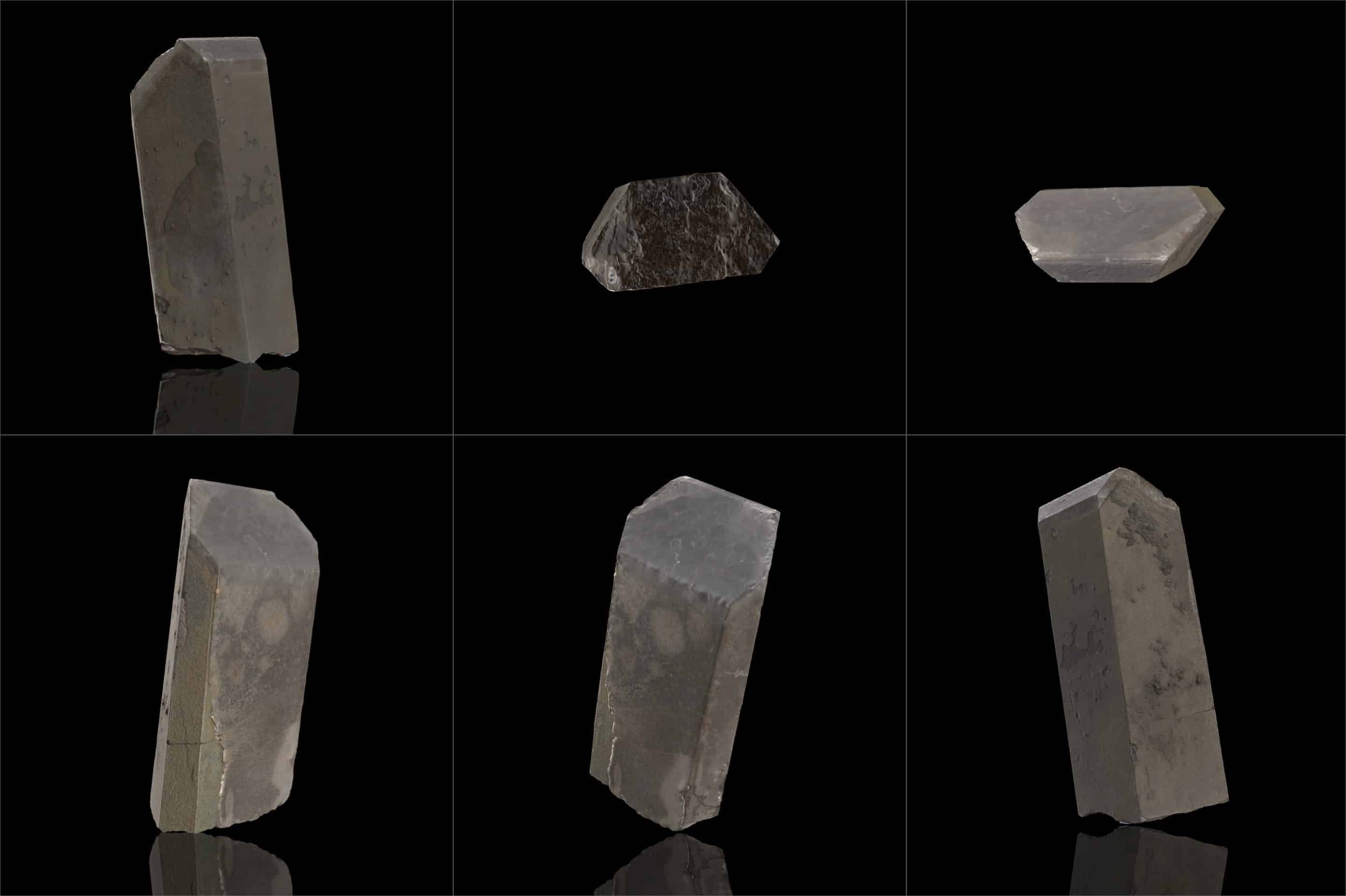
Baryte
17.5 cm x 9.5 cm x 5 cm)
BaSO4
Origin: St-Honoré, Quebec
Sulfates
Frequency: common
Hardness: 3 – 3.5
Streak: white
Crystals are often white but may exhibit shades of blue, yellow or brown. It is a very dense mineral due to its barium content; its name derives from the Greek ‘barús’, meaning ‘heavy’. It has three well-defined cleavage planes.
Uses: Used in paints and plastics, and for radiation shielding.
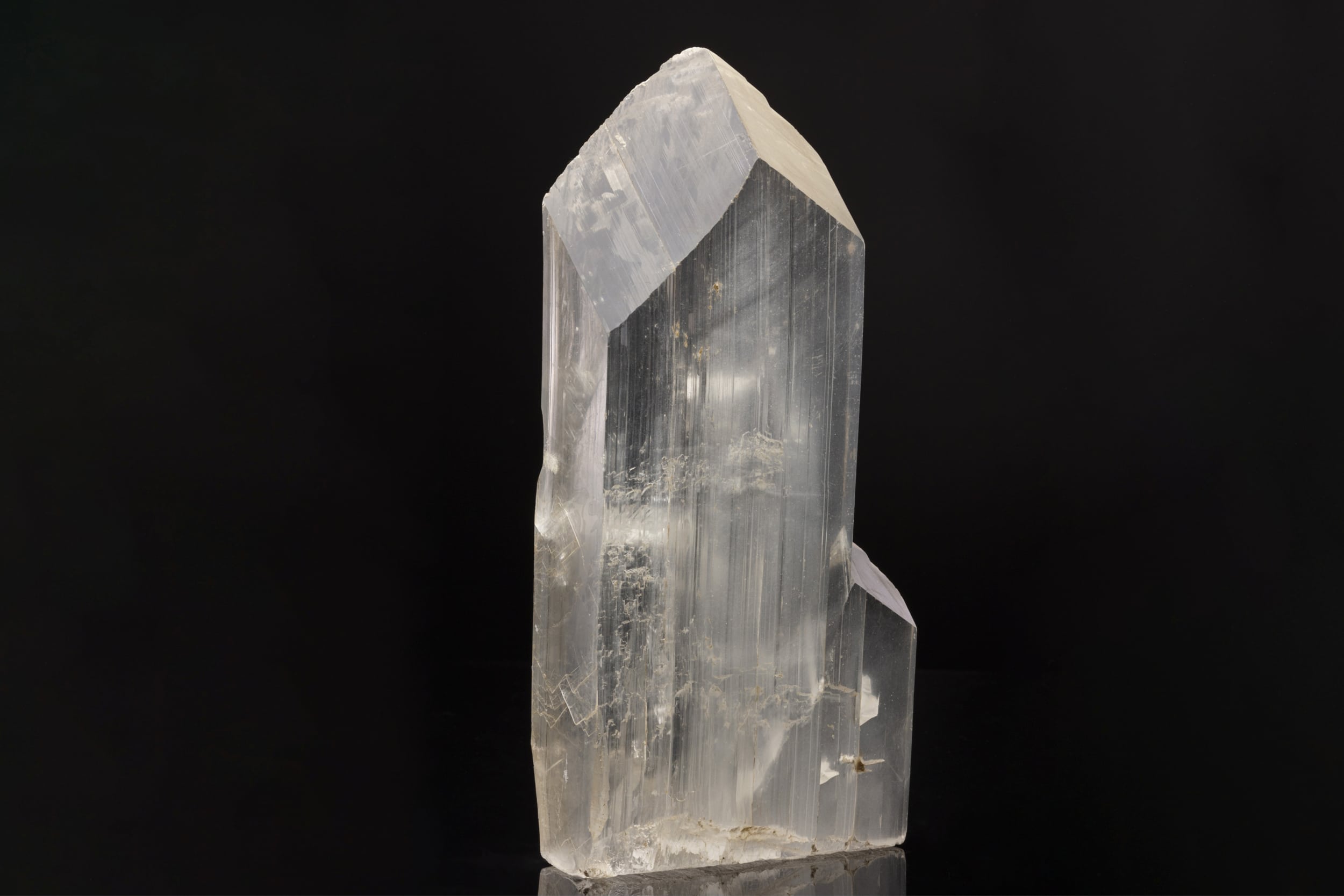
Selenite
29.5 cm x 15 cm x 6.5 cm
CaSO4· 2H2O
Origin: Romania
Sulfates
Frequency: common
Hardness: 2
Streak: white
Very soft crystals with 3 cleavage planes that are not at 90 degrees to each other. Selenite is the name for clear to lightly tinted gypsum crystals.
Uses: Gypsum is mainly used to make plaster.
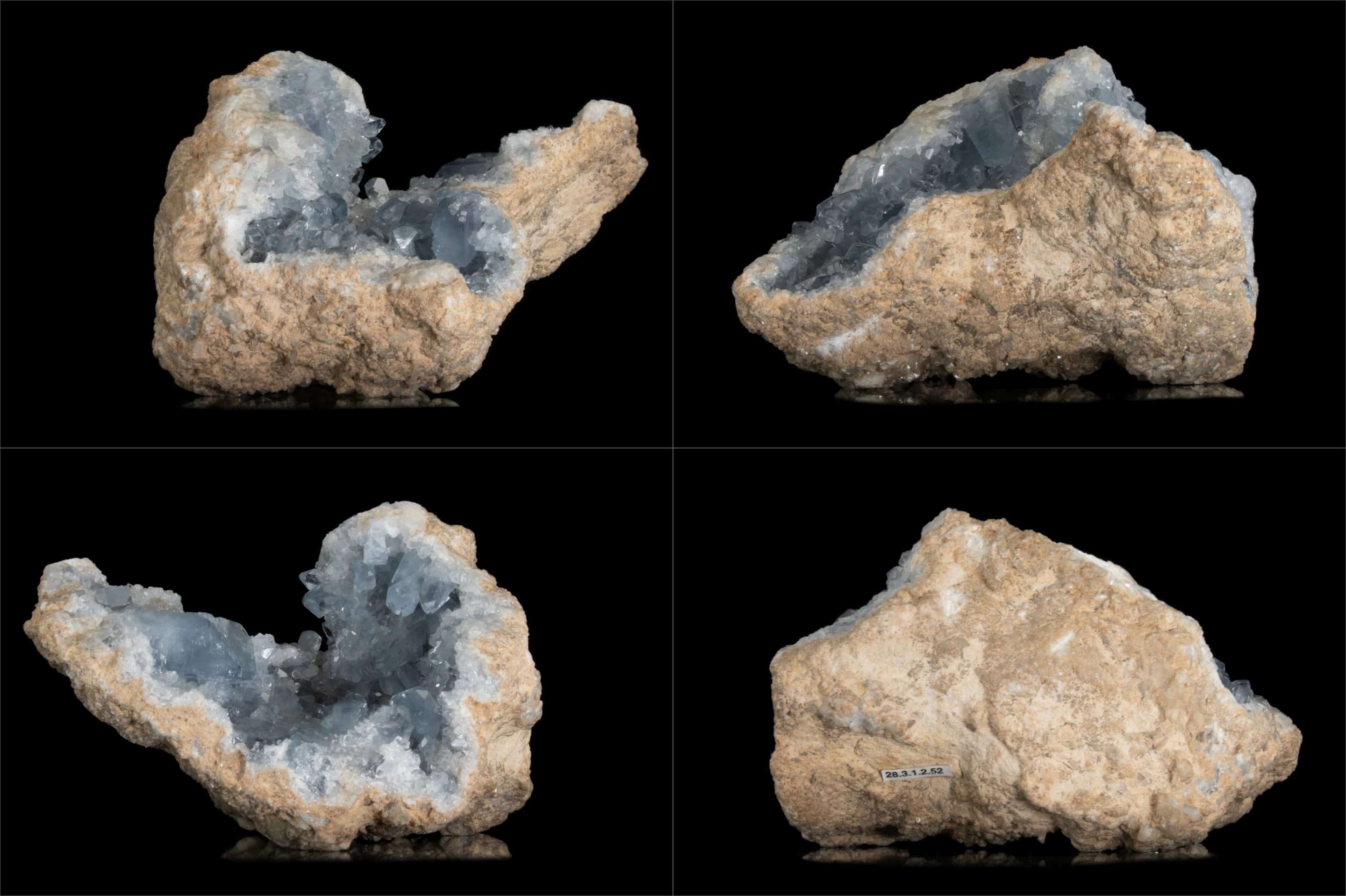
Celestine
17 cm x 15 cm x 12 cm
SrSO4
Origin: Madagascar
Sulfates
Frequency: common
Hardness: 3 – 3.5
Streak: white
The crystals come in many colors, but celestine gets its name from its blue variety. The name comes from the Latin word “caelestis,” which means heavenly. Celestine crystals have up to 3 cleavage planes and are sometimes found as geodes.
Uses: A source of strontium, which is used in several alloys and in fireworks.