

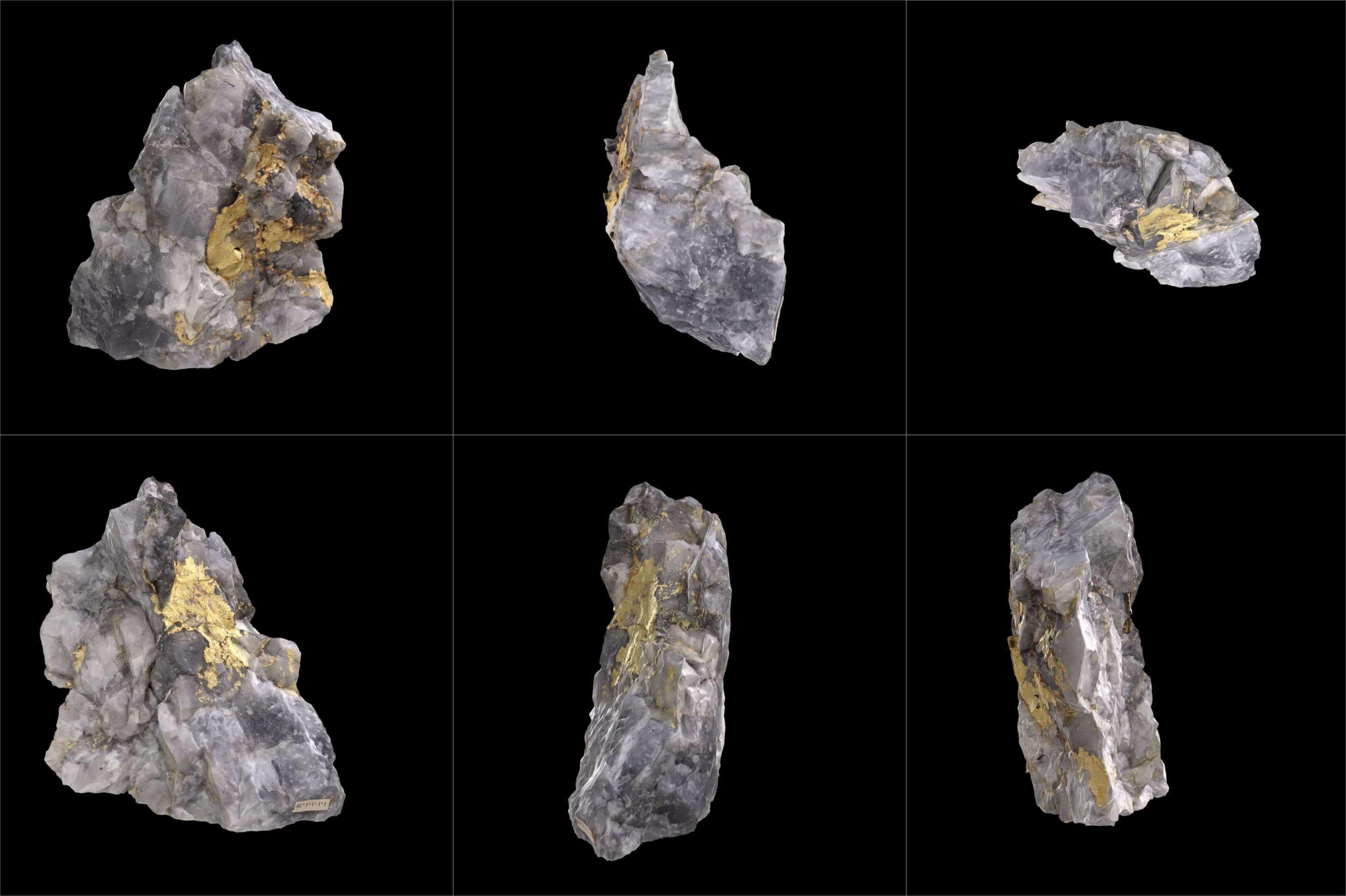
Gold
16.5 cm x 12.5 cm x 8 cm
Origin: Val-d’Or, Quebec
Native elements
Frequency: rare
Hardness: 2.5 – 3
Streak: golden yellow
A malleable, very shiny yellow metal that can take on whiter shades when it forms an alloy with silver. Gold has always been highly sought after because of its color, its resistance to corrosion and its rarity. Most gold is found in its native state.
Uses: Only a small portion of gold is used in jewelry, as this yellow metal has numerous applications across many fields, including currency, aerospace, electronics, and medicine.
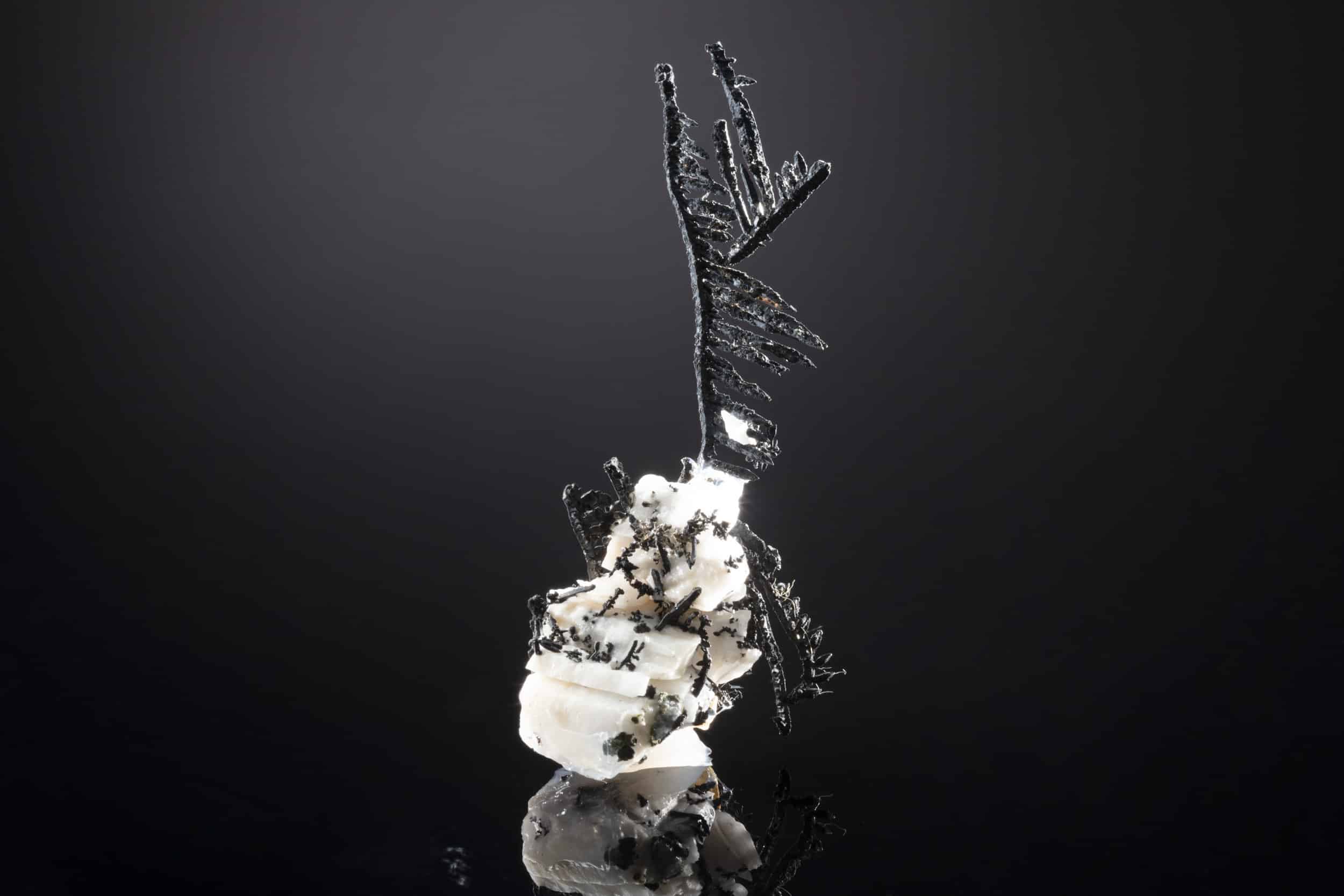
Silver
6.5 cm x 2.5 cm x 2 cm
Ag
Origin: Germany
Native Elements
Frequency: very rare
Hardness: 2.5 – 3
Streak: silvery white
A silver-colored metal that turns black when it oxidizes.
Uses: A precious metal used in jewelry and in industrial processes.
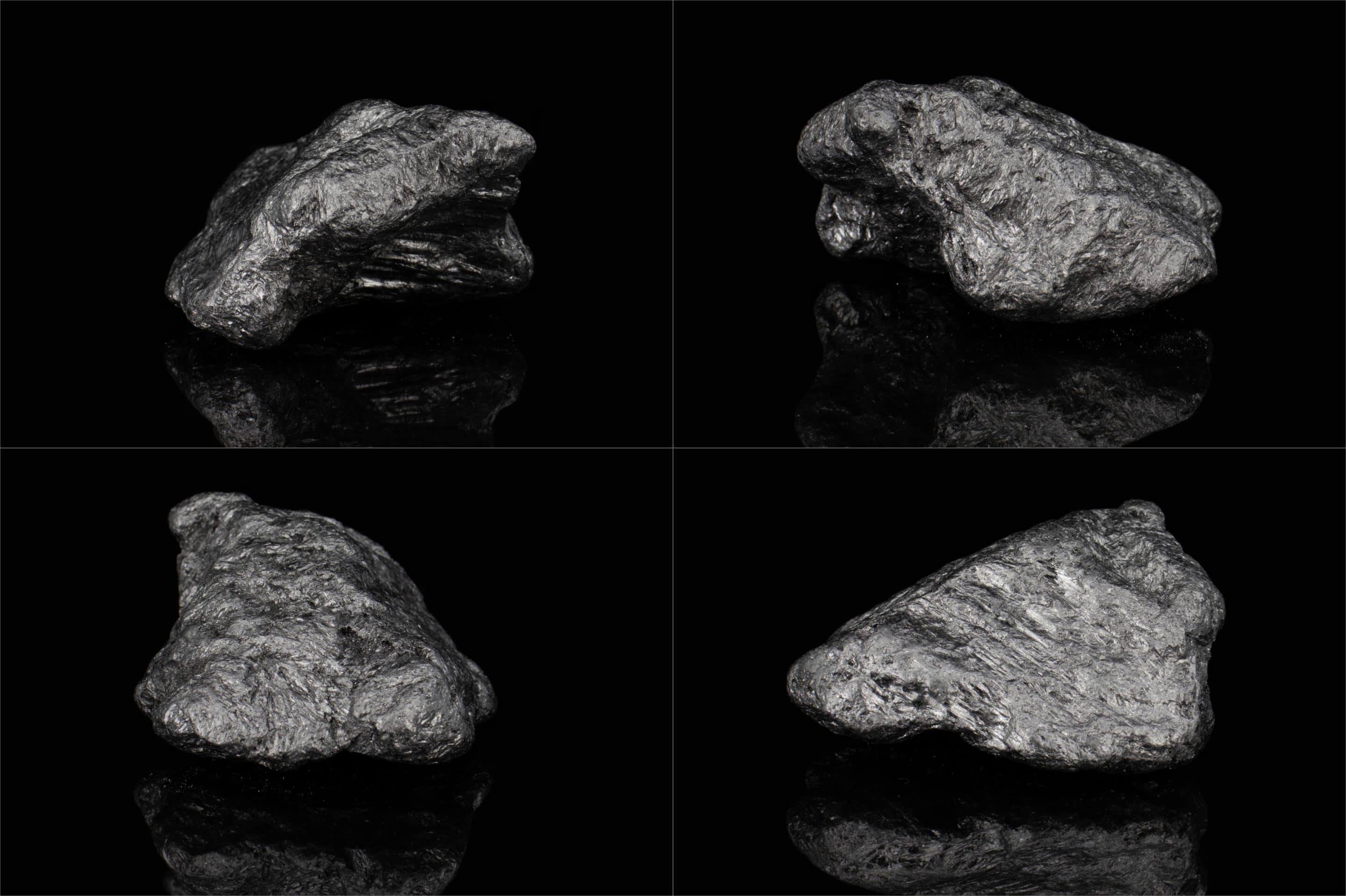
Graphite
12.5 cm x 7 cm x 5.5 cm
C
Origin: Labelle, Quebec
Donated by: Jean-Charles Sisi, 1995
Native elements
Frequency: common
Hardness: 1-2
Streak: gray-black
Very soft submetallic (almost metallic) crystals that come apart in sheets. Because it leaves marks on paper, it is used as pencil lead. This is also where its name comes from: the Greek word “graphein,” which means to write.
Uses: Very diverse. An essential component of modern batteries. Used in pencils, lubricants, refractory components, and nuclear reactors.
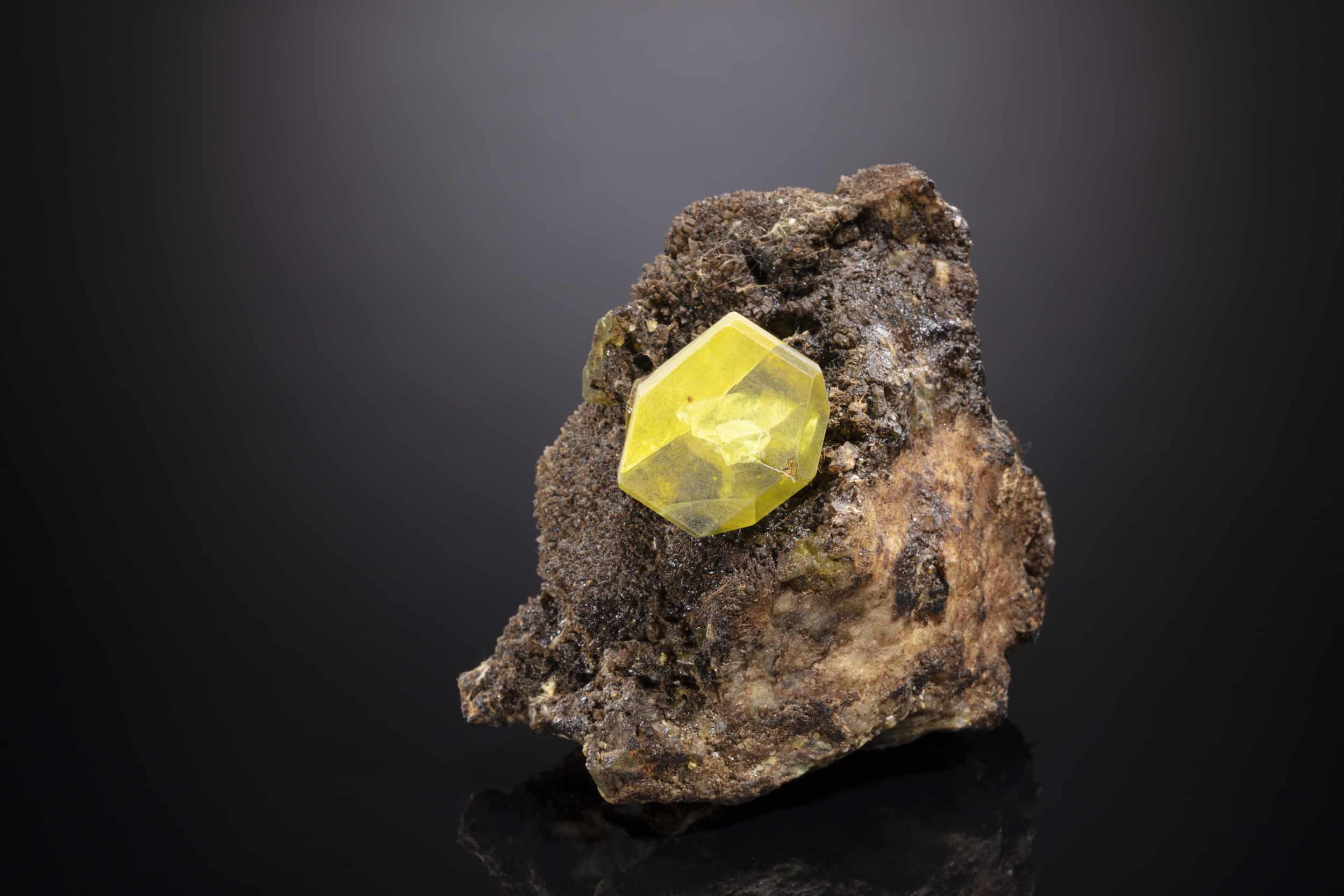
Sulfur
12.5 cm x 9 cm x 6.5 cm
S8
Origin: Sicily, Italy
Native elements
Frequency: rare
Hardness: 2
Streak: colorless
A very bright yellow crystal found near volcanic fumaroles and in sedimentary rocks.
Uses: agriculture, chemistry.
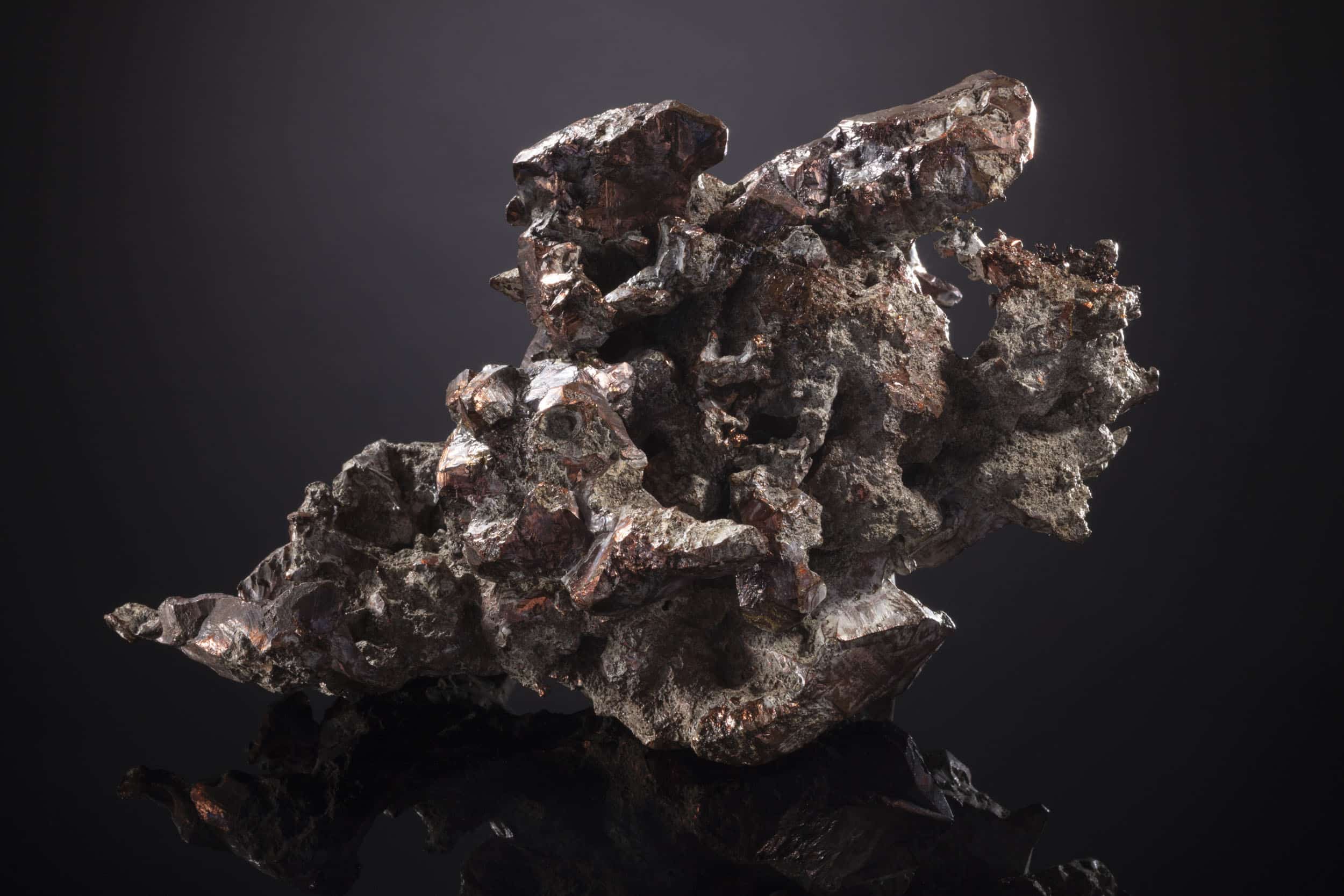
Native copper
18 cm x 13 cm x 12 cm
Cu
Origin: Michigan, USA
Donated by: Bernard Baudin, 1995
Native elements
Frequency: uncommon
Hardness: 2.5 – 3
Streak: copper to red
Dense, copper-colored metallic crystals. Typically found filling fractures.
Uses: Copper has many uses, for example as an electrical conductor and in making bronze.