

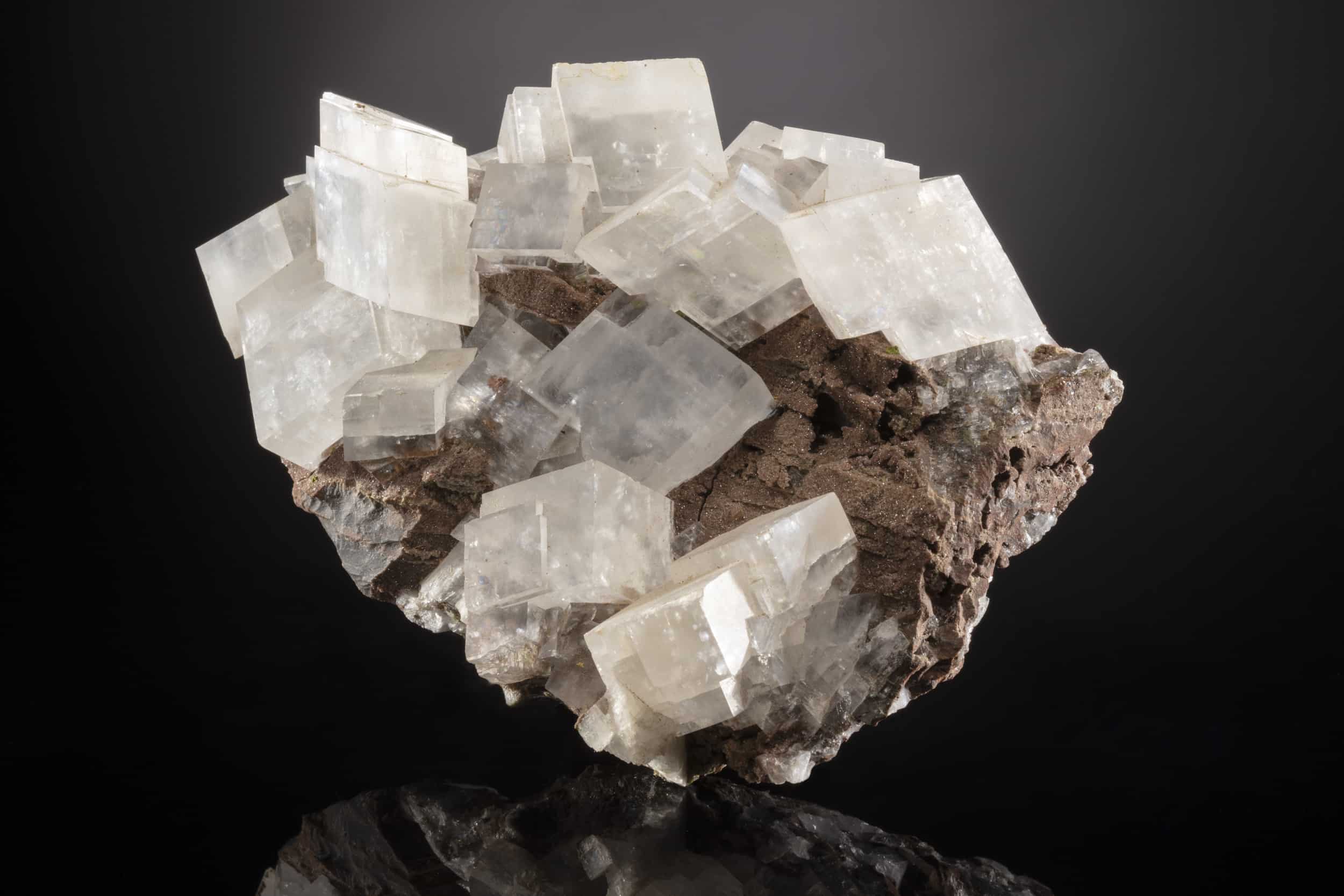
Calcite
14 cm x 10.5 cm x 7 cm
CaCO3
Tsuneb, Namibia
Donated by: Jean-Charles Sisi, 1990
Carbonates
Frequency: very common
Hardness: 3
Streak: white
Rhombohedral crystals with 3 cleavage planes. The main mineral in limestone and marble. Its color varies a lot.
Uses: Used to make lime.
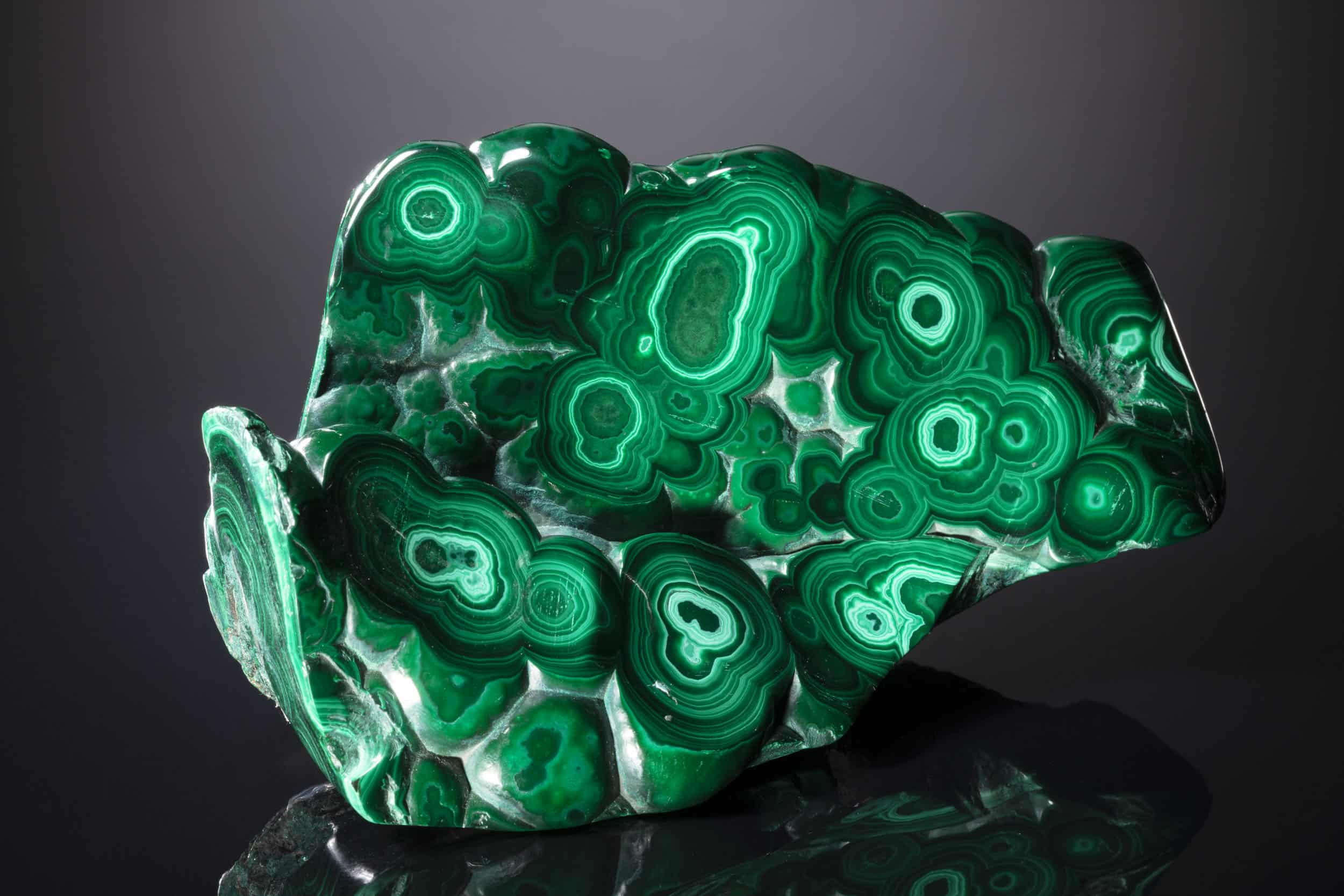
Malachite
14.5 cm x 9 cm x 5 cm
Cu2CO3(OH)2
Arizona, USA
Donated by: Harvard University, 1939
Carbonates
Frequency: fairly common
Hardness: 3.5 – 4
Streak: green
Brightly colored green crystals usually linked to the alteration of copper-rich minerals. Often found as crusts.
Uses: A low-grade copper ore used as a decorative stone.
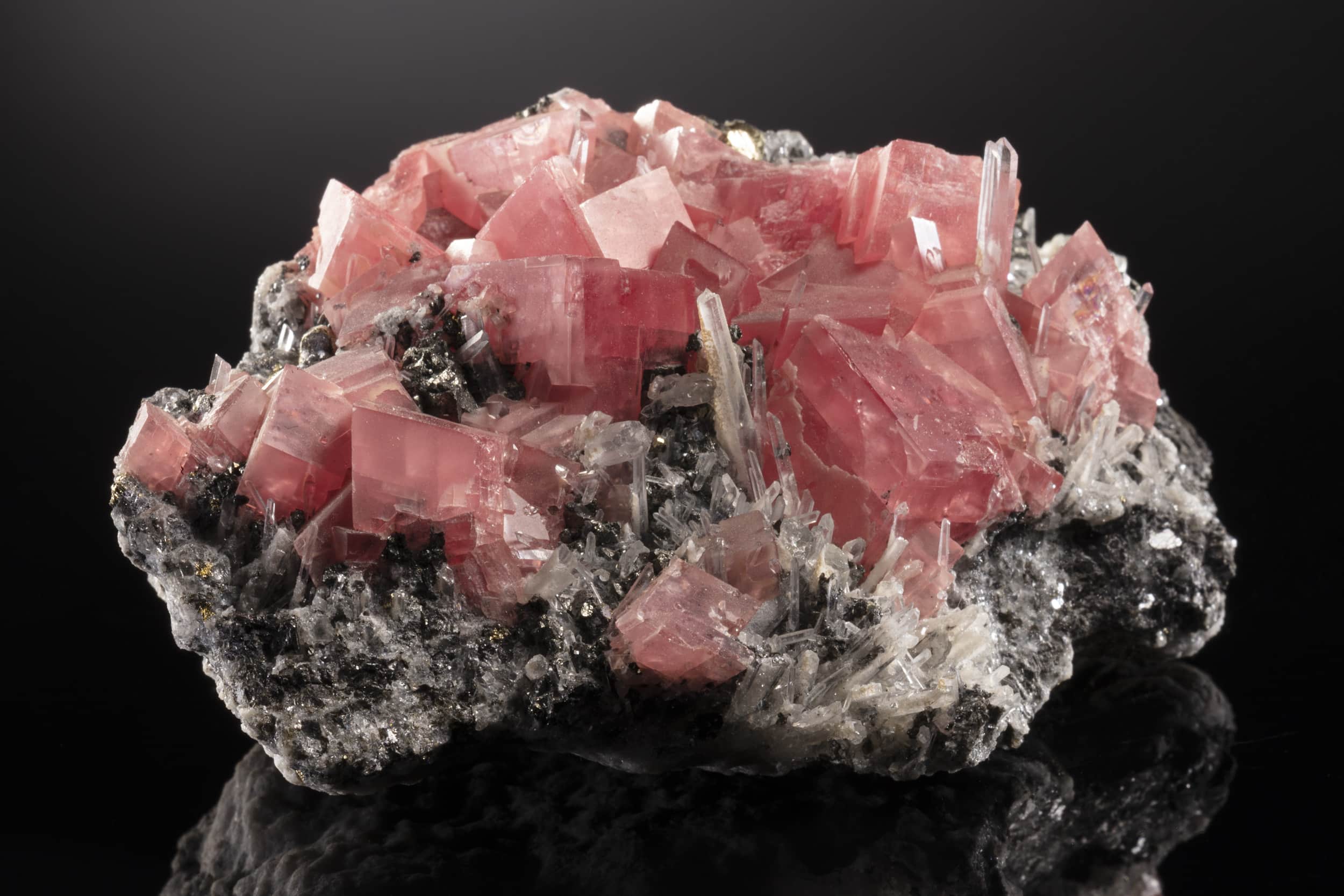
Rhodochrosite
8.5 cm x 6 cm x 4 cm
MnCO3
Origin: Colorado, USA
Carbonates
Frequency: rare
Hardness: 3.5 – 4
Streak: white
This mineral gets its name from its main color, pink (although it can sometimes show shades of gray or brown). Its name comes from the Greek words “rhodon” and “khrôma”, meaning rose and color. Rhodochrosite crystals often have a rhombohedral shape and have 3 cleavage planes.
Uses: jewelry.