

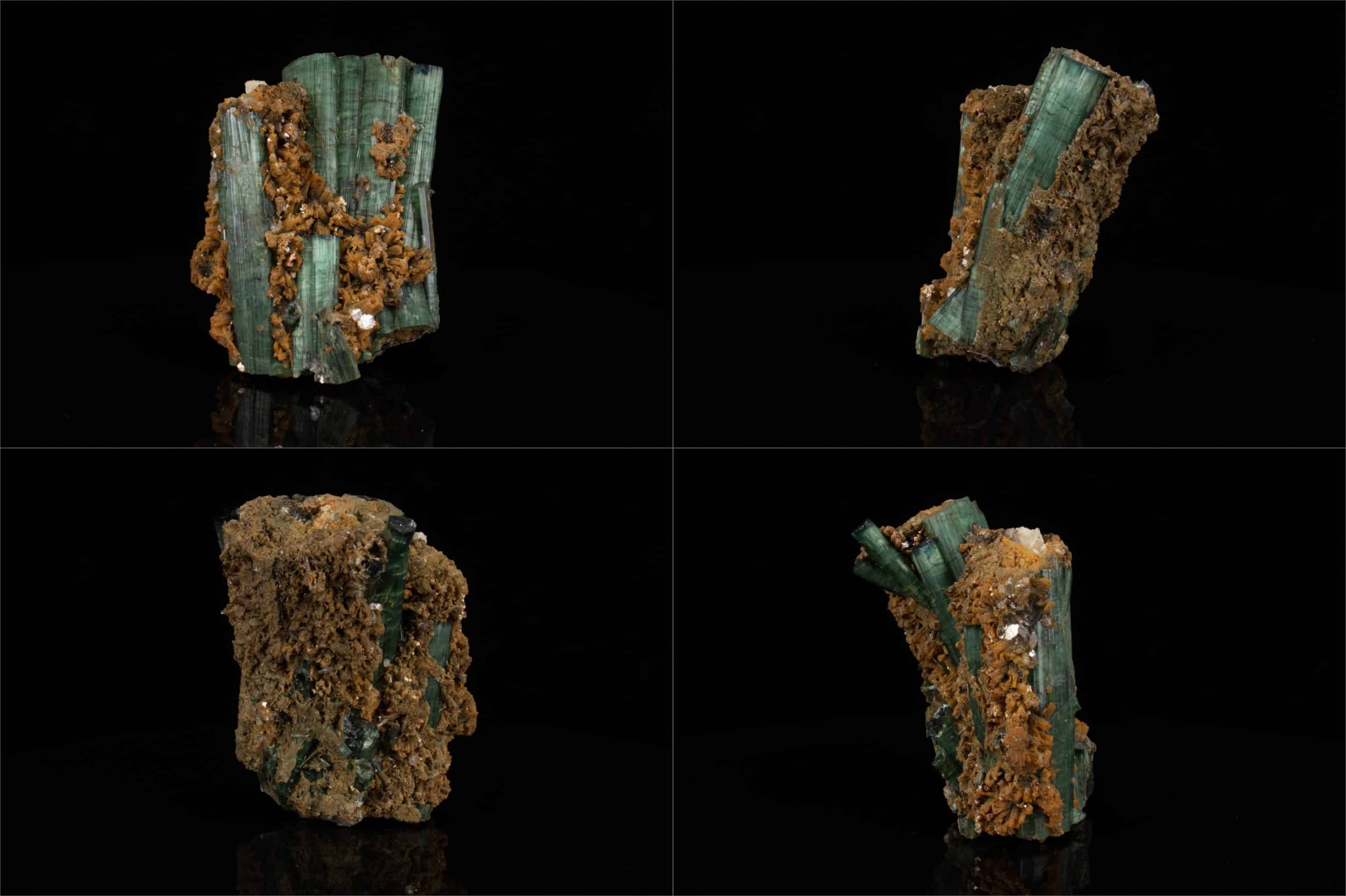
Green Tourmaline
9.5 cm x 5 cm x 5 cm
Na(Li1.5Al1.5)Al6(Si6O18)(BO3)3(OH)3(OH)
Origin: California, USA
Silicates
Occurrence: fairly common, the elbaite variety is rare
Hardness: 7.5
Streak: white
Long rod-shaped crystals of many different colors (red, pink, green, blue, orange or colorless) with a triangular cross-section and striations.
Uses: Jewelry and collecting
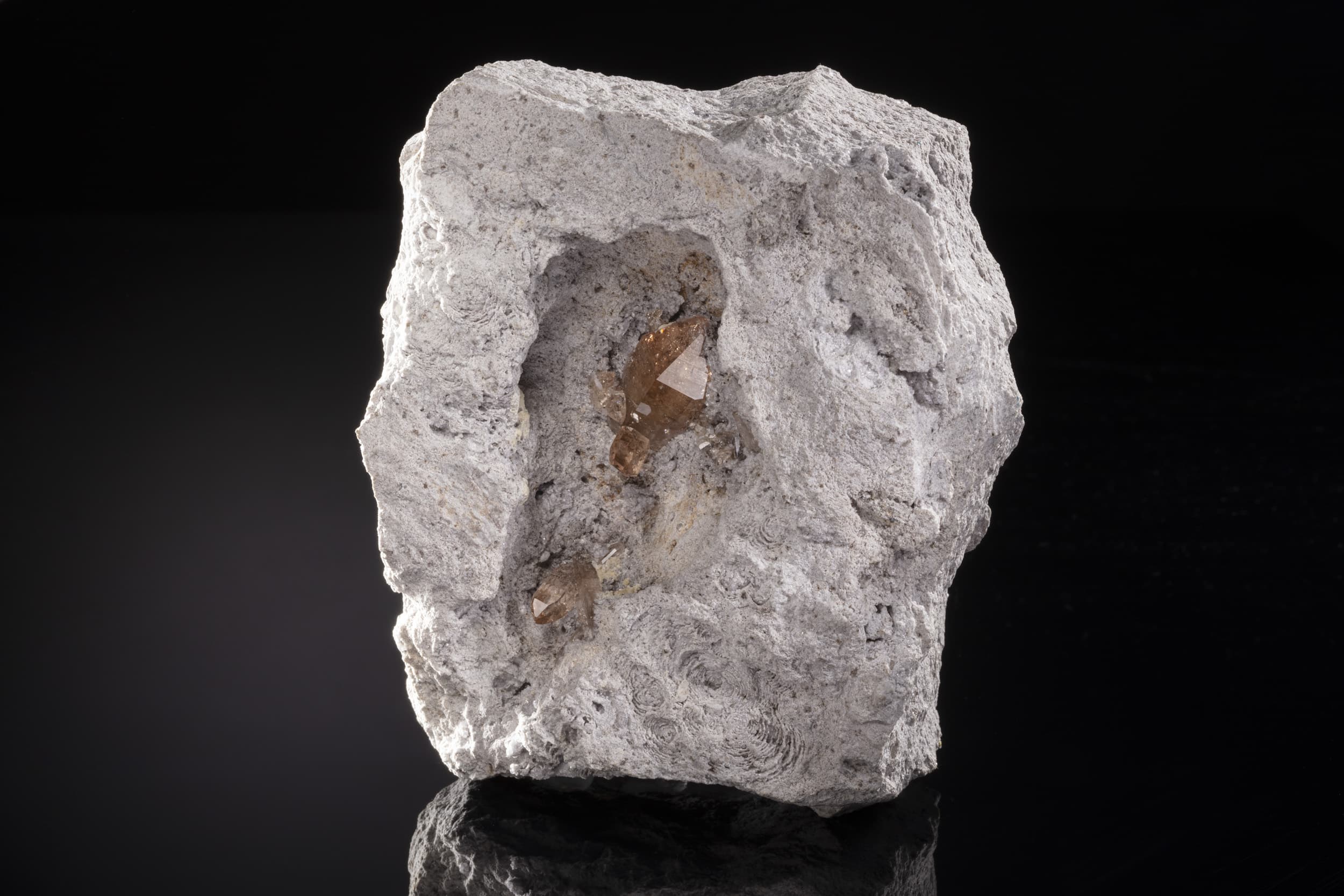
Topaz
15.5 cm x 10 cm x 6.5 cm
Al2(SiO4)(F,OH)2
Origin: Utah, USA
Silicates
Frequency: rare
Hardness: 8
Streak: white
Topaz can be transparent or come in shades of white, blue, green, yellow, brown or red. It is highly sought after in its gem form.
Uses: Jewelry
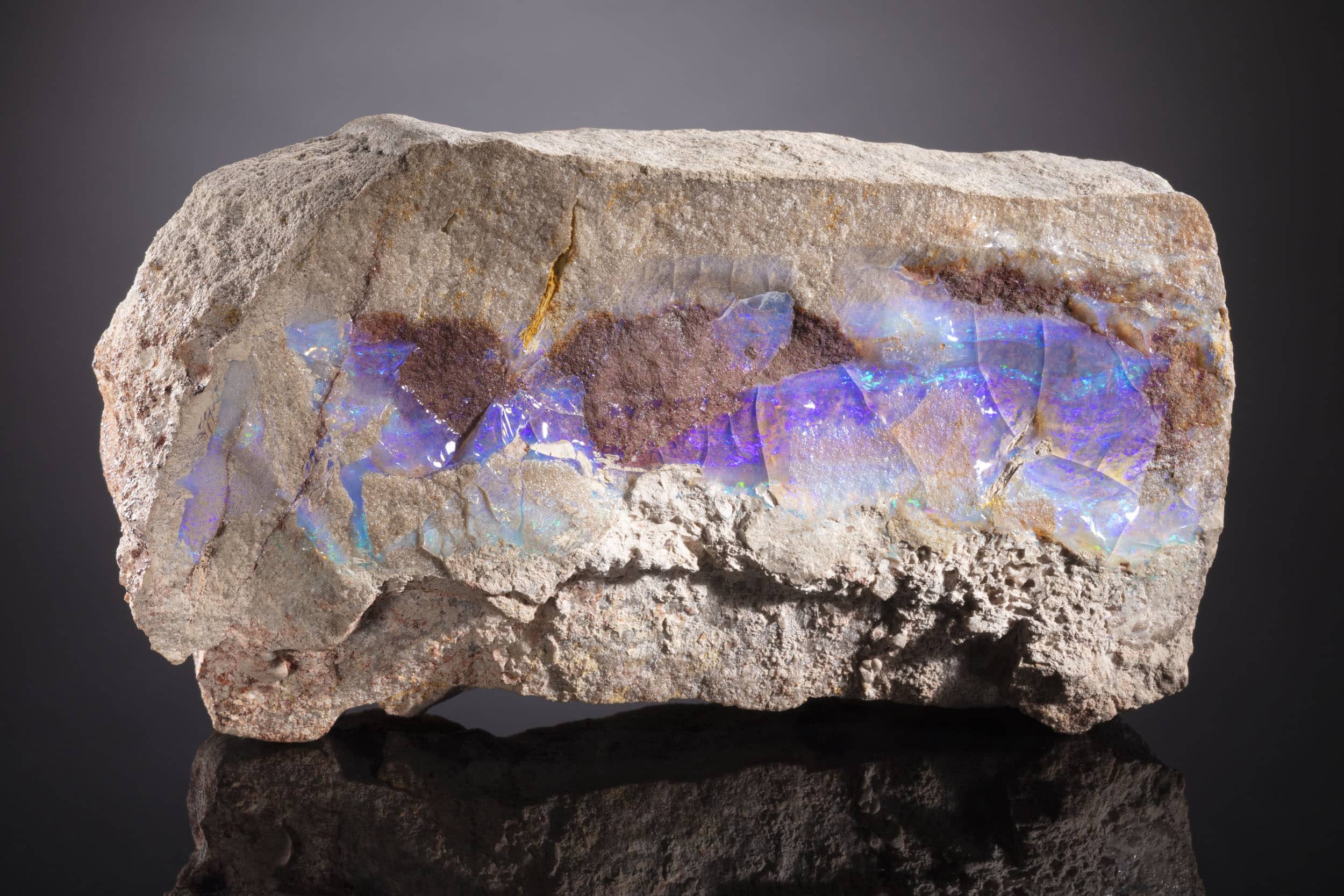
Opal
16.5 cm x 9 cm x 6.5 cm
SiO2 · nH2O
Origin: Australia
Mineraloids
Frequency: rare
Hardness: 5.5 – 6.5
Streak: white
Opal is not a mineral, because it is a hydrated form of amorphous silica. Precious opal is a highly sought-after stone because of the complex play of light it shows. Common opal does not have these optical effects.
Uses: Jewelry
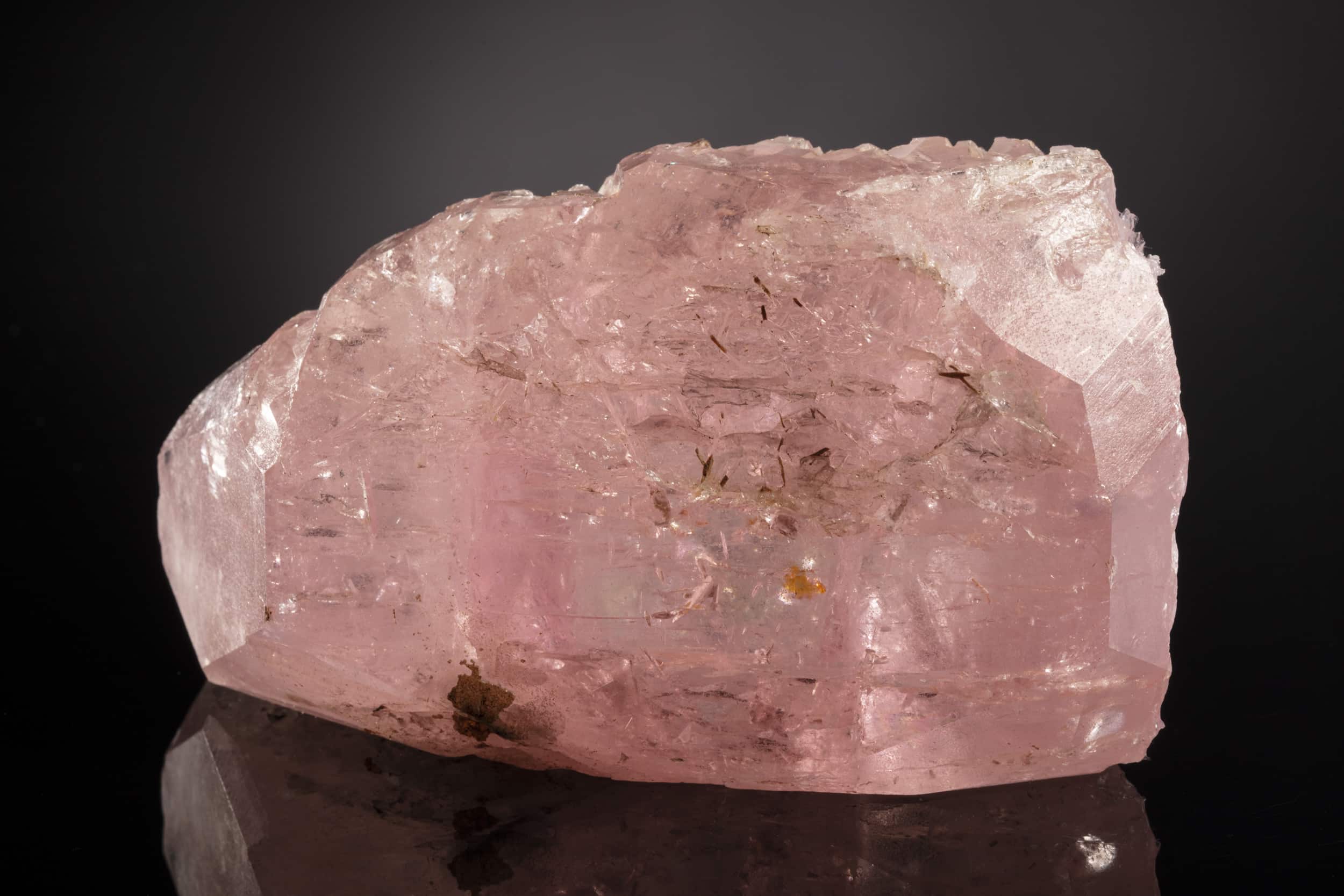
Morganite
(5 cm x 5 cm x 4.5 cm)
Be3Al2Si6O18
Origin: Minas Gerais, Brazil
Silicates
Abundance: Beryl is relatively common, but the morganite variety is rare
Hardness: 7.5 – 8
Streak: white
Very hard, long, pink hexagonal crystals with conchoidal fracture.
Uses: A highly sought-after gemstone. Several varieties of beryl are also sought-after gemstones: emerald (chromium: Cr), aquamarine (iron 3+: 3+Fe), morganite (manganese: Mn), and heliodor (iron 2+: 2+Fe)
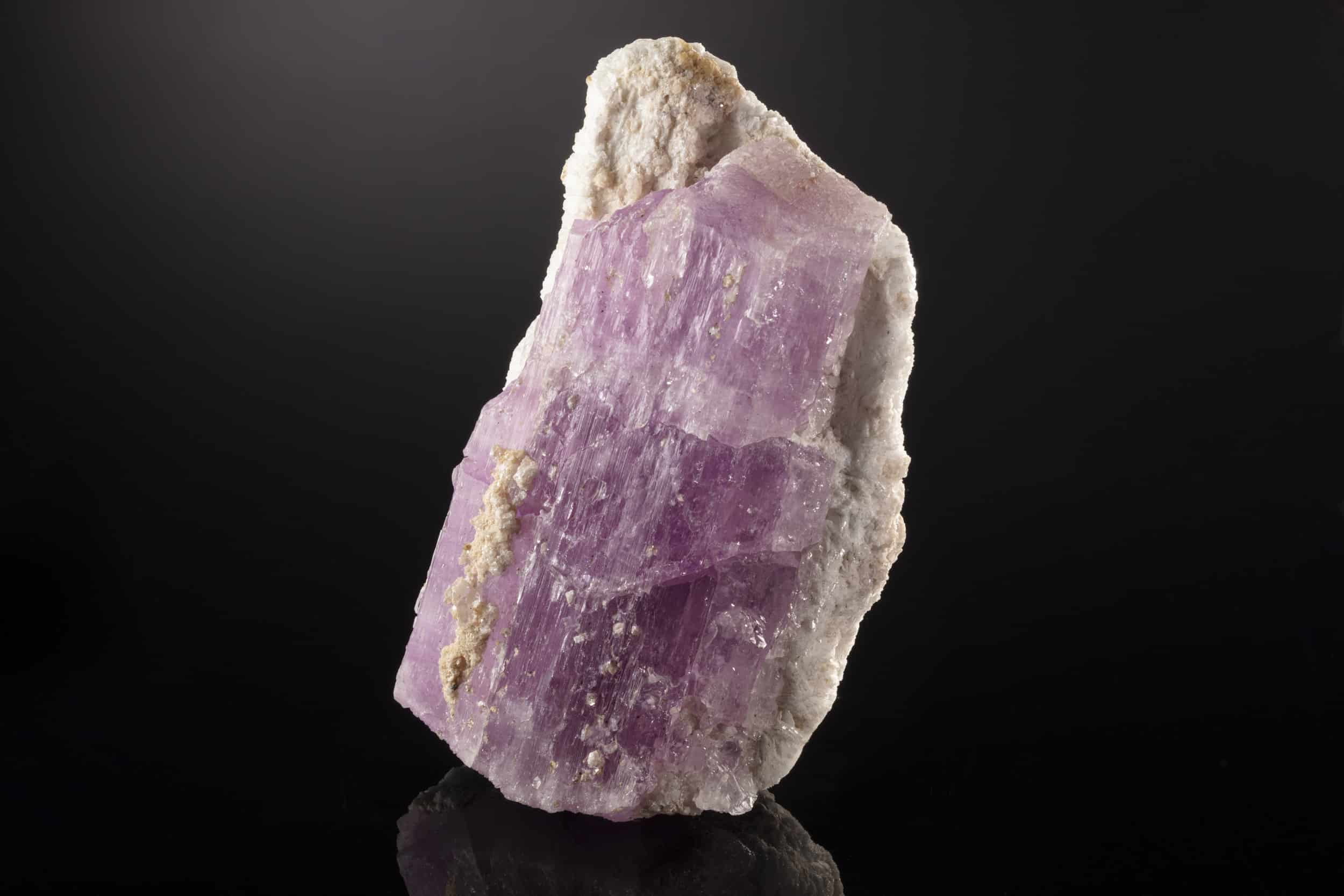
Kunzite
21.5 cm x 13.5 cm x 6.5 cm
LiAlSi2O6
Origin: Pakistan
Silicates
Frequency: uncommon, the kunzite variety is rare
Hardness: 6.5- 7
Streak: white
Kunzite is the translucent pink variety of spodumene. Spodumene crystals are fairly long prisms with two cleavage planes at about 90 degrees.
Uses: Spodumene is a lithium ore used, among other things, in batteries, and its gem varieties are used in jewelry.
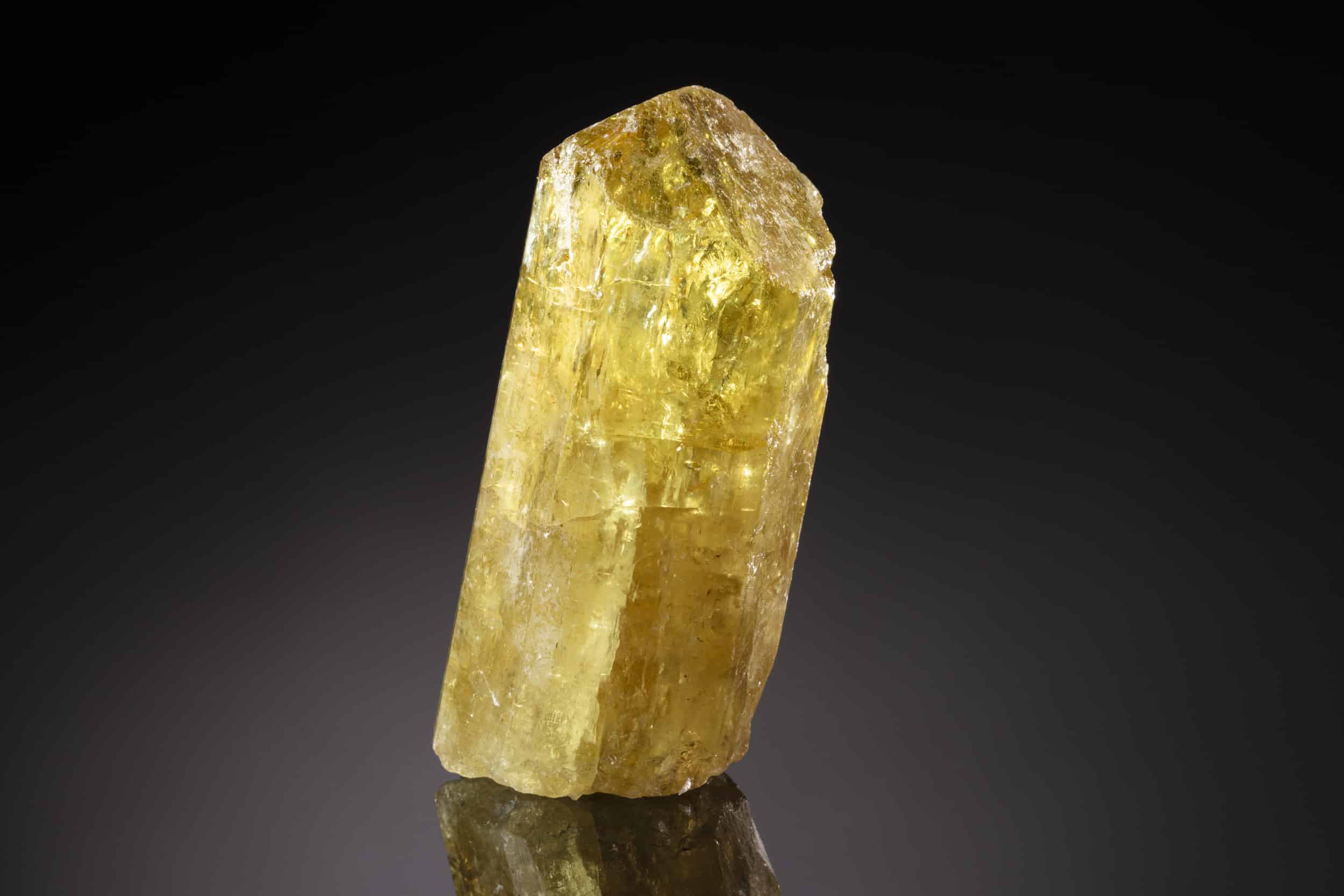
Apatite
7 cm x 3 cm x 3 cm
Ca5(PO4)3(OH, Cl, F)
Orgin: Durango, Mexico
Donated by: Jean-Charles Sisi, 1990
Phosphates
Frequency: common
Hardness: 5
Streak: white
A mineral that forms hexagonal prisms, often green or yellow, but they can also be colorless, blue, green, purple or brown.
Uses: It is used to make fertilizer, and it can also be cut for jewelry.
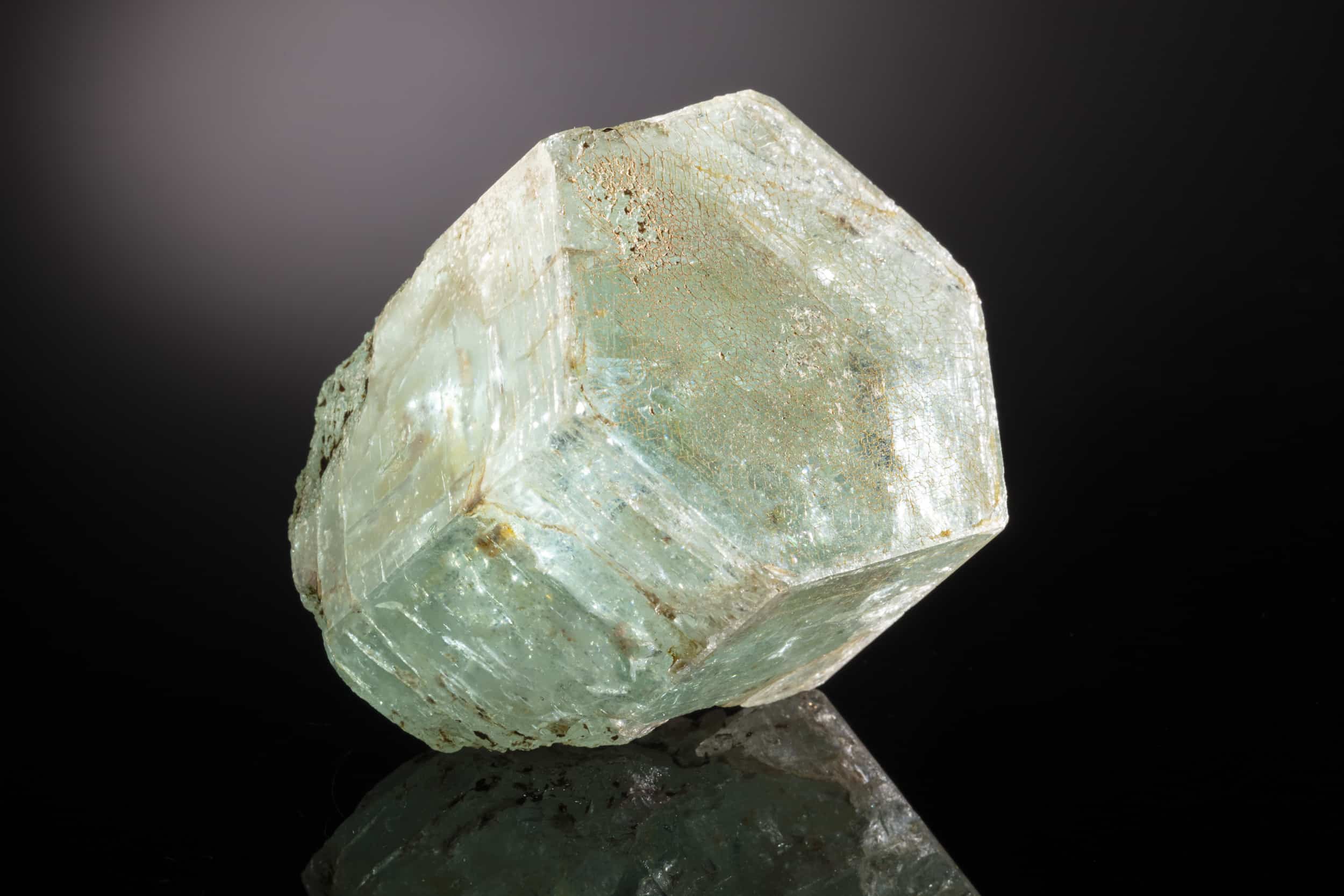
Aquamarine
5 cm x 5 cm x 4.5 cm
Be3Al2Si6O18,
Origin : Minas Gerais, Brazil
Silicates
Frequency: uncommon; rare for the aquamarine variety
Hardness: 7.5 – 8
Streak: white
Very hard, long, blue hexagonal crystals with conchoidal fracture.
Uses: A highly sought-after gemstone. Several varieties of beryl are also sought-after gemstones: emerald (chromium: Cr), morganite (manganese: Mn), and heliodor (iron 2+: Fe²⁺)