

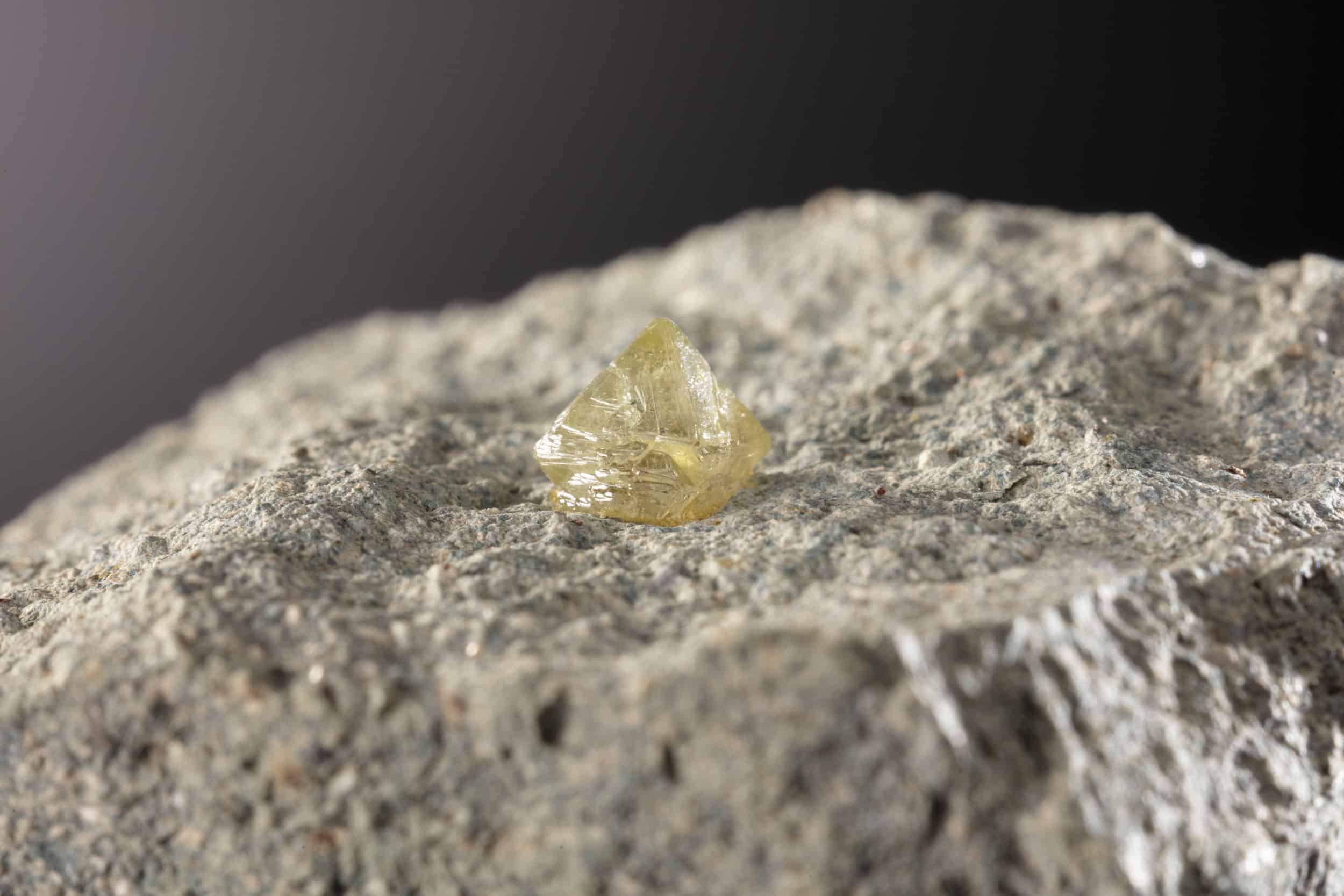
Diamond
0.4 cm x 0.4 cm x 0.4 cm (crystal)
C
Origin: Yakutia, Russia.
Native Elements
Frequency: very rare
Hardness: 10
Streak: None
A very rare and very precious mineral that usually forms octahedrons in its raw form. The color of a diamond can range from brown to white or gray, and even pink and blue.
Uses: A precious stone that is highly sought after in jewelry, but is also useful in some industrial applications.
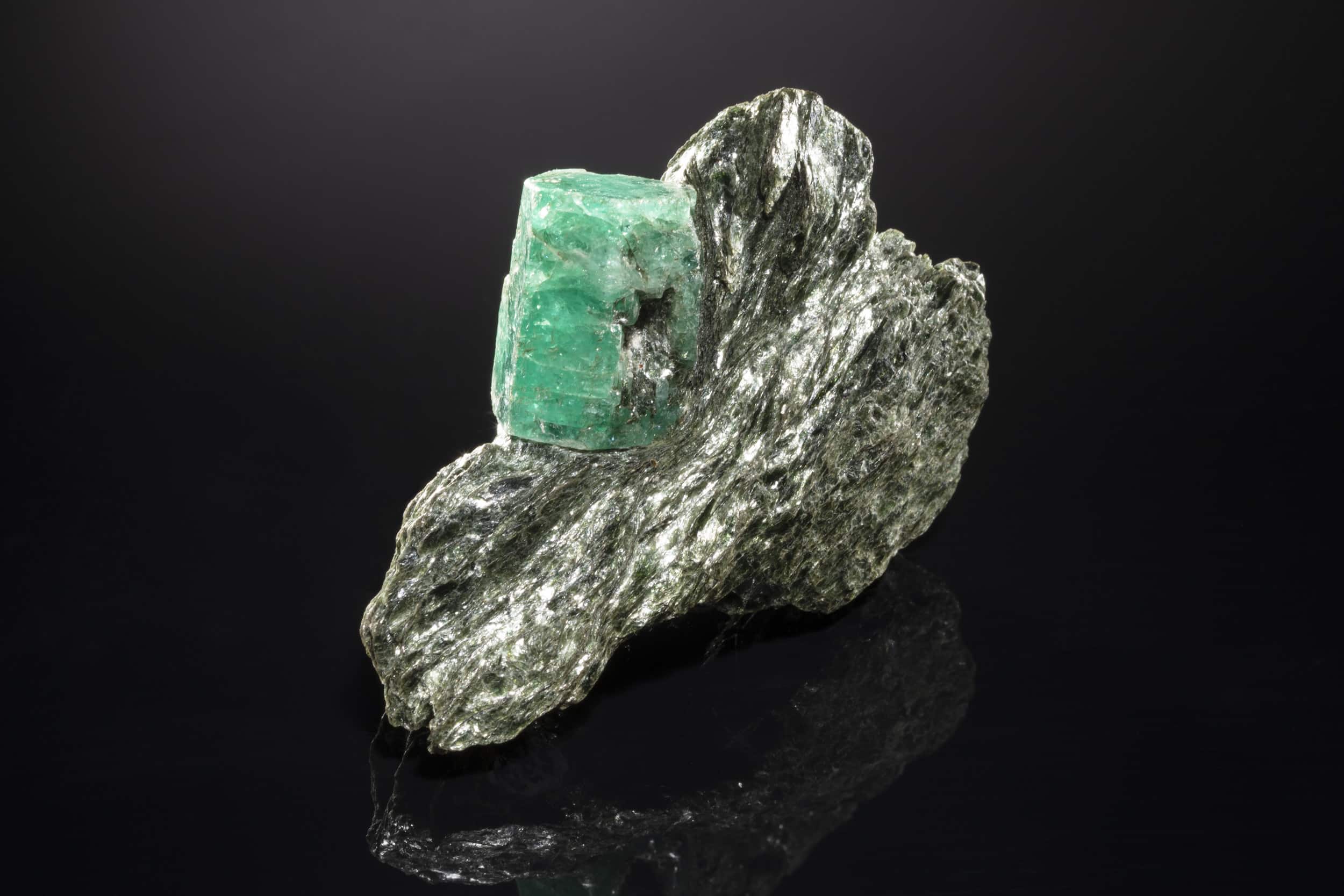
Emerald
7 cm x 4.5 cm x 2.5 cm
Be3Al2Si6O18
Origin : Val Vigezzo, Italie
Silicates
Occurrence: relatively common, rare in the emerald variety
Hardness: 7.5 – 8
Streak: white
Very hard green hexagonal crystals with a conchoidal fracture. Emeralds are valued based on their color, their transparency, the amount of inclusions and the size of the crystal.
Uses: A highly sought-after gemstone. Several other varieties of beryl are also sought-after gemstones: aquamarine (blue), morganite (pink), heliodor (yellow), goshenite (translucent) and bixbite (red).
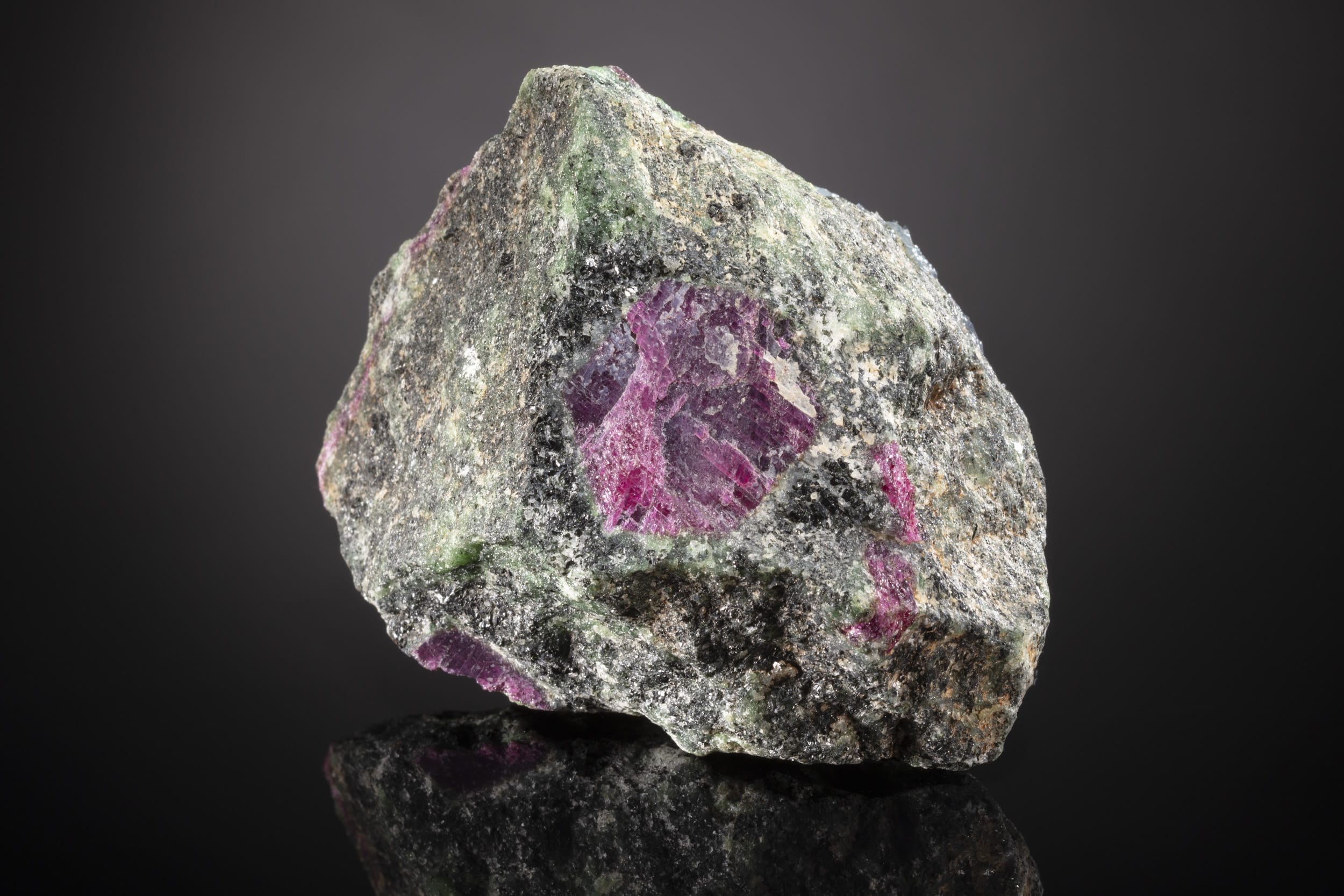
Ruby
7 cm x 6.5 cm x 6.5 cm)
Al2O3
Origin : Myanmar
Oxides and hydroxides
Frequency: relatively common, except for sapphire and ruby varieties which are very rare
Hardness: 9
Streak: white
Very hard hexagonal prismatic crystals; the hardest natural crystals after diamond. The ruby variety of corundum is red in colour.
Uses: used as an abrasive. The gem varieties are sought after as precious stones (ruby, sapphire)
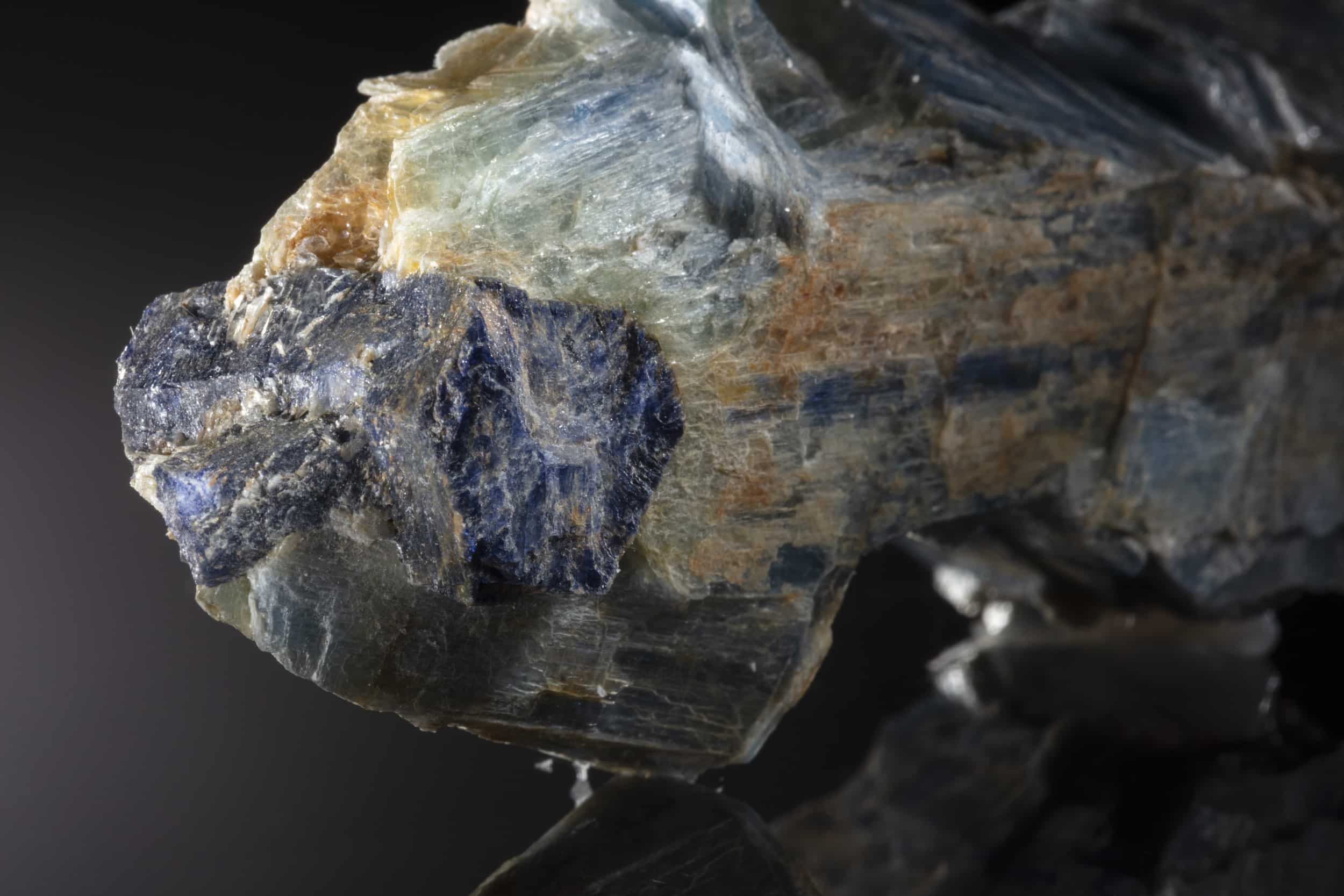
Sapphire
6 cm x 2.5 cm x 2.5 cm
Al2O3
Origin : Rwanda
Donated by: Bernard Baudin, 1995
Oxides and hydroxides
Frequency: relatively common, except for sapphire and ruby varieties which are very rare
Hardness: 9
Streak: white
Very hard hexagonal prismatic crystals, the hardest natural crystals after diamond. The sapphire variety of corundum is blue.
Use: The gemstone varieties are very sought after as precious stones (rubies and sapphires)