

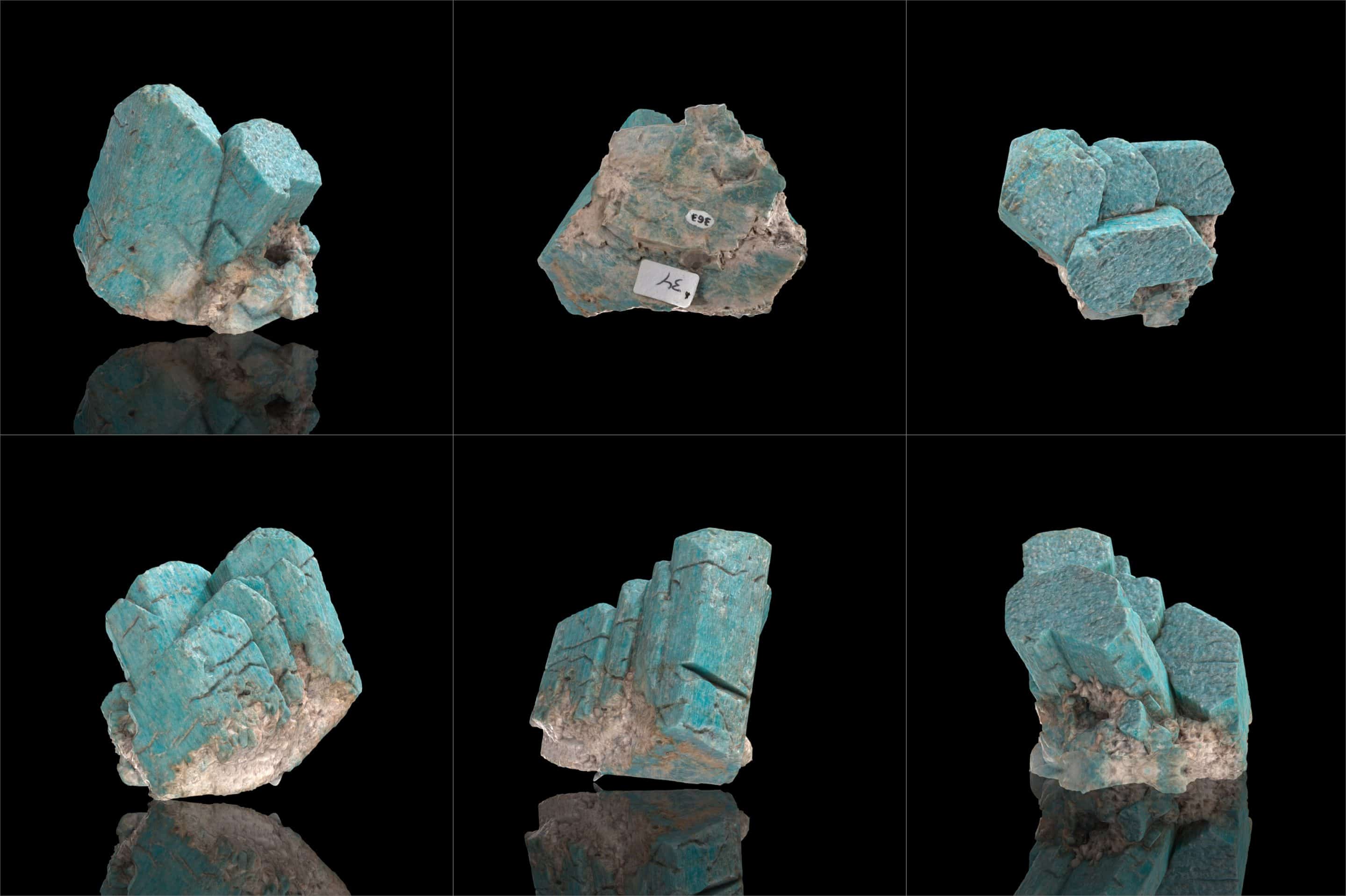
Amazonite
7.5 cm x 6.5 cm x 6 cm
KAlSi3O8
Origin: Colorado, United States
Silicates
Frequency: microcline is common, but the amazonite variety is rare
Hardness: 6 to 6.5
Streak: white
The special green color of this mineral comes from lead inserted into its structure. This mineral has two cleavage planes at 90 degrees.
Uses: An ornamental stone in jewelry, microcline is used to make glass and ceramics.
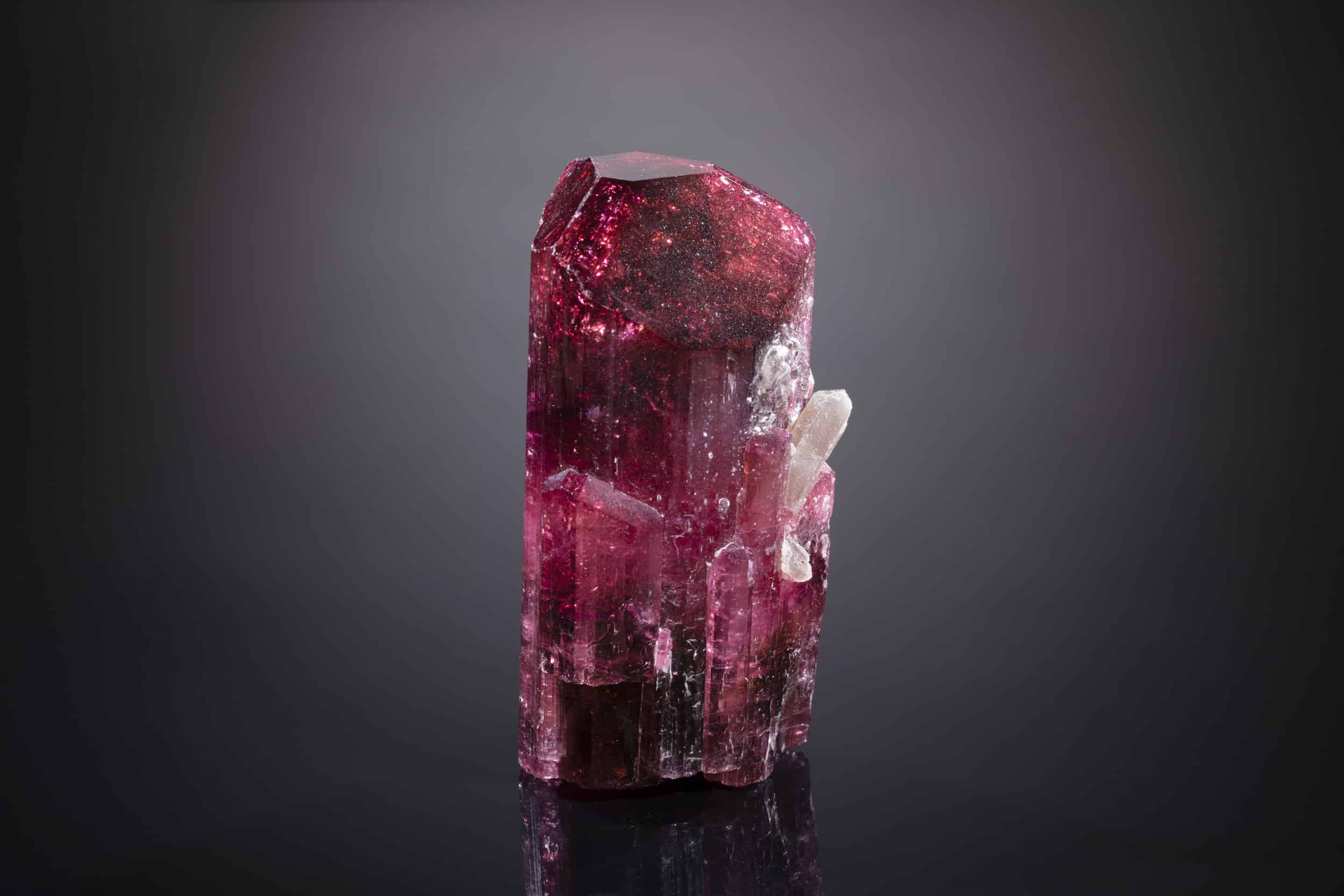
Tourmaline
7.5 cm x 4 cm x 4 cm
Na(Li1.5Al1.5)Al6(Si6O18)(BO3)3(OH)3(OH)
Origin: Sibera, Russia
Silicates
Occurrence: fairly common, the elbaite variety is rare
Hardness: 7.5
Streak: white
Long rod-shaped crystals in many different colors (red, pink, green, blue, orange or colorless) with a triangular cross-section and striations.
Uses: Jewelry and collecting.
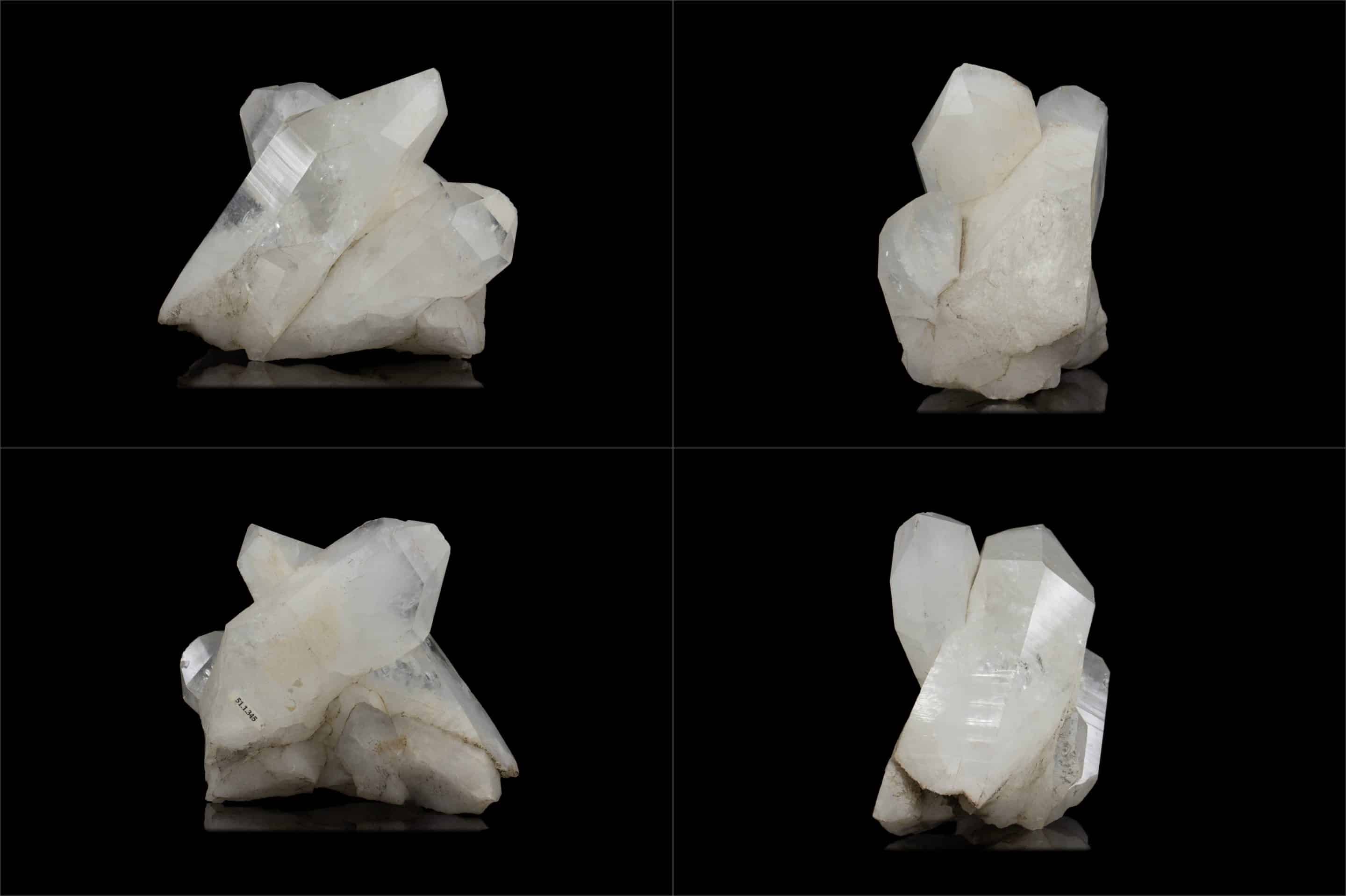
Quartz
22.5 cm x 18.5 cm x 12 cm
SiO2
Origin: Quebec, Canada
Silicates
Frequency: common
Hardness: 7
Streak: white
A very hard, common mineral found in many types of rocks. Although it is often seen in shades of white or gray, or even translucent, quartz can be found in a wide range of colors: purple (amethyst variety), yellow (citrine variety), blue, red, brown…
Uses: Used to make glass. Quartz is also used in watchmaking, as an abrasive, as a refractory material, and in the oil industry, electronics and jewelry.
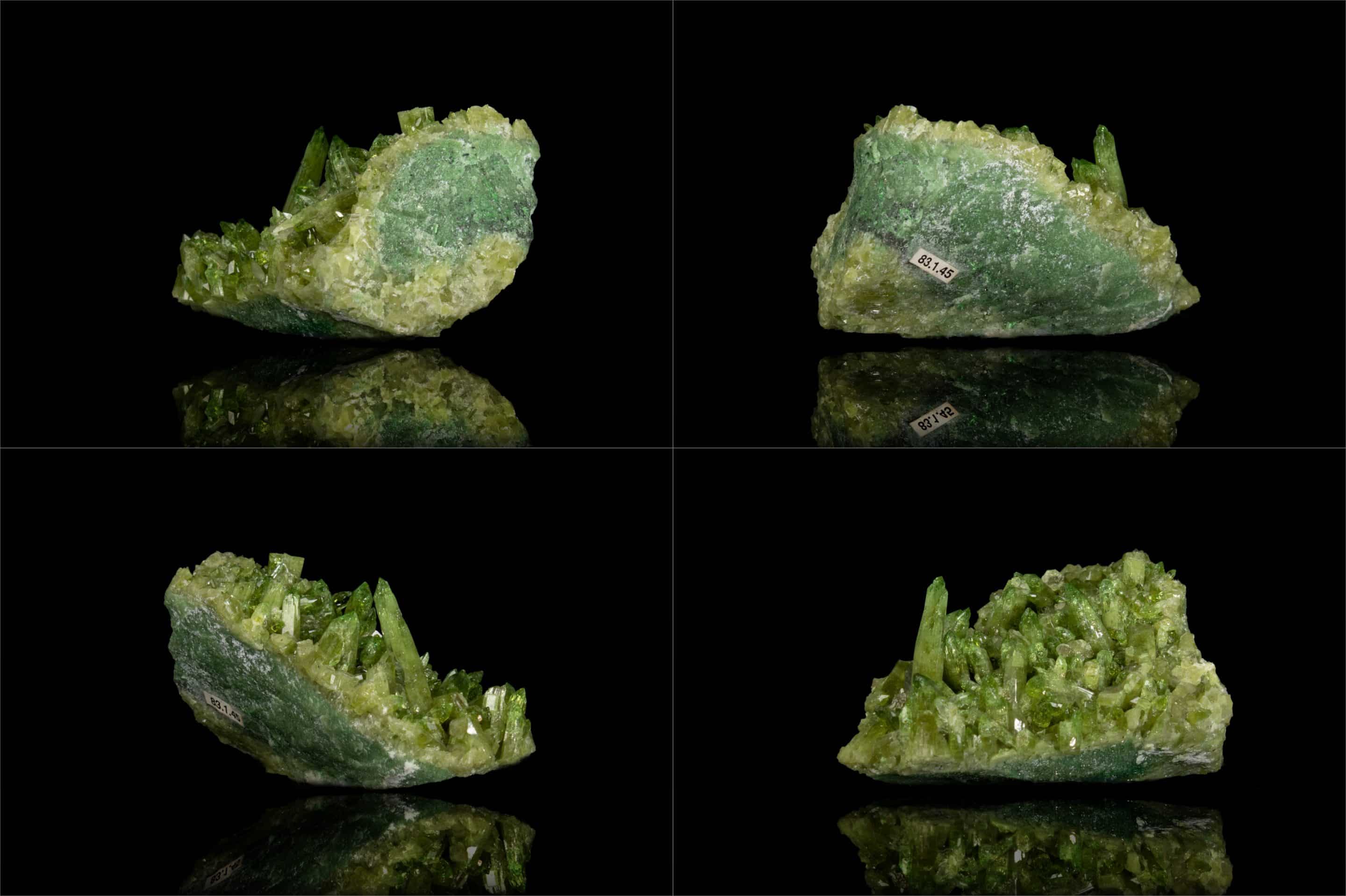
Vesuvianite
6.5 cm x 6.6 cm x 4.5 cm
Ca10(Mg, Fe)2Al4(SiO4)5(Si2O7)2(OH,F)
Val-des-Sources, Quebec, Canada
Donated by: Tony Gordian, 1992
Silicates
Frequency: rare
Hardness: 6.5
Streak: white
Crystals that can be very colorful (green, pink, purple, brown, yellow, blue). It used to be known as idocrase.
Uses: jewelry, collecting.