

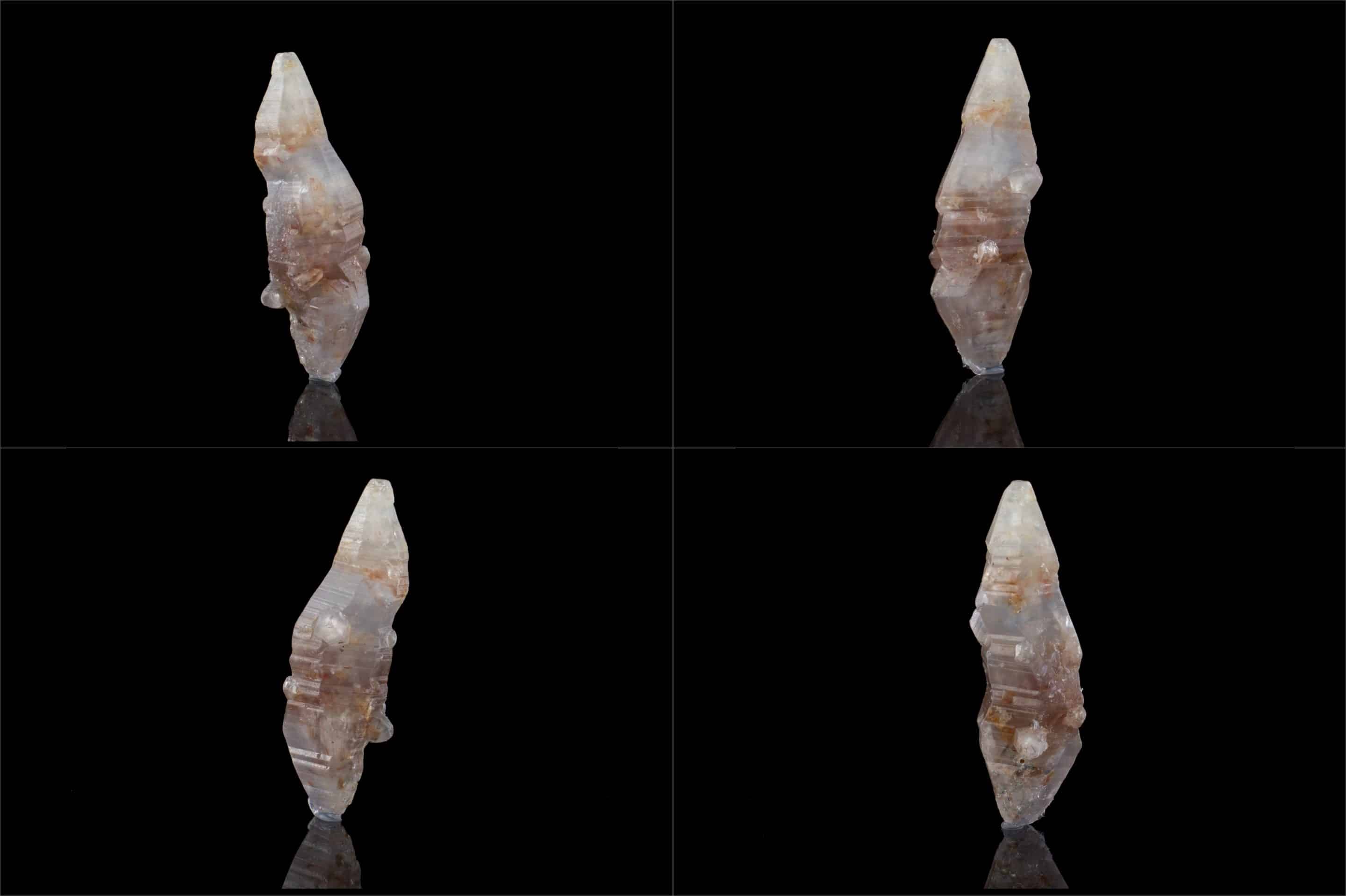
Corundum
5 cm x 2.5 cm x 5.5 cm
Al2O3
Origin : Ratnapura, Sri Lanka
Oxides and hydroxides
Frequency: relatively common, very rare in sapphire and ruby varieties.
Hardness: 9
Streak: white
Very hard hexagonal prismatic crystals; the hardest natural crystals after diamond. The ruby variety of corundum is red in colour.
Uses: Used as an abrasive. Gem-quality varieties are sought after as precious stones (rubies, sapphires).
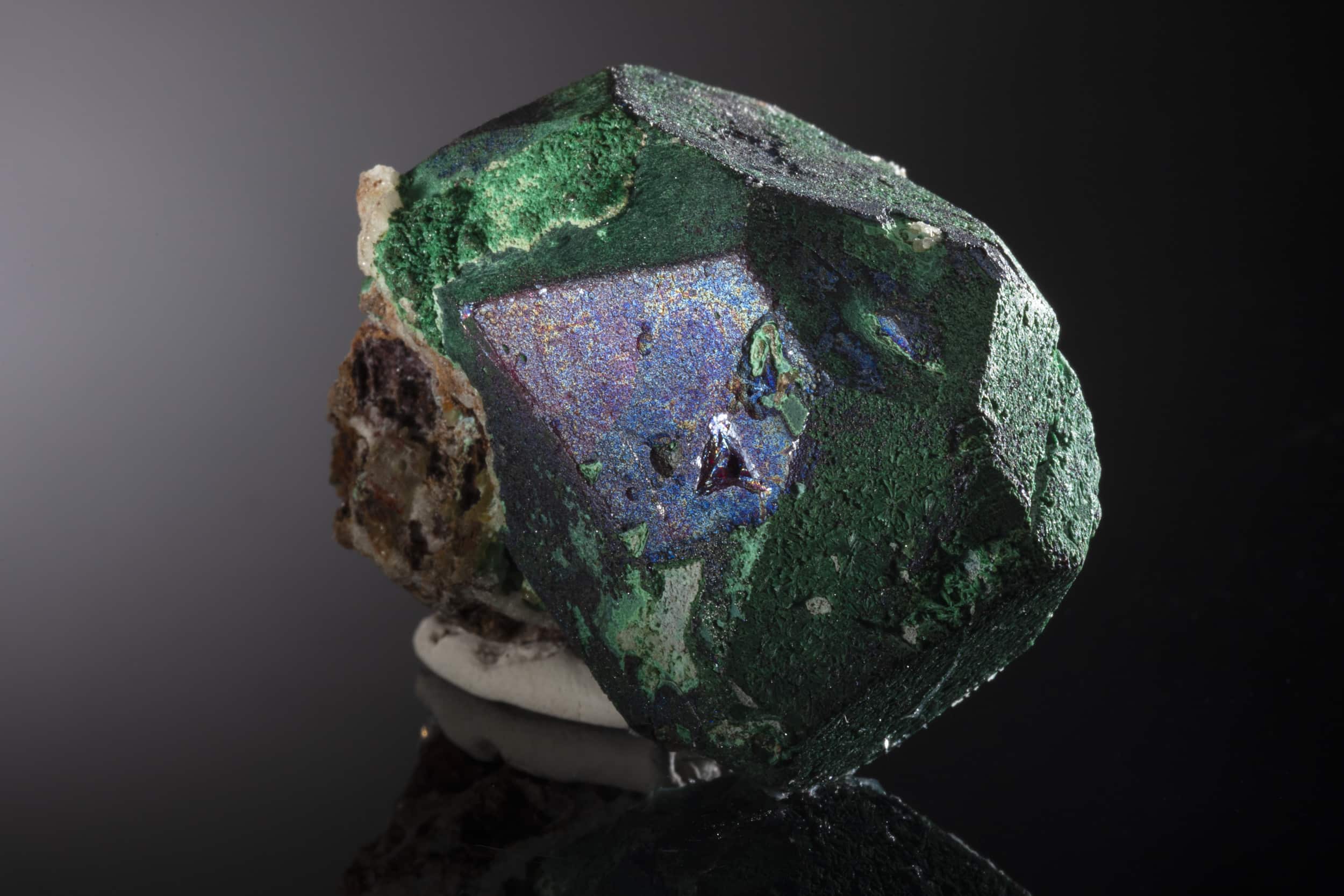
Cuprite
5 cm x 5 cm x 3.5 cm
Cu2O
Origin: Oganja, Namibia
Donated by: J. Pigeon, 1990
Oxides and Hydroxides
Frequency: uncommon
Hardness: 3.5 – 4
Streak: red to reddish brown.
A red to almost black mineral found with copper deposits.
Uses: Can be used as a copper ore. Some gem varieties exist.
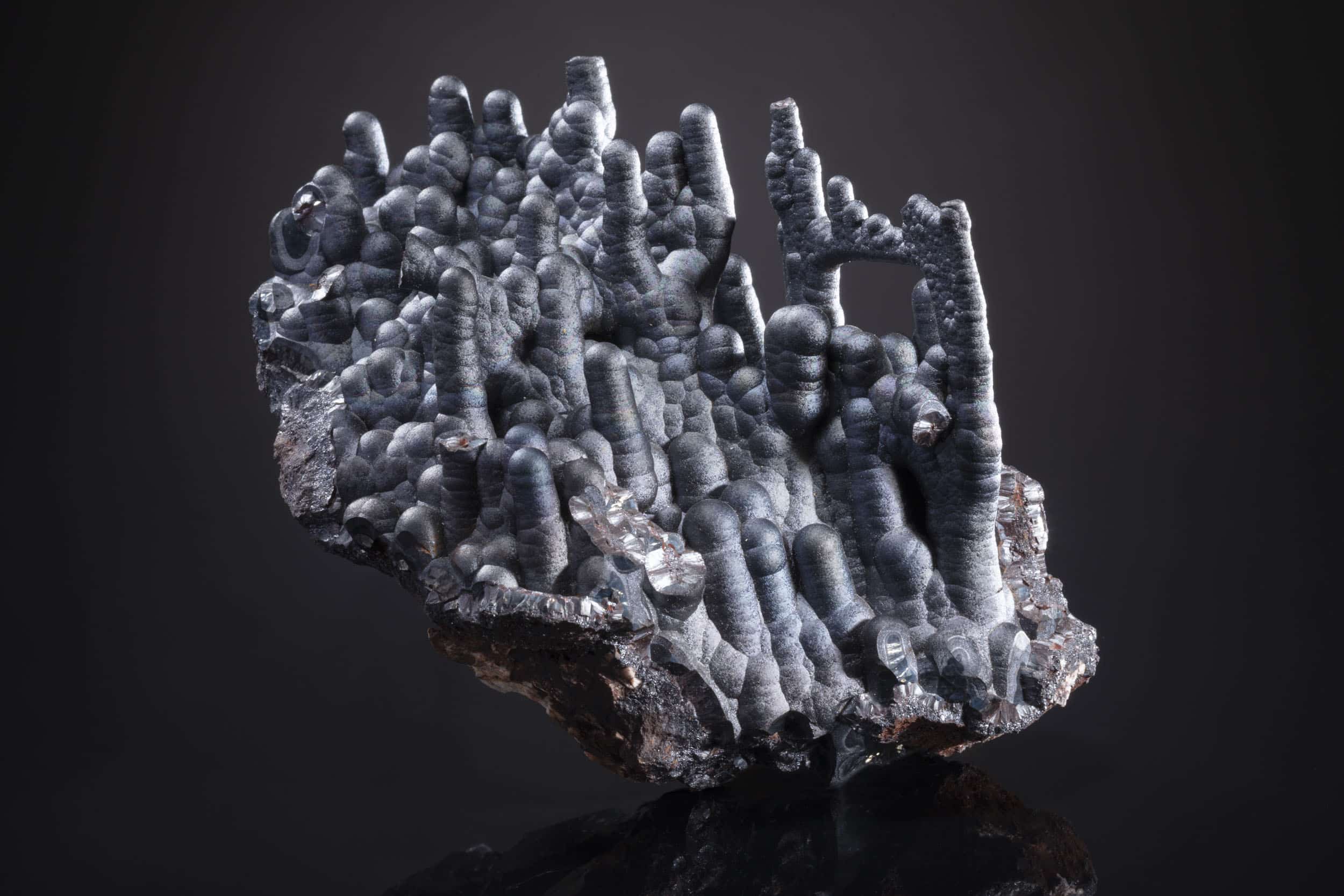
Goethite
8 cm x 7 cm x 5.5 cm
FeO(OH)
Origin: Germany
Oxides and hydroxides
Frequency: common
Hardness: 5-5.5
Streak: yellowish brown
Reddish-brown to black crystals that form when iron-rich minerals are altered.
Uses: Used as an iron ore and as a pigment.
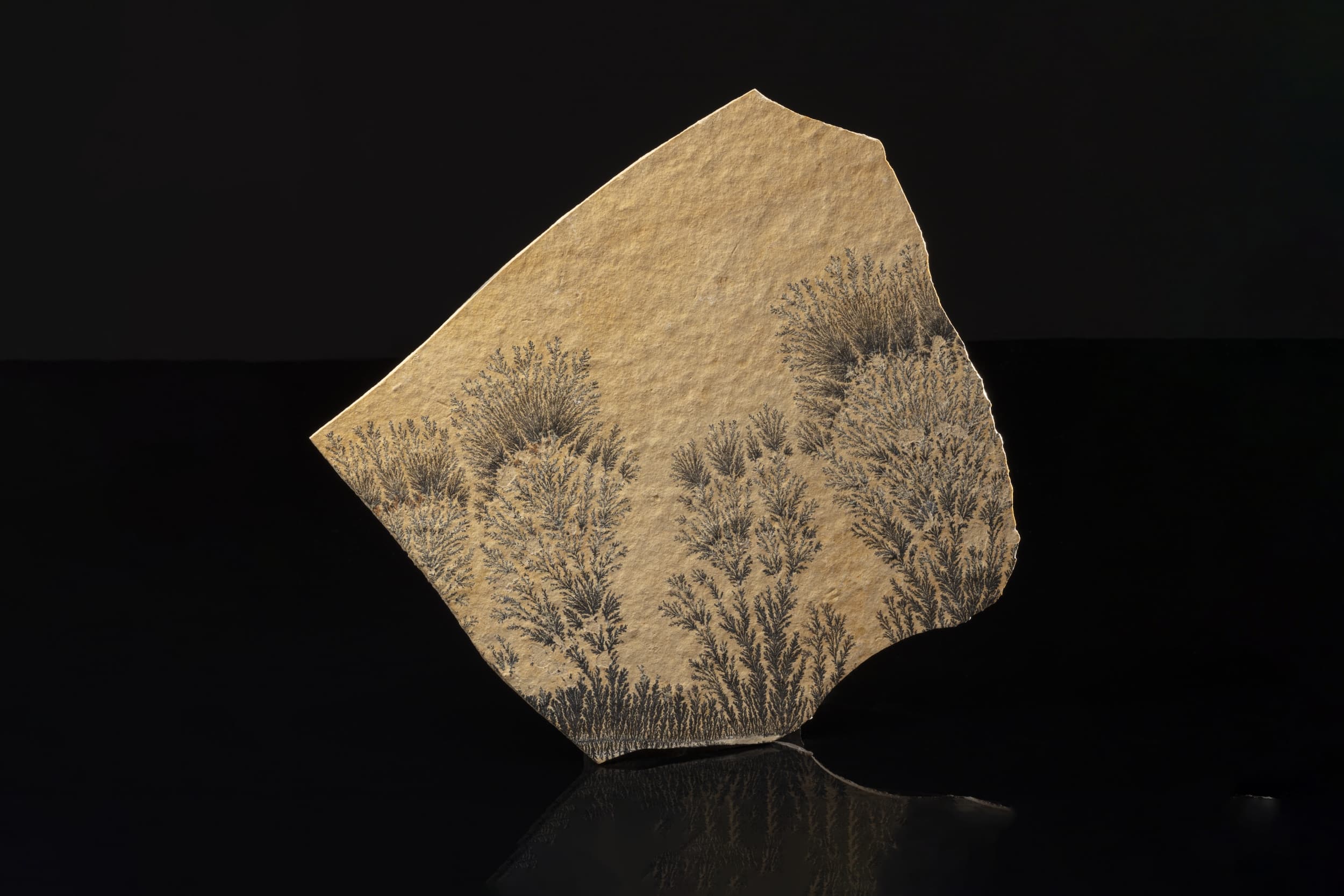
Romanechite
28.5 cm x 25.5 cm x 1 cm
(Ba,H2O)2(Mn4+,Mn3+)5O10
Origin: Germany
Oxides and hydroxides
Frequency: common
Hardness: 5 – 6
Streak: black – gray
Black to dark gray crystals named after the place where it was first described, Romanèche in France. Often forms when manganese-rich rocks are altered.
Uses: Manganese ore used to make steel.
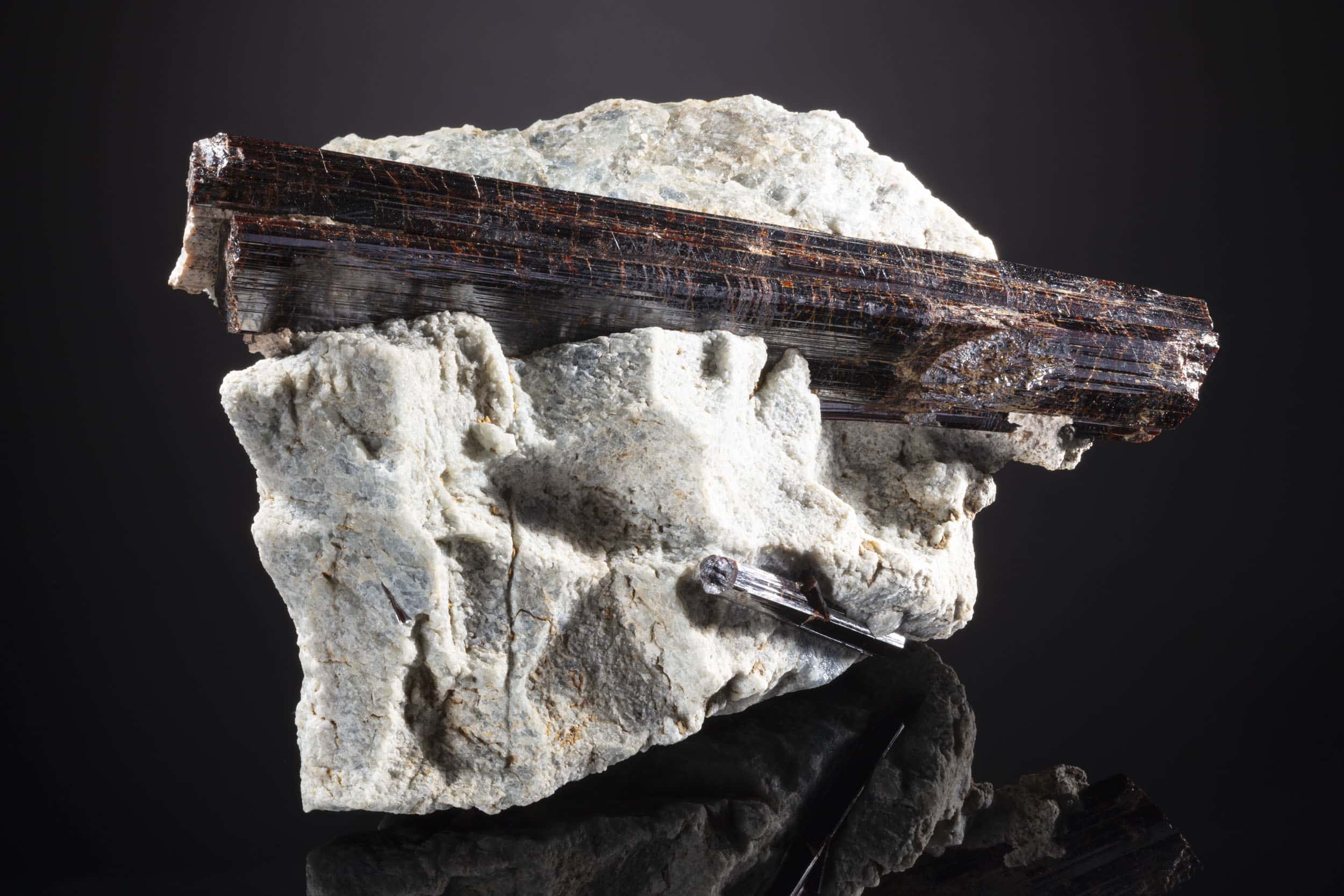
Rutile
(19 cm x 13 cm x 8.5 cm)
TiO2
Origin: Quebec, Canada
Donated by: Janick Spatz, 2020
Oxides and Hydroxides
Frequency: uncommon
Hardness: 6 – 6.5
Streak: gray-black, pale brown to yellow
A hard mineral named after the Latin word “rutilus,” which means red. The name refers to the bright red color of some specimens.
Uses: Titanium ore used as a white pigment or as an opacifier. It is found, among other things, in cosmetics that protect against UV rays.