
Gems
A gem is an extremely pure and transparent mineral. These stones have always fascinated humans; people have wanted them for thousands of years because of their appearance, their color and their rarity.

Did You Know?
The largest diamond ever found weighed 3,106 carats.
You can find the accessible version of this content on this page.
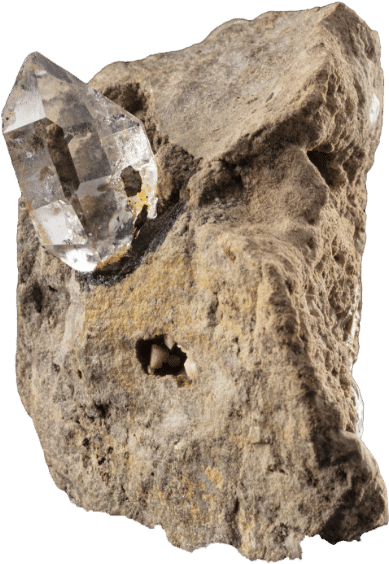
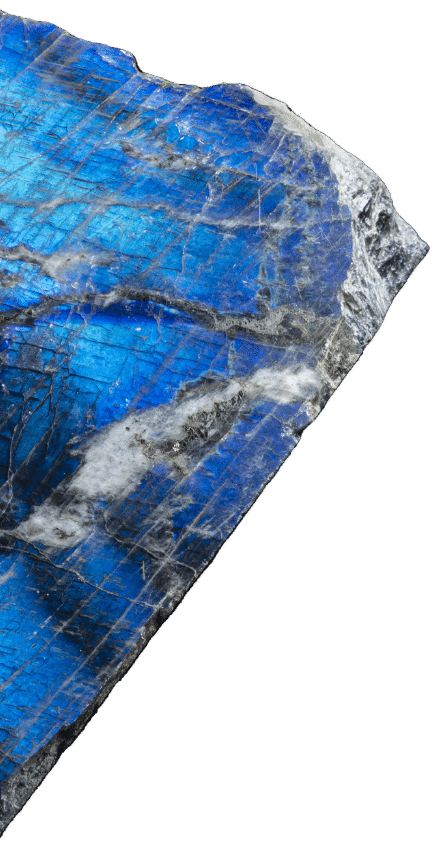
Precious Stones
Among gems, some stones earn the name precious stones because of their rarity and their hardness. They are the most sought after. There are 4 so-called precious stones:
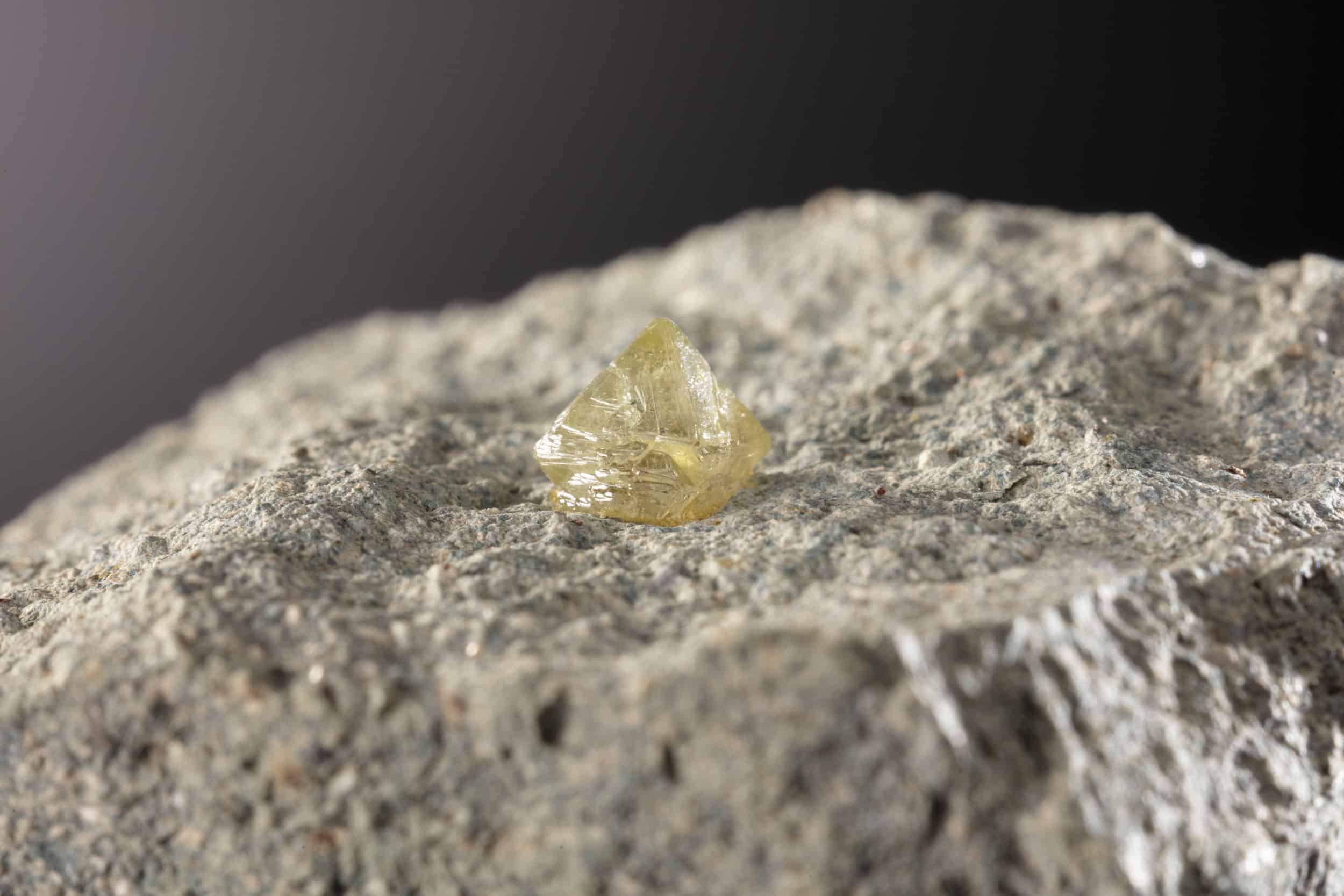
Diamond
0.4 cm x 0.4 cm x 0.4 cm (crystal)
C
Origin: Yakutia, Russia.
Native elements
Frequency: very rare
Hardness: 10
Streak: None
A very rare and very precious mineral that usually forms octahedrons in its raw form. The color of diamond can range from brown to white or gray, and even pink and blue.
Uses: Precious stone that is highly sought after in jewelry, but also useful in some industrial applications.
Emerald
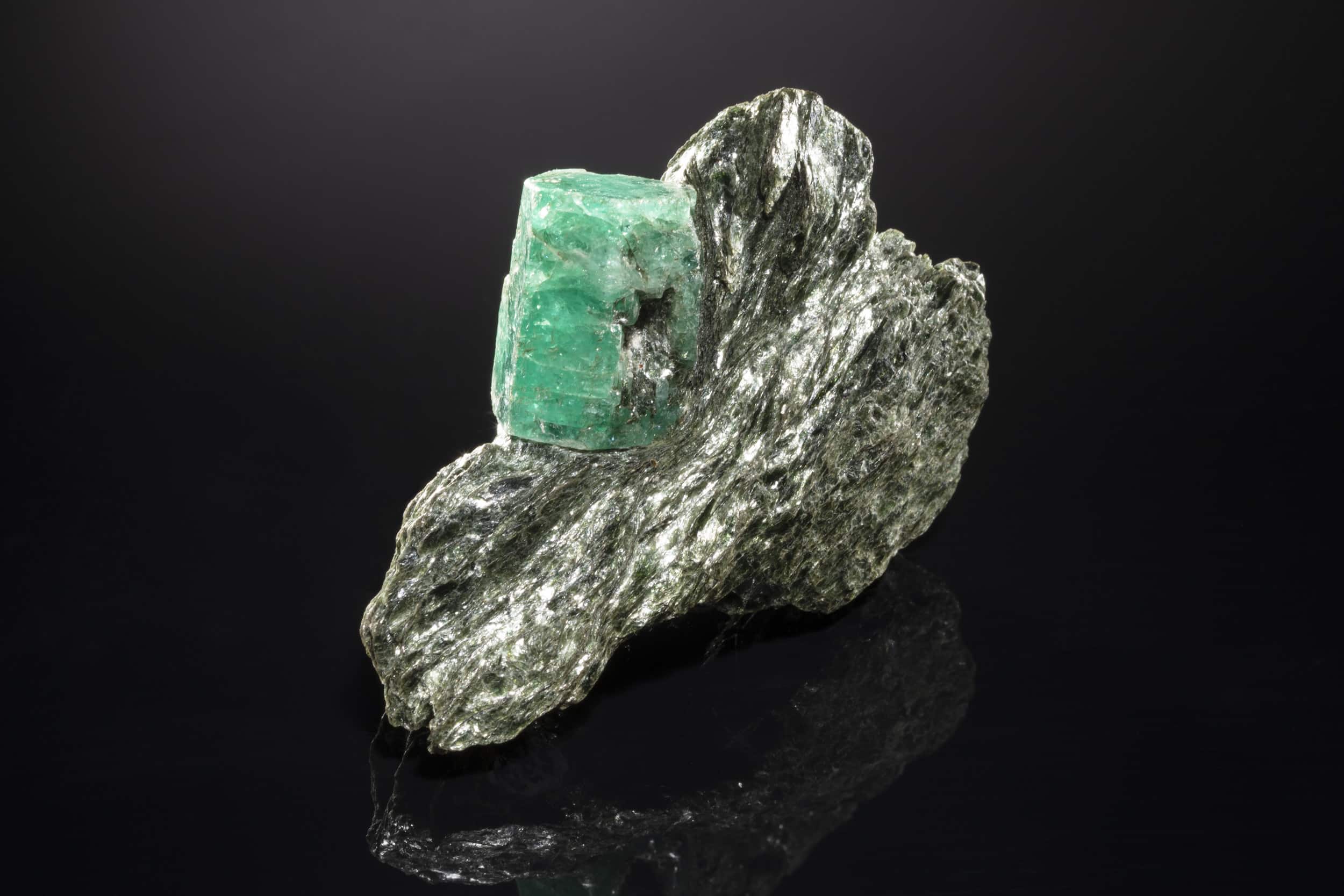
7 cm x 4.5 cm x 2.5 cm
Be3Al2Si6O18
Origin : Val Vigezzo, Italie
Silicates
Occurrence: relatively common, rare in the emerald variety
Hardness: 7.5 - 8
Streak: white
Very hard green hexagonal crystals with a conchoidal fracture. The value of an emerald is based on its color, its transparency, the amount of inclusions and the size of the crystal.
Uses: A highly sought-after gemstone. Several other varieties of beryl are also sought-after gemstones: aquamarine (blue), morganite (pink), heliodor (yellow), goshenite (translucent) and bixbite (red).
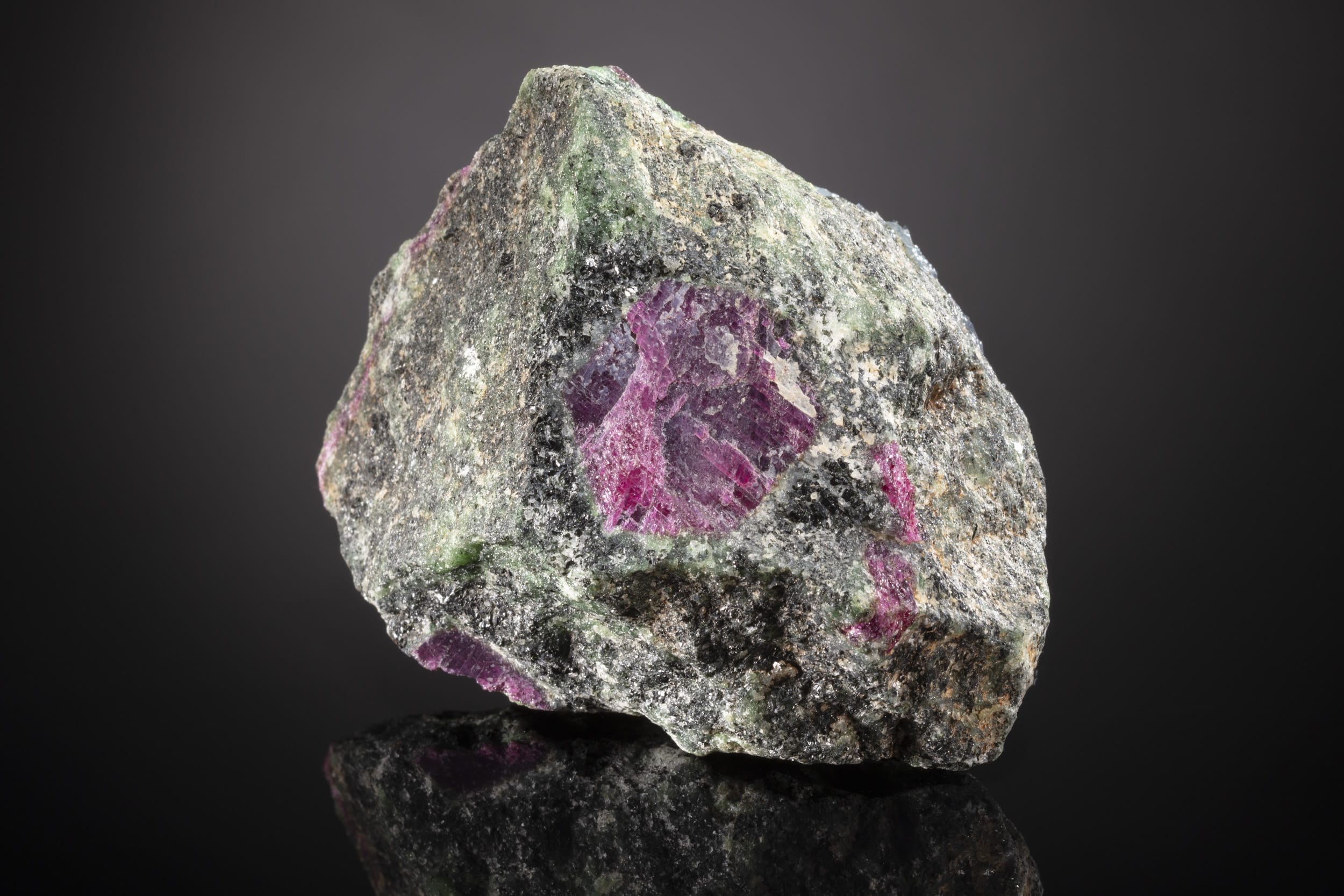
Ruby
7 cm x 6.5 cm x 6.5 cm
Al2O3
Origin : Myanmar
Oxides et hydroxides
Frequency: relatively common, with the exception of sapphires and rubies (very rare)
Hardness: 9
Streak: white
Very hard hexagonal prismatic crystals; the hardest natural crystals after diamond. The ruby variety of corundum is red in colour.
Use: Used as an abrasive. The gemstone varieties (rubies and sapphires) are very sought after as precious stones
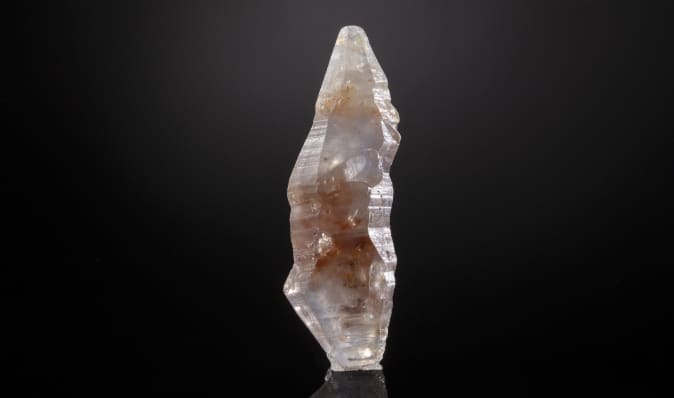
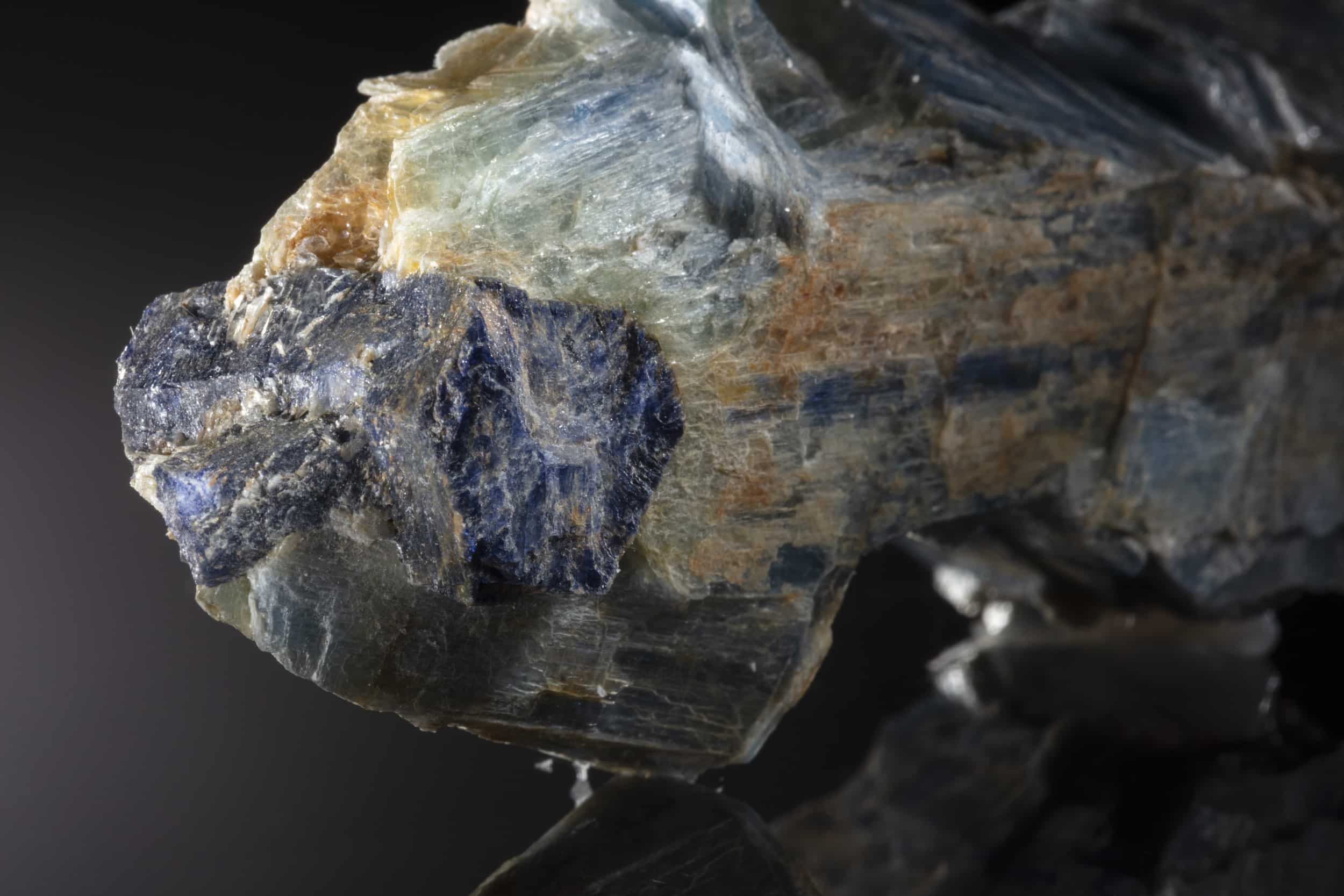
Sapphire
6 cm x 2.5 cm x 2.5 cm
Al2O3
Origin : Rwanda
Donated by: Bernard Baudin, 1995
Oxides et hydroxides
Frequency: relatively common, with the exception of sapphires and rubies (very rare)
Hardness: 9
Streak: white
Very hard hexagonal prismatic crystals, the hardest natural crystals after diamond. The sapphire variety of corundum is blue.
Use: The gemstone varieties (rubies and sapphires) are very sought after as precious stones

Did You Know?
The same mineral can give two different precious stones.
You can find the accessible version of this content on this page.
Semi-Precious Stones
There are more semi-precious stones than precious stones. They are still gemstones, but they are less rare. Among them you will find: kunzite, tourmaline, quartz (citrine variety, amethyst variety), peridot, garnet and topaz.
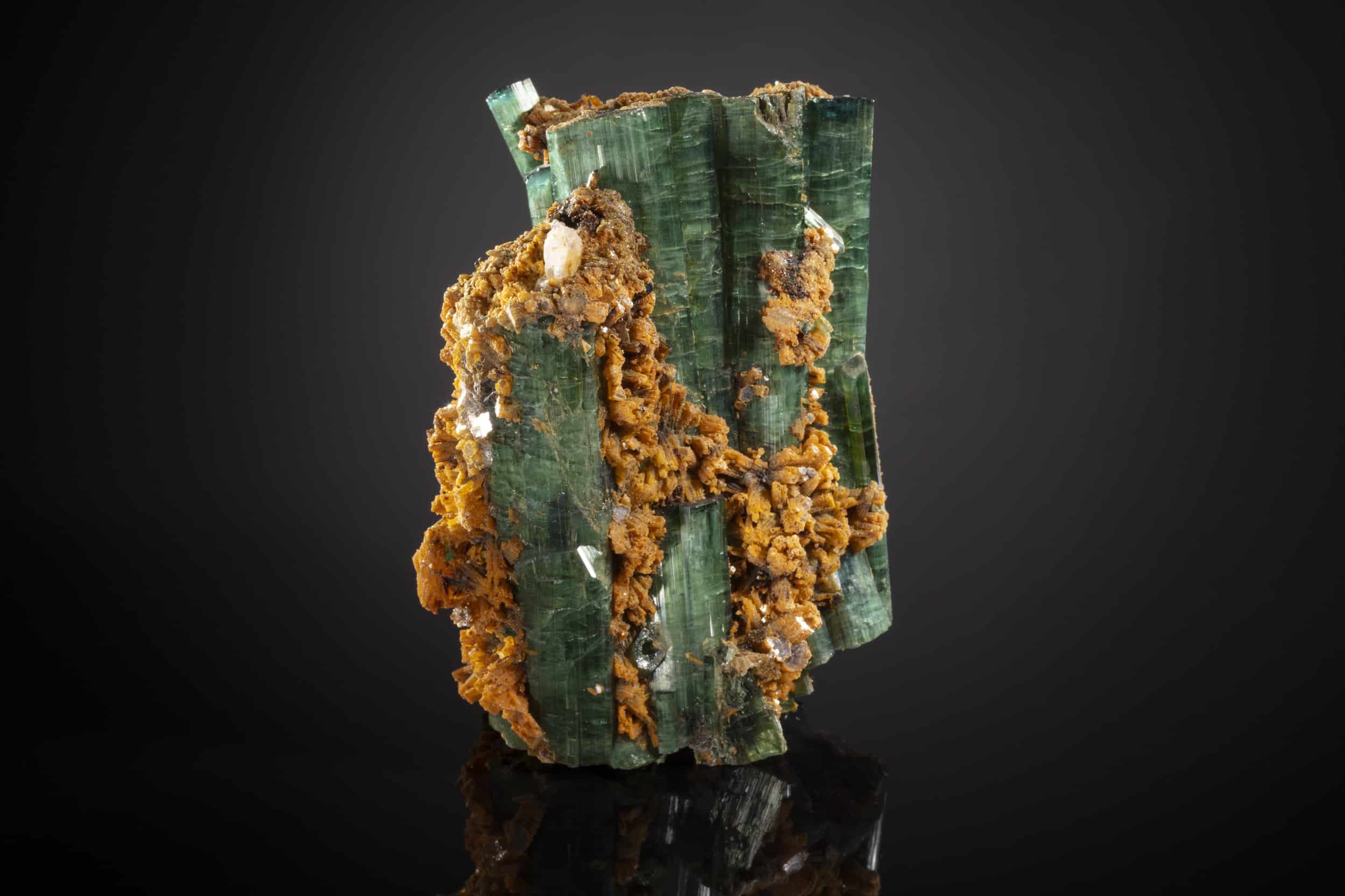
Green Tourmaline
9.5 cm x 5 cm x 5 cm
Na(Li1.5Al1.5)Al6(Si6O18)(BO3)3(OH)3(OH)
Origin: California, USA
Silicates
Occurrence: fairly common, the elbaite variety is rare
Hardness: 7.5
Streak: white
Long rod-shaped crystals in many different colors (red, pink, green, blue, orange or colorless) with a triangular cross-section and striations.
Uses: Jewelry and collecting
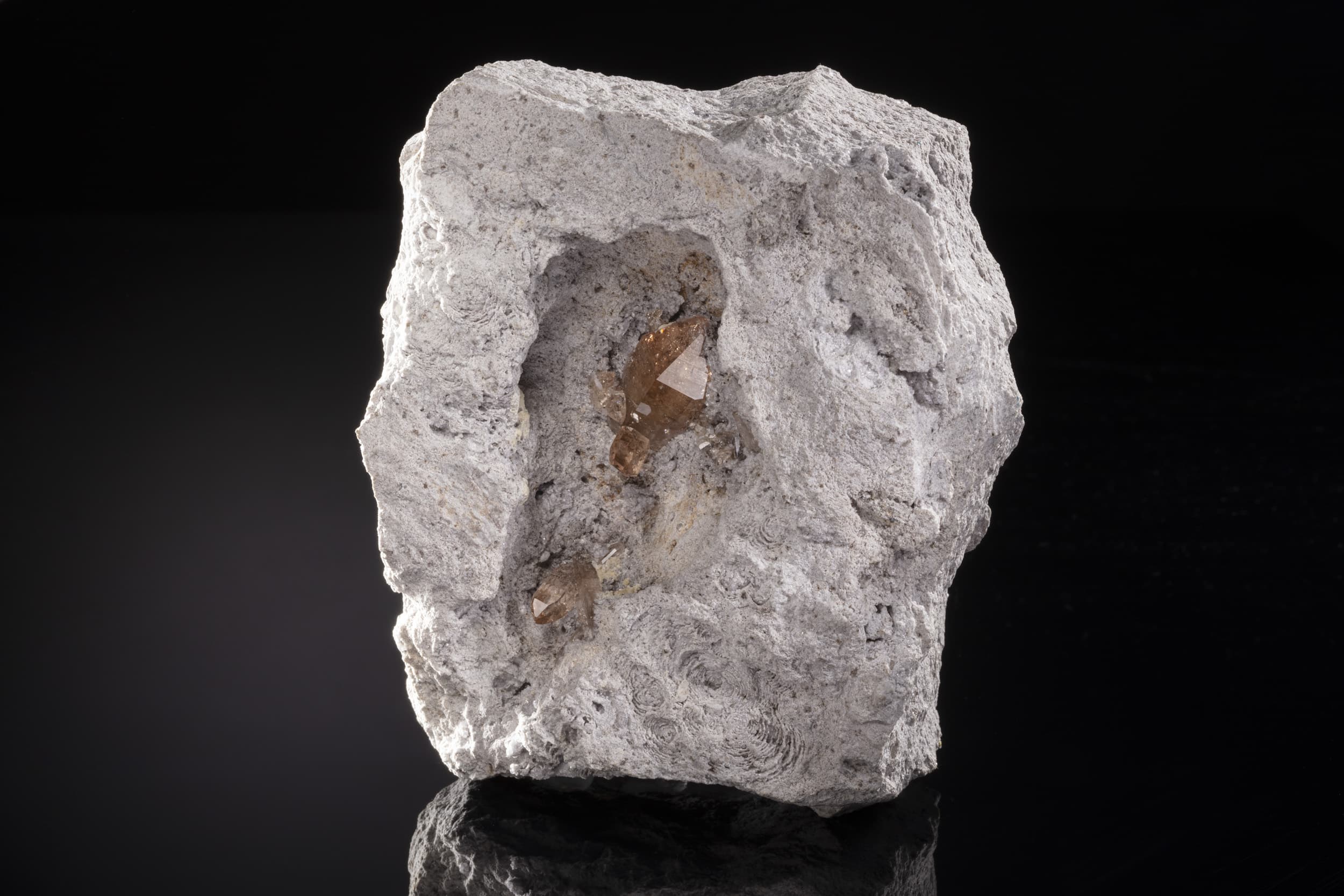
Topaz
15.5 cm x 10 cm x 6.5 cm
Al2(SiO4)(F,OH)2
Origin: Utah, USA
Silicates
Frequency: rare
Hardness: 8
Streak: white
Topaz can be transparent or come in shades of white, blue, green, yellow, brown or red. It is highly sought after in its gem form.
Uses: Jewelry
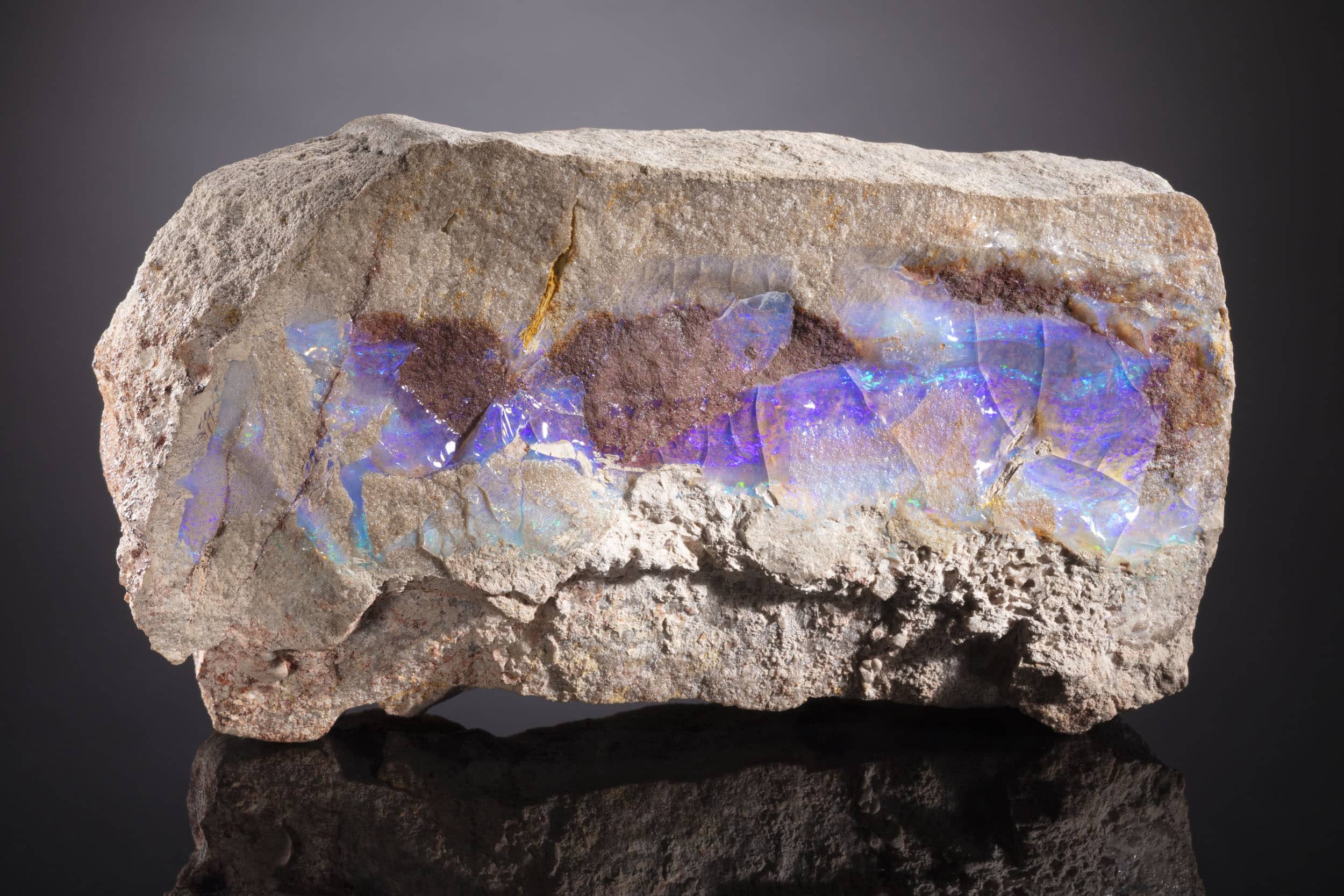
Opal
16.5 cm x 9 cm x 6.5 cm
SiO2 · nH2O
Origin: Australia
Mineraloids
Frequency: rare
Hardness: 5.5 - 6.5
Streak: white
Opal is not a mineral, because it is a hydrated form of amorphous silica. Precious opal is a highly sought-after stone because of the complex play of light it shows. Common opal does not have these optical effects.
Uses: Jewelry
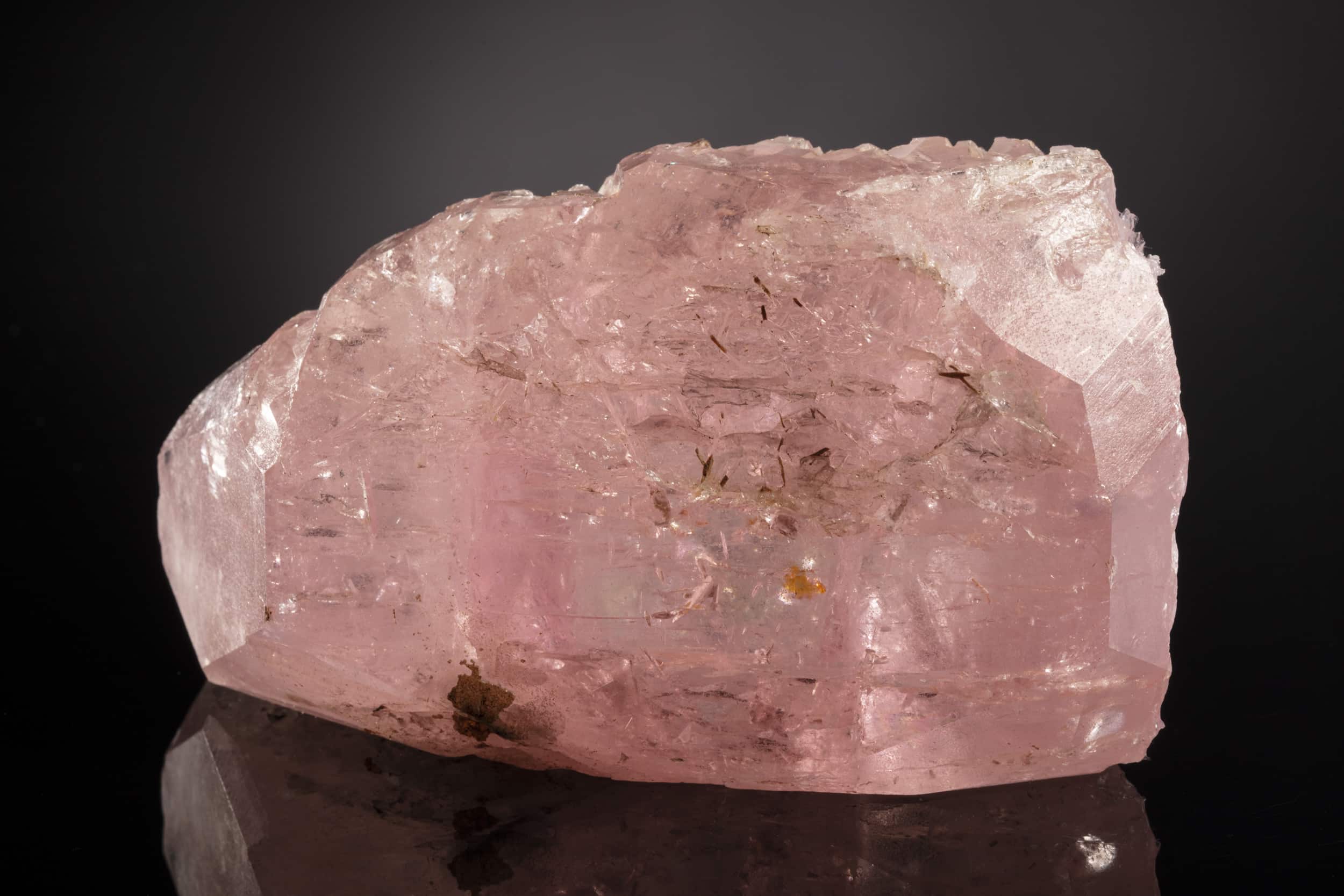
Morganite, a variety of beryl
5 cm x 5 cm x 4.5 cm
Be3Al2Si6O18,
Origin: Minas Gerais, Brazil
Silicates
Abundance: Beryl is relatively common, but the morganite variety is rare
Hardness: 7.5 - 8
Streak: white
Very hard, long, pink hexagonal crystals with conchoidal fracture.
Uses: A highly sought-after gemstone. Several varieties of beryl are also sought-after gemstones: emerald (chromium: Cr), aquamarine (iron 3+: 3+Fe), morganite (manganese: Mn), and heliodor (iron 2+: 2+Fe)
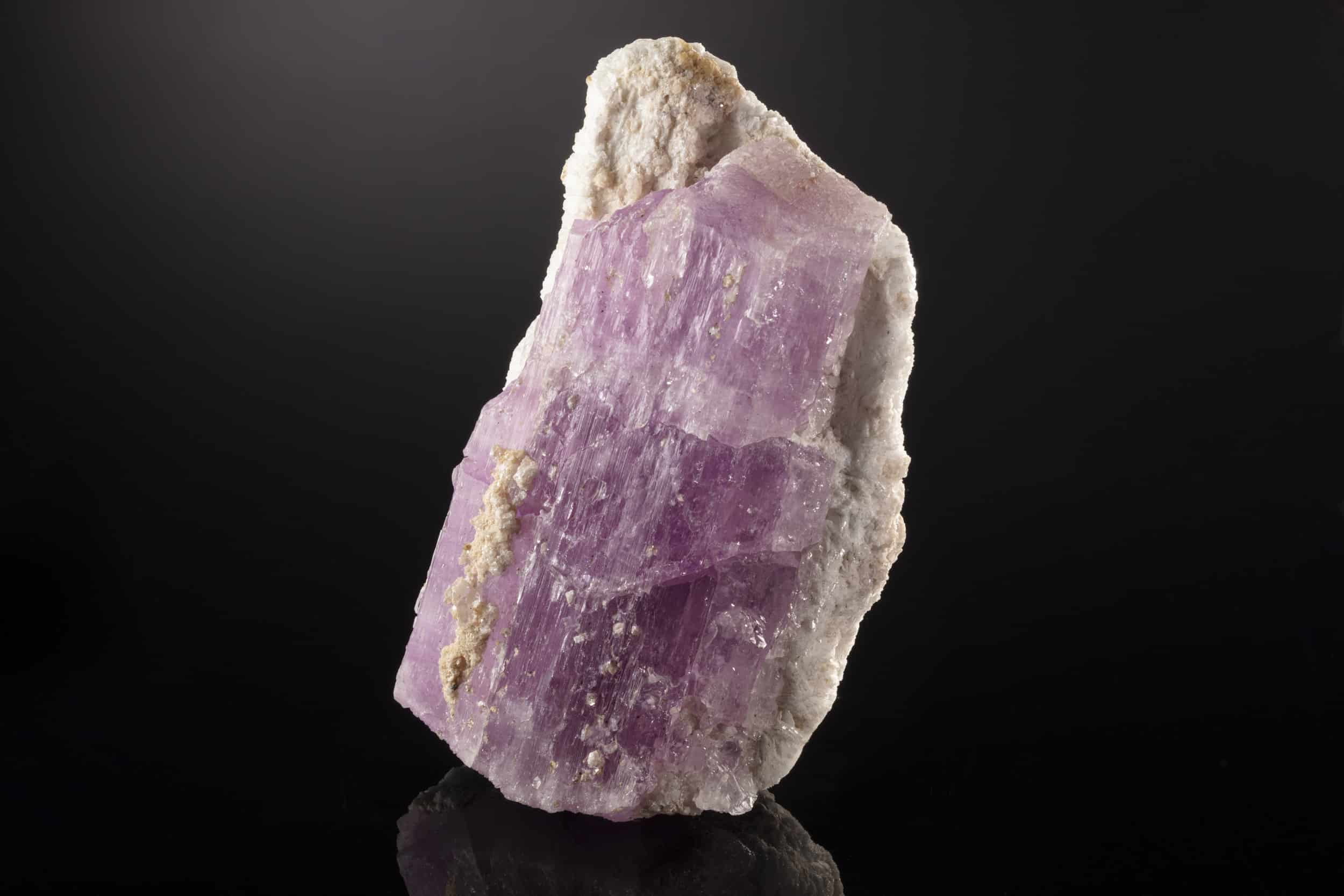
Spodumene, kunzite variety
21.5 cm x 13.5 cm x 6.5 cm
LiAlSi2O6
Origin: Pakistan
Silicates
Frequency: uncommon, rare for the kunzite variety
Hardness: 6.5- 7
Streak: white
Kunzite is the translucent pink variety of spodumene. Spodumene crystals are fairly long prisms with two cleavage planes at about 90 degrees.
Uses: Spodumene is an ore of lithium, which is used in batteries, among other things, and its gem varieties are used in jewelry.
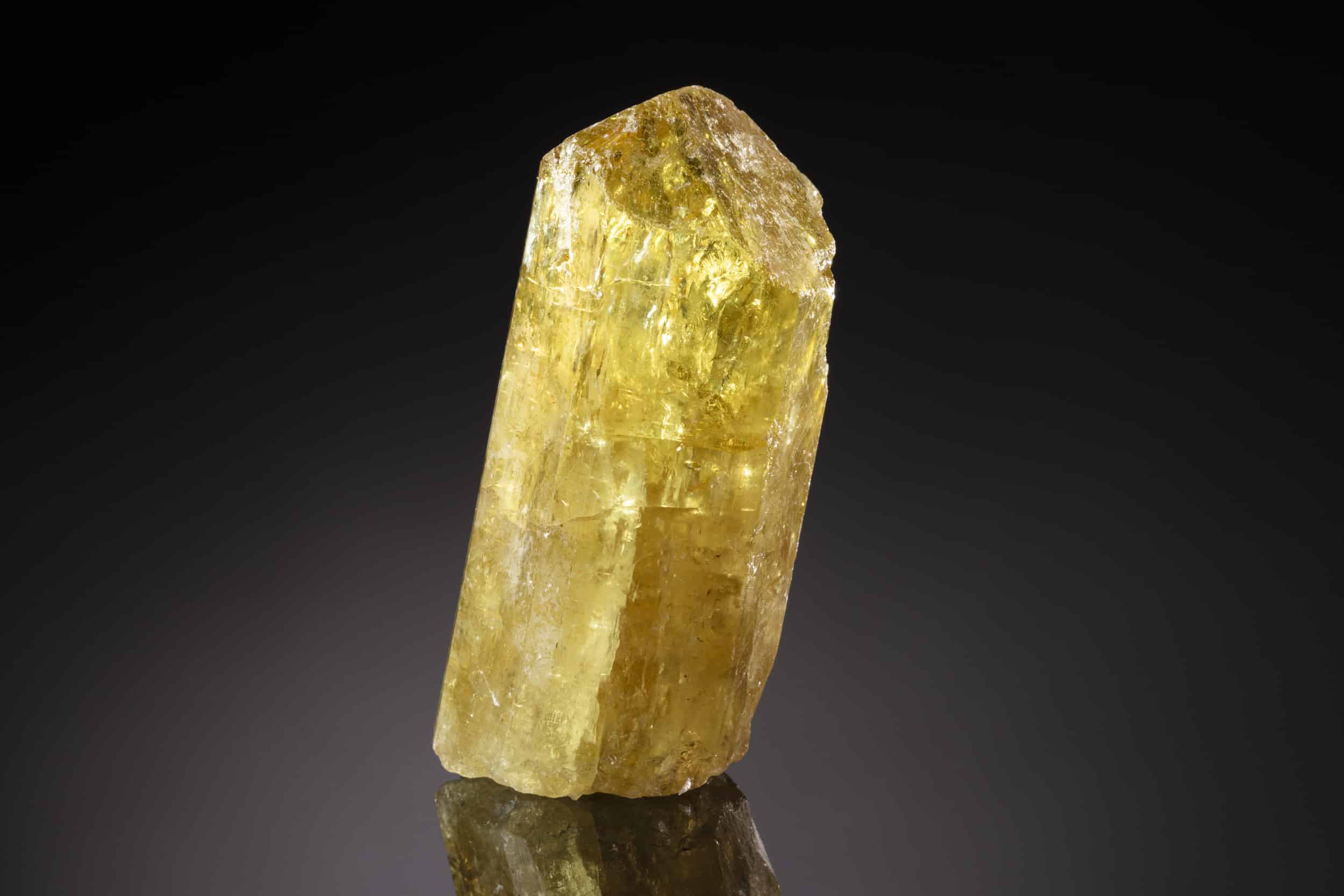
Apatite
7 cm x 3 cm x 3 cm
Ca5(PO4)3(OH, Cl, F)
Orgin: Durango, Mexico
Donated by: Jean-Charles Sisi, 1990
Phosphates
Frequency: common
Hardness: 5
Streak: white
A mineral that forms hexagonal prisms, often green or yellow, but they can also be colorless, blue, green, purple or brown.
Uses: It is used to make fertilizer, and it can also be cut for jewelry.
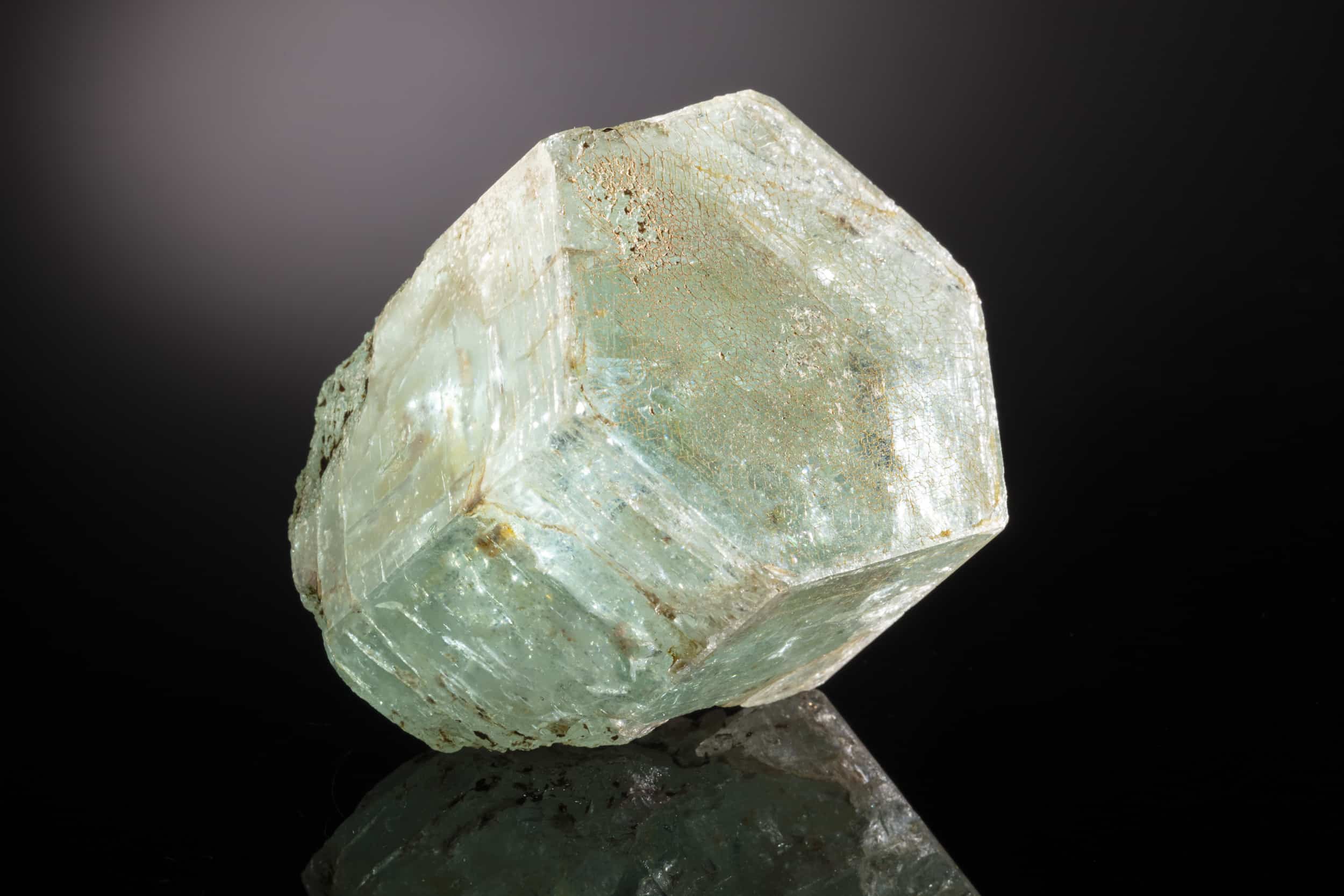
Aquamarine, a variety of beryl
5 cm x 5 cm x 4.5 cm
Be3Al2Si6O18,
Origin: Minas Gerais, Brazil
Silicates
Frequency: uncommon; the aquamarine variety being rare
Hardness: 7.5 - 8
Streak: white
Very hard, long, blue hexagonal crystals with conchoidal fracture.
Uses: Highly sought-after gemstone. Several varieties of beryl are also sought-after gems: emerald (chromium - Cr), morganite (manganese - Mn) and heliodor (iron 2+ - 2+Fe)
Ornamental Stones
The last category is ornamental stones. They are not necessarily transparent or very rare, but they still have interesting esthetic qualities. You often find them polished or cut as cabochons.
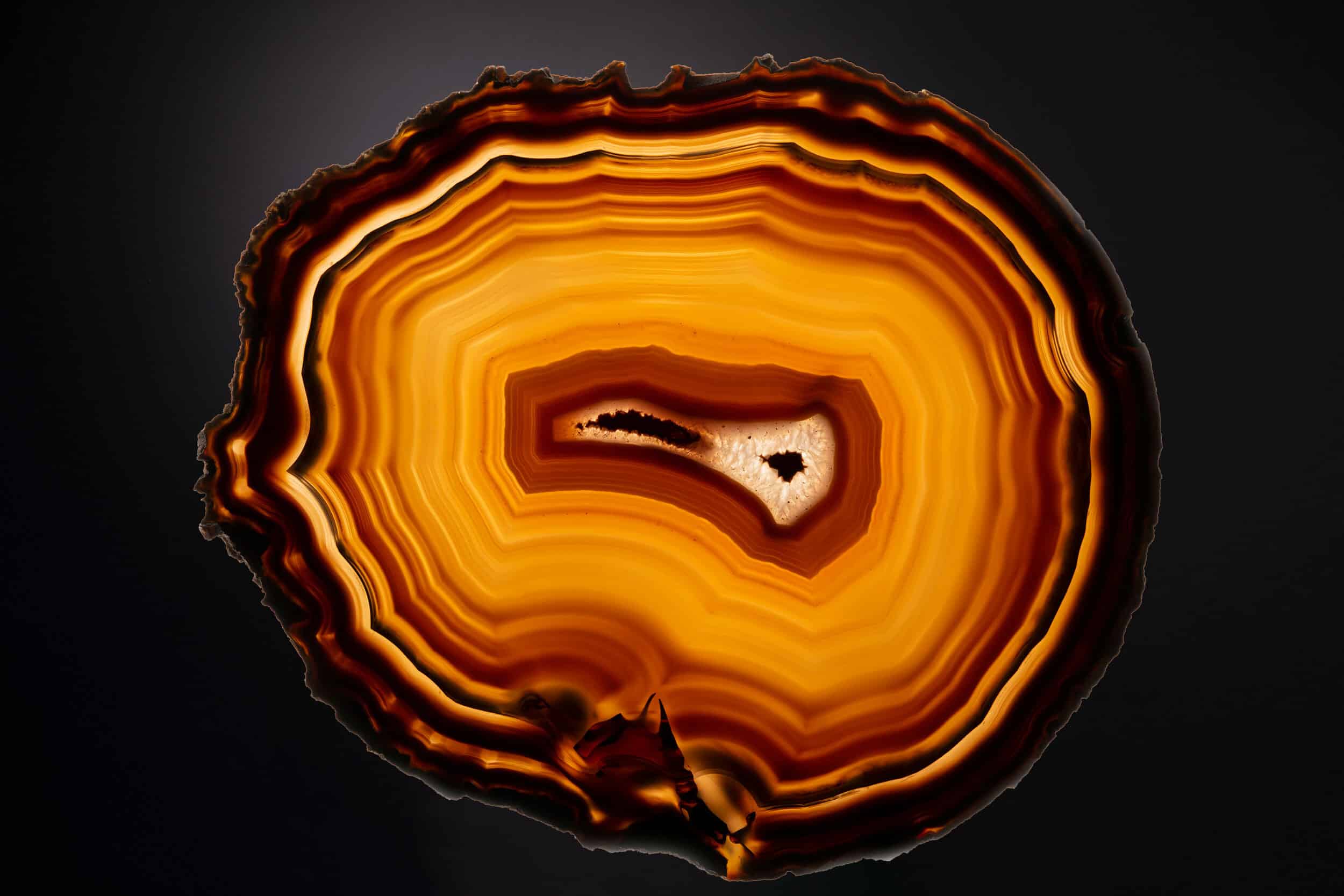
Agate, a variety of chalcedony
29 cm x 25 cm x 0.9 cm
SiO2
Origin: Brazil
Silicates
Frequency: rare
Hardness: 6.5 to 7
Streak: white
Shows a huge variety of colors, even within the same specimen. Formed by successive deposits of silica with different compositions.
Uses: Semi-precious stone
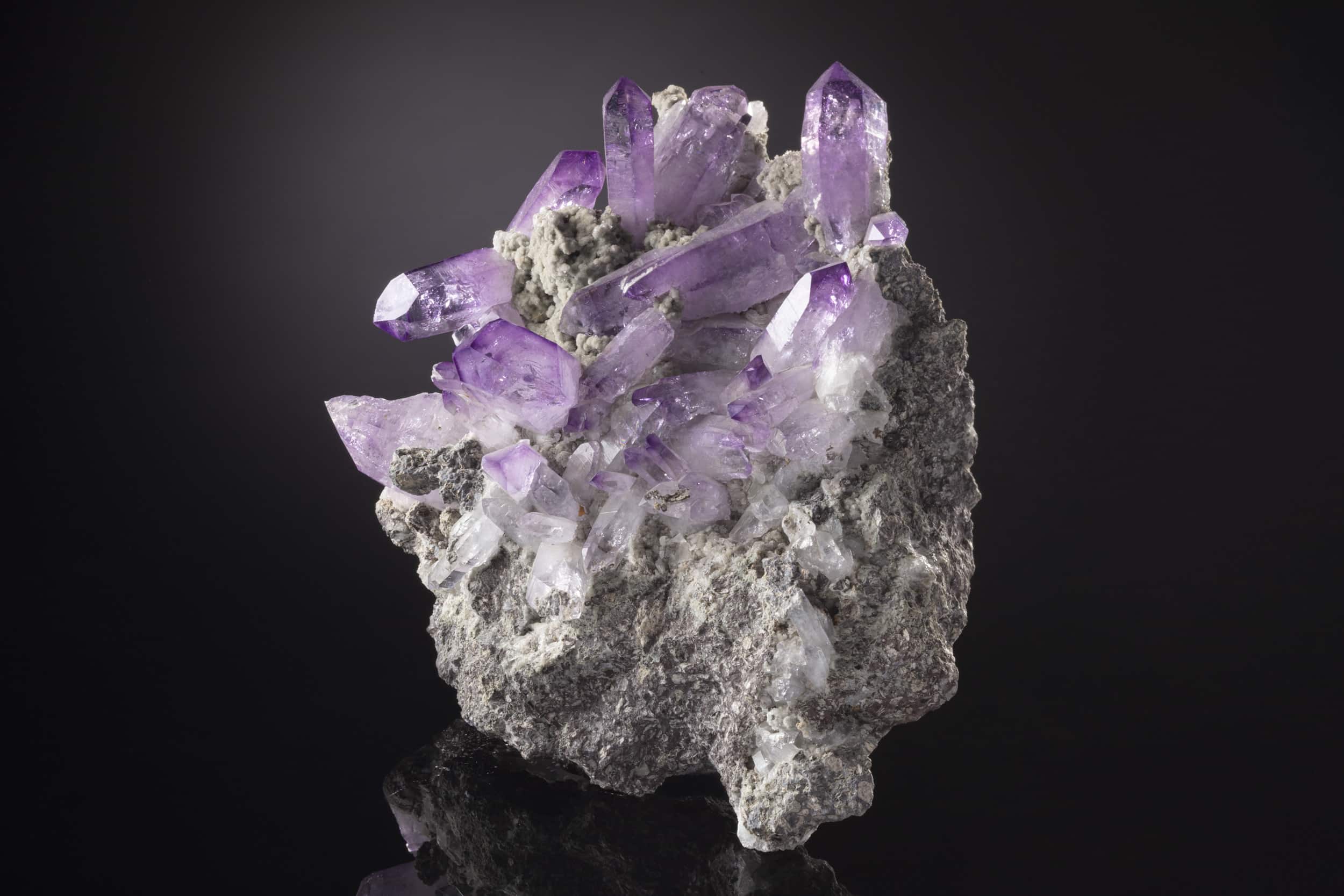
Amethyst, a variety of quartz
11 cm x 9 cm x 6.5 cm
SiO2
Origin: Brazil
Silicates
Frequency: although quartz is very common, this variety is rare
Hardness: 7
Streak: white
The characteristic purple color of this variety of quartz comes from iron inserted into the mineral’s structure. Its name comes from the Greek “a-methystos,” meaning “not drunk”: in ancient Greece, the stone was believed to protect against drunkenness.
Uses: Jewelry
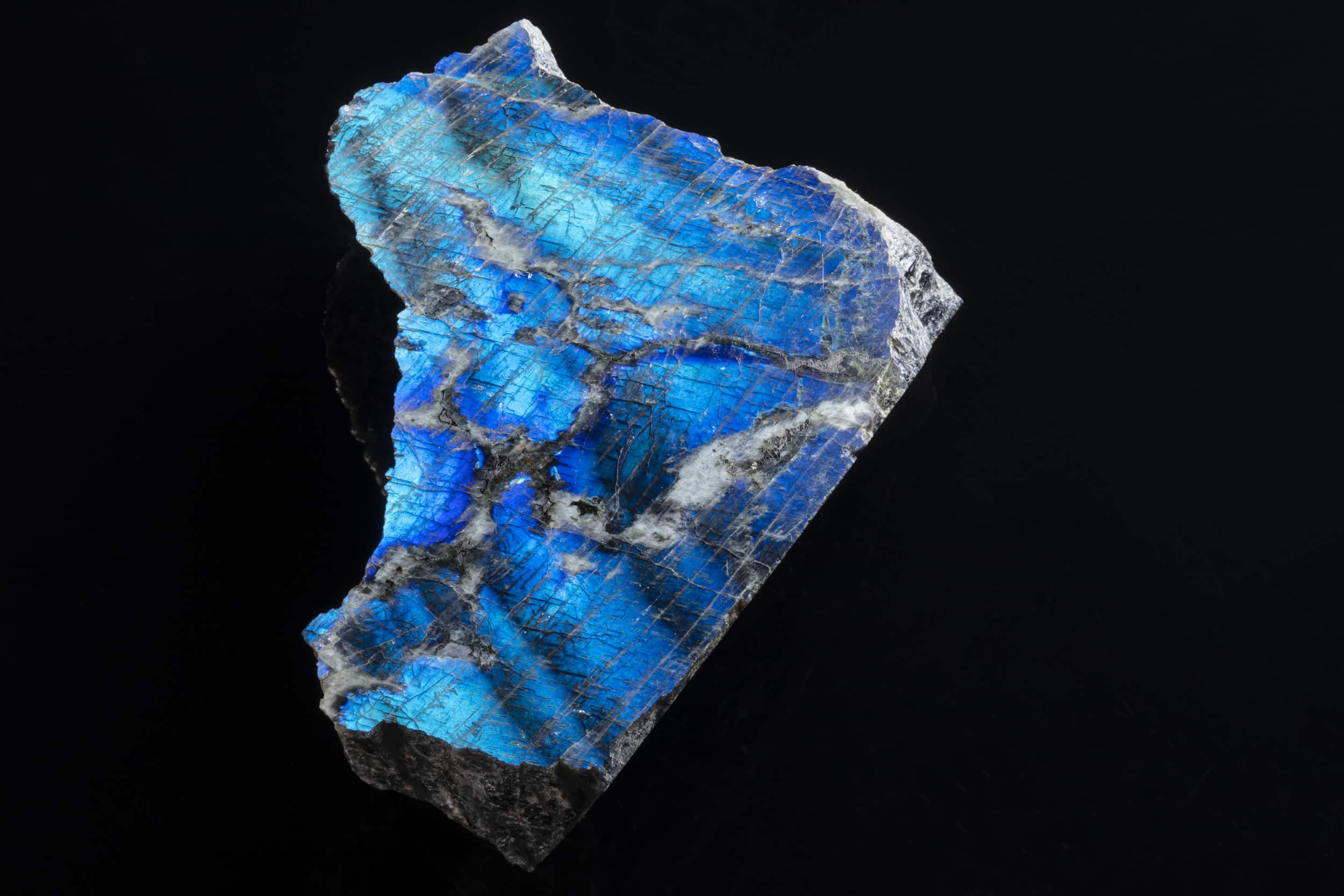
Plagioclase labradorite
15 cm x 12.5 cm x 6 cm
(Na,Ca)(Al,Si)4O8
Labrador, Newfoundland and Labrador, Canada
Silicates
Frequency: fairly common
Hardness: 6
Streak: white
Plagioclase labradorite forms gray, bluish to black crystals. It often shows an optical effect called labradorescence, which gives the mineral blue, green or orange flashes at certain angles of light.