The Earth’s History in 24 Hours – Alternative
As we have seen, the Earth’s history is so long that it is hard to really grasp how much time separates the events that shaped it.
Ages are given in millions of years (Ma) or billions of years (Ga)
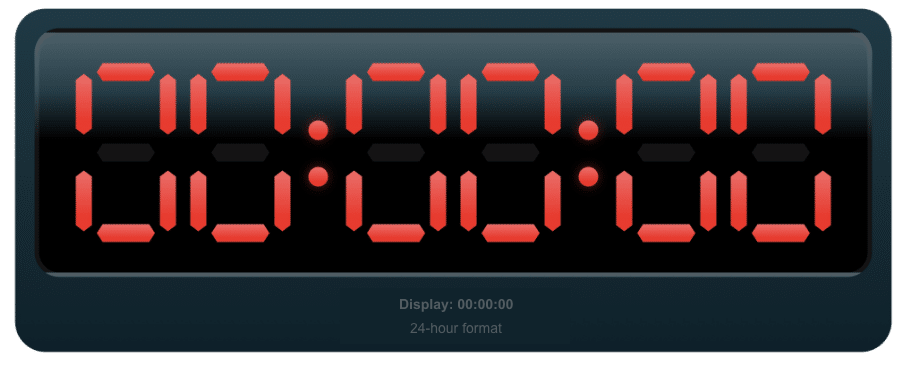
Formation of Earth
(4.55 Ga) (0h 00 min AND 00 SEC)
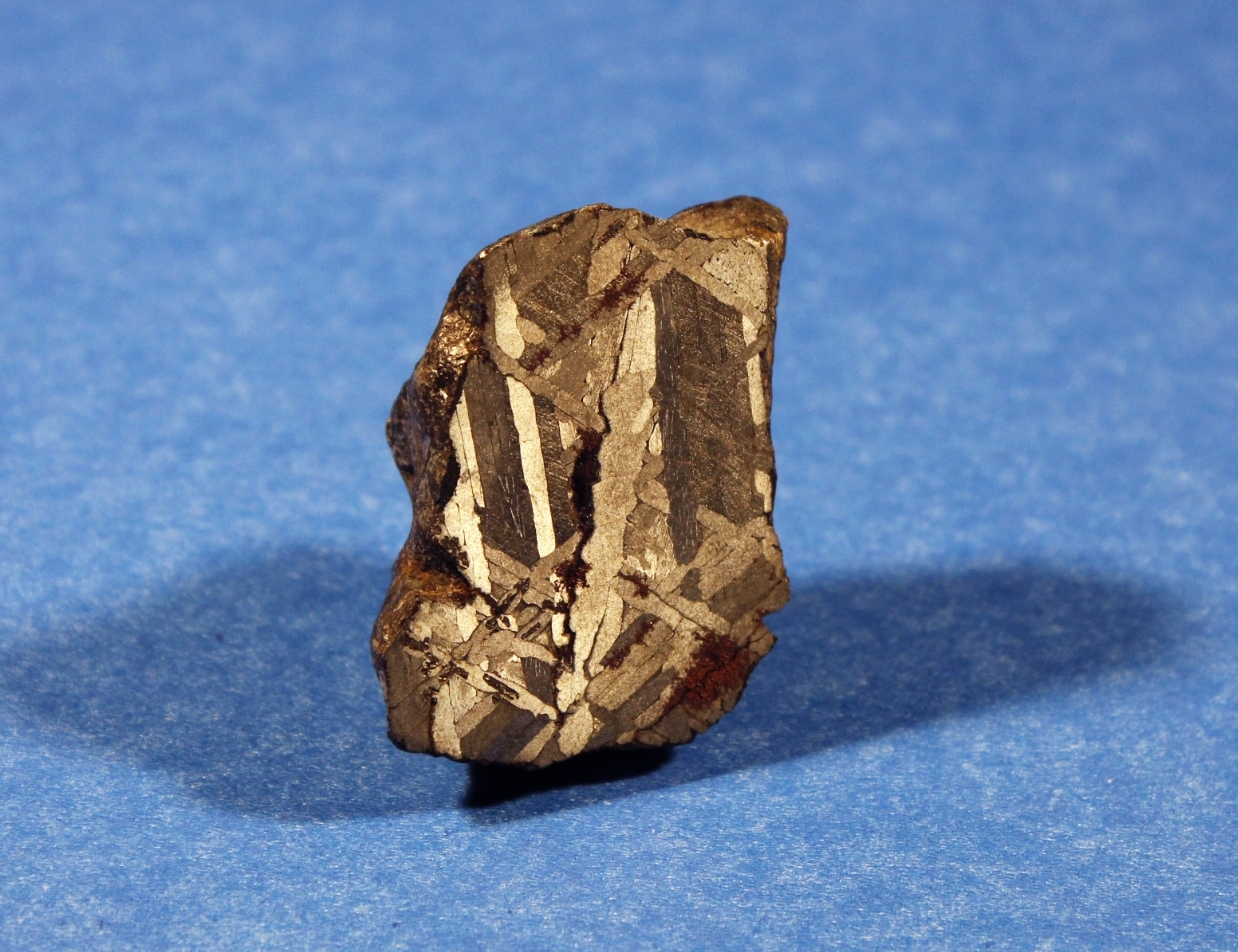
Earth formed at the same time as the rest of the solar system, 4.55 billion years ago. This age was determined by dating meteorites, which represent the original material of the solar system, that is, the material that clumped together to form the Sun and the planets.
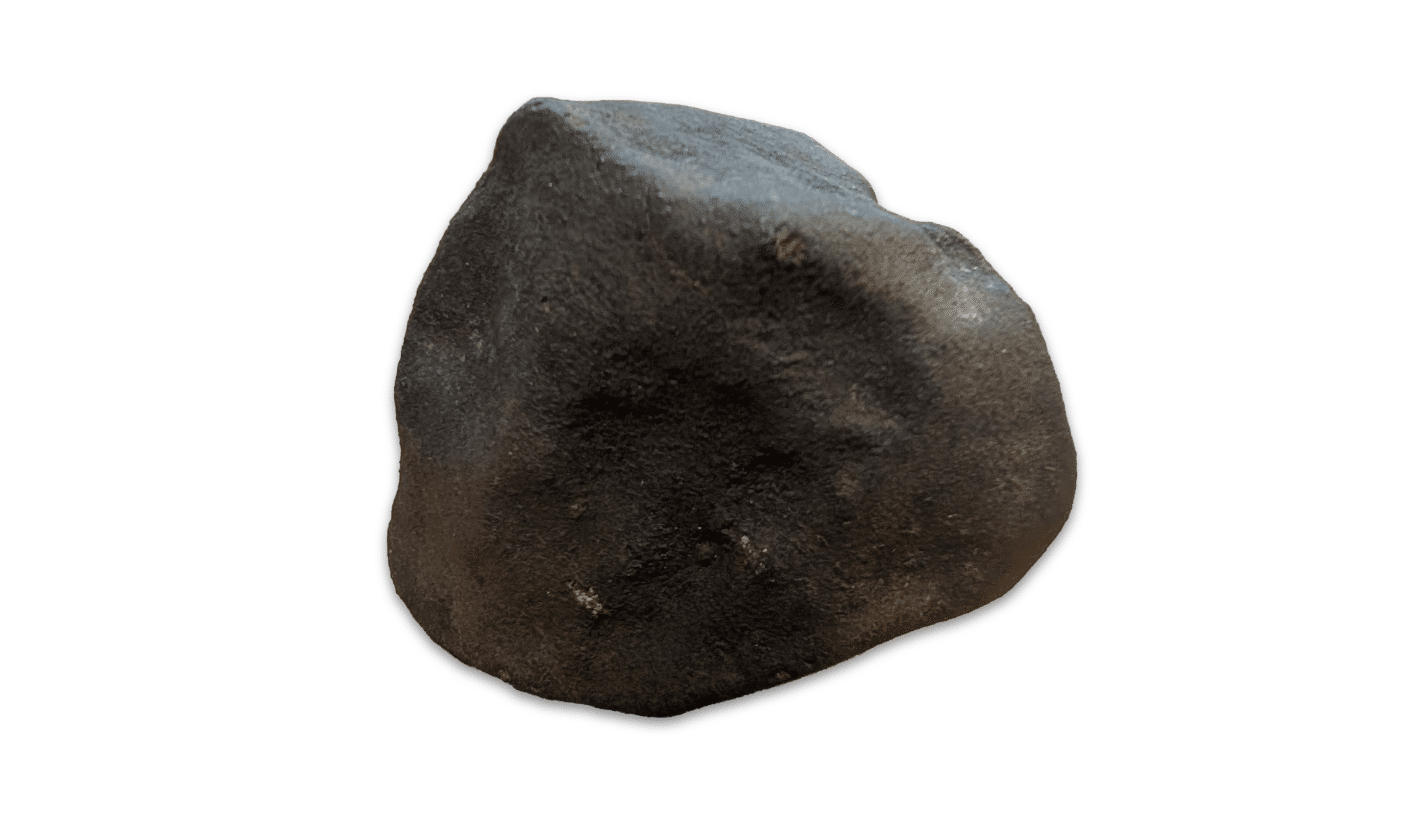
Meteorite that fell on 14 June 1994 in St-Robert, Quebec – 322.8 grams.
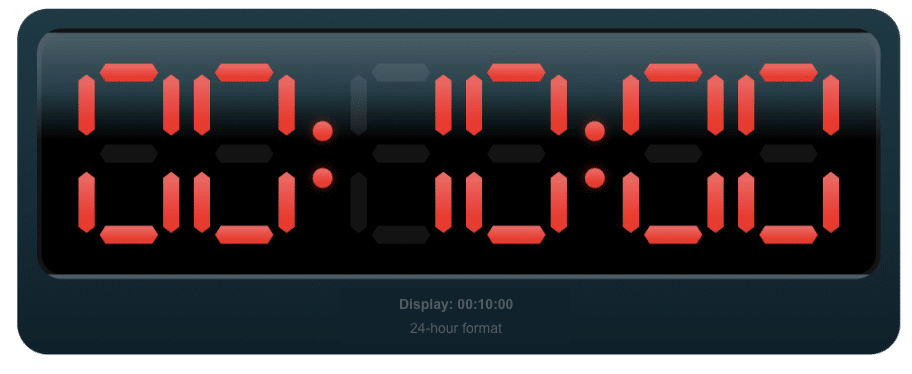
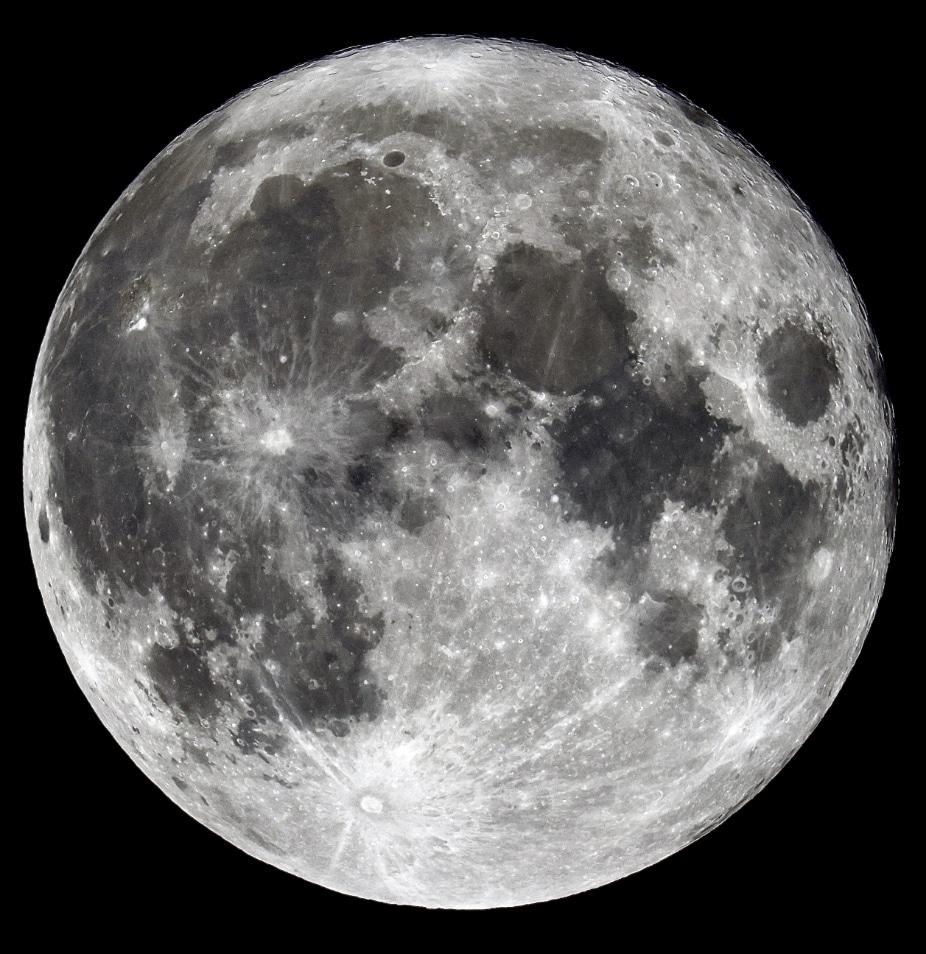
Formation of the Moon (4.52 Ga) (0h 10 min AND 00 SEC)
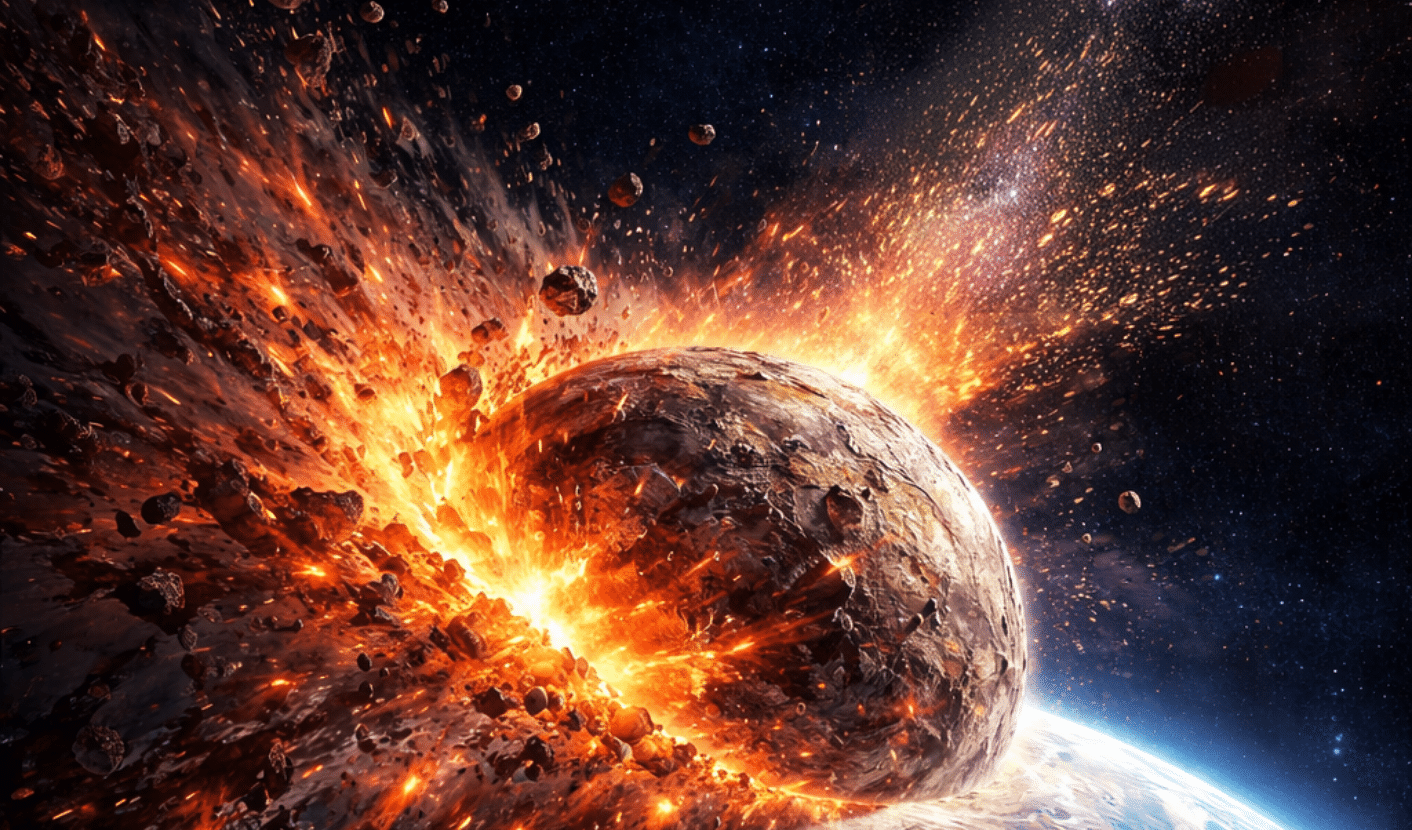
Our only satellite, the Moon, was formed after a small planet collided with Earth early in its existence.
Did You Know?
Oldest dated rock (4.031 Ga) (1h 25 min AND 00 SEC)
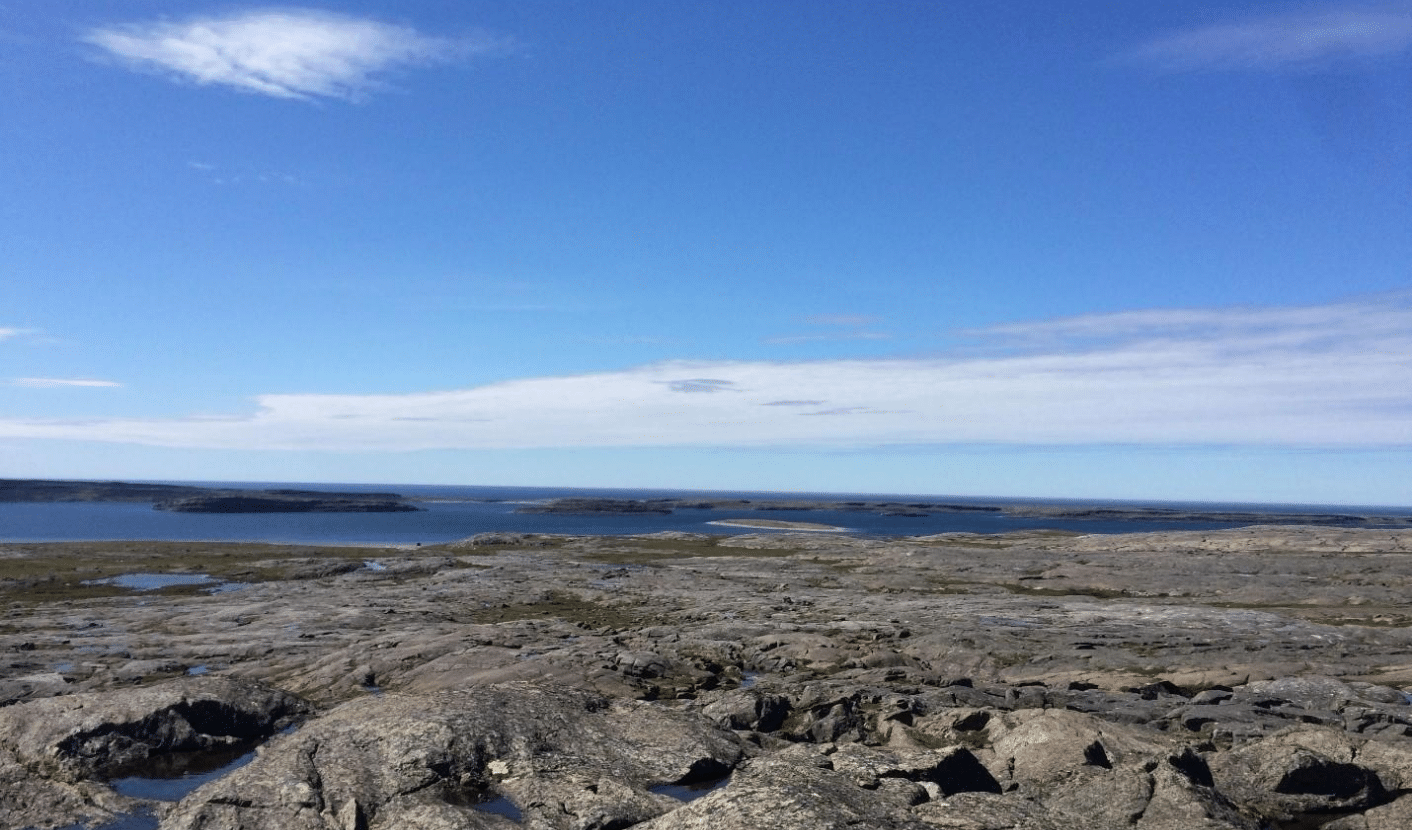
The oldest rocks on the planet were found in the Nuvvuagittuq belt in northern Quebec. These rocks were dated at 4.031 billion years old, which is 400 million years after the planet formed.
References: University of Ottawa
First fossilized life forms
(3.5 Ga) (5h 32 min AND 00 SEC)
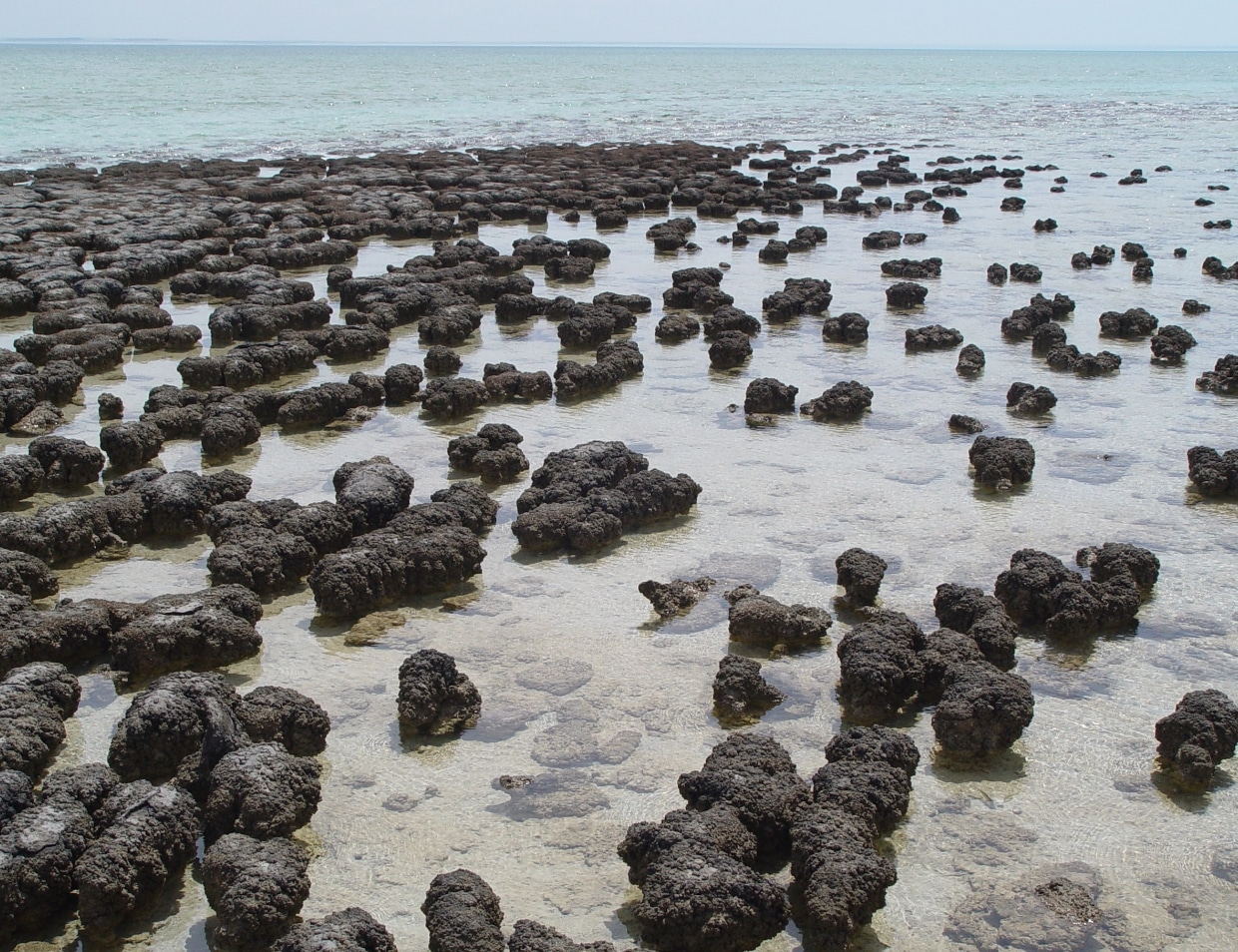
The first traces of life ever found are geological structures were created by bacterial activity. They are stromatolites, which are layered structures that usually form columns. These structures are made by microbial mats at the surface that help rock to precipitate.
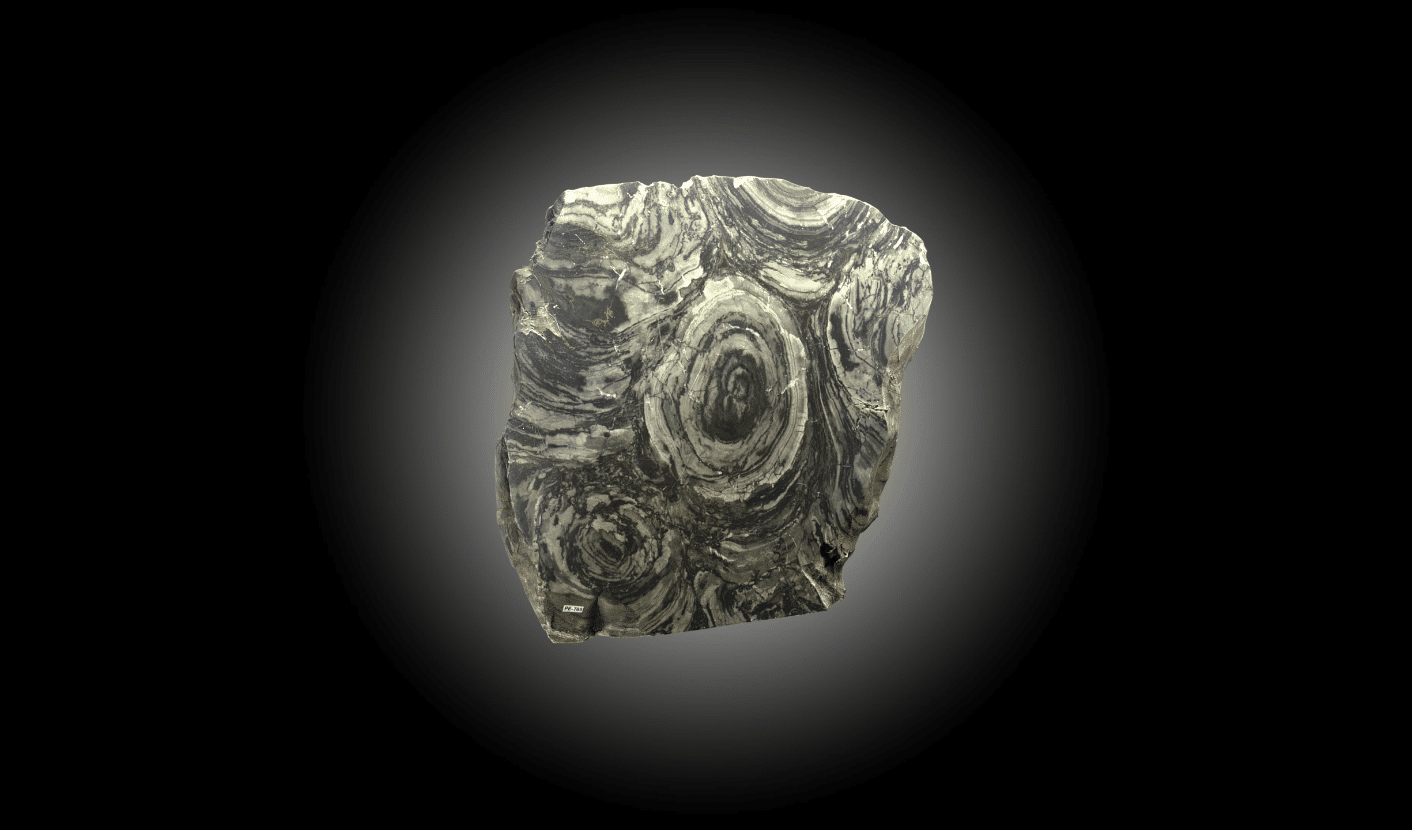
Example of a 2.2-billion-year-old stromatolite from Lake Albanel. The sample has a polished surface so you can clearly see the structure.
Did You Know?

Canadian Shield (Superior) (2.7 Ga) (9h 45 min AND 00 SEC)
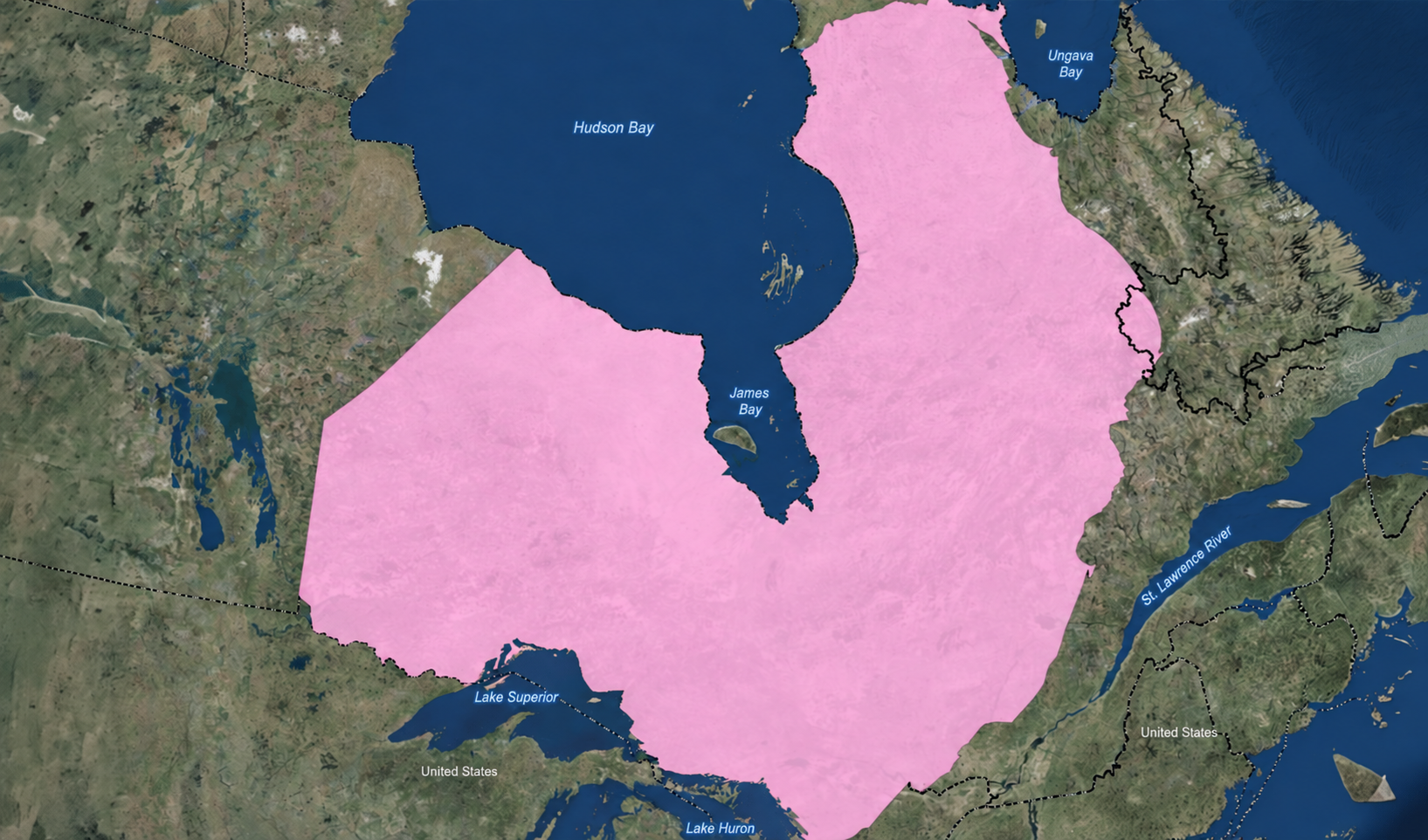
The Superior geological province, the main part of the Canadian Shield, covers a large part of Quebec and Ontario. It is mostly made of Archean rock, 2.7 billion years old. The Superior Province is the largest group of ancient rocks on Earth, and is known for its many mineral resources.
The Great Oxidation of the planet (2.3 Ga) (11h 20 min AND 00 SEC)
As bacterial activity increased and photosynthesis began, large amounts of O2 were released. This event led to the oxygenation of the oceans and to a rise in the concentration of O2 in the atmosphere, which had none before.
One of the effects of this change was the appearance of many minerals that require oxygen to form:
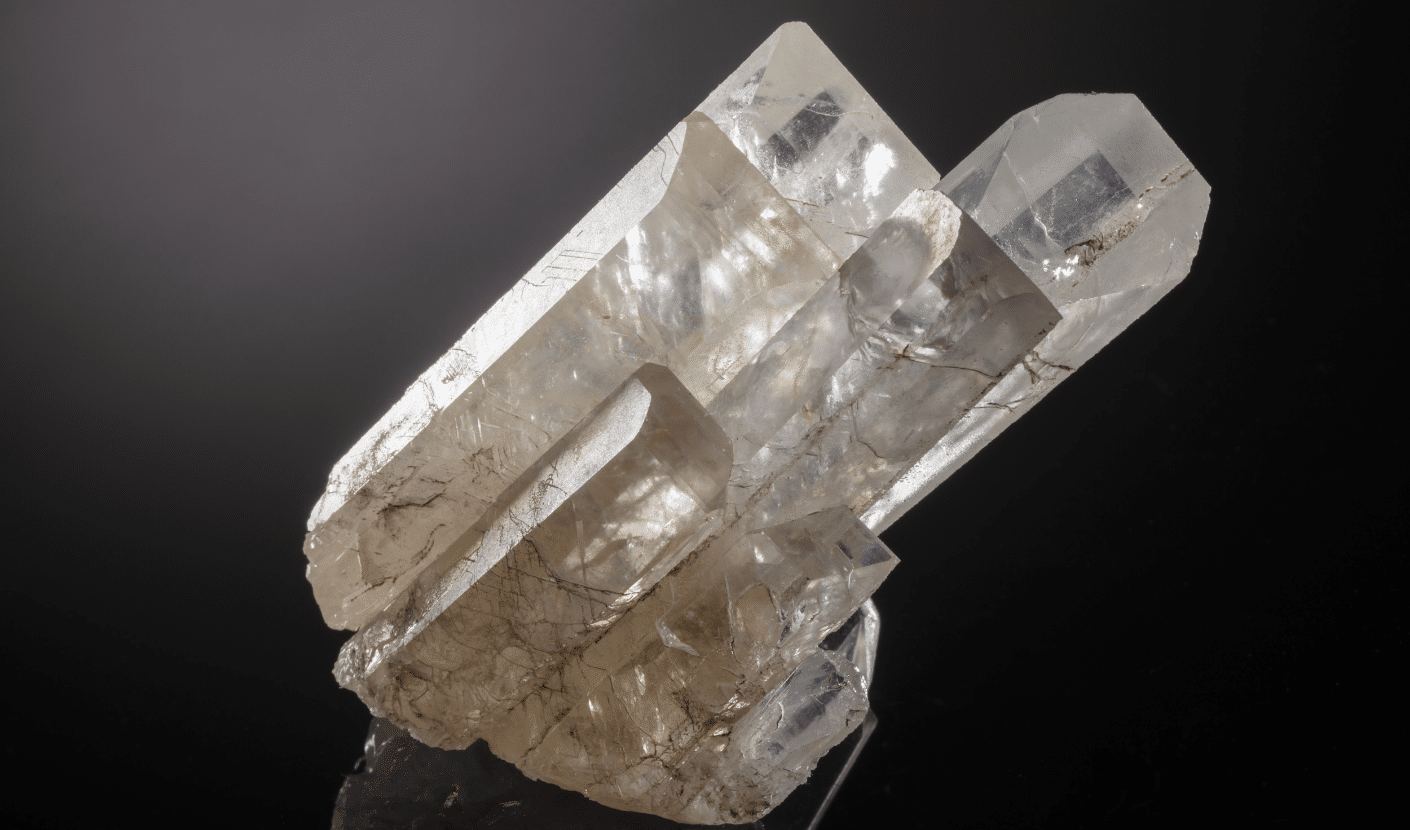
Baryte (BaSO₄) began to form with the emergence of oxygen, just like all sulfates. The specimen shown here comes from St-Fabien, Quebec.
First complex cells – eukaryotes, cells with a nucleus
(1.4 Ga) (16h 40 min AND 00 SEC)
These cells are bigger than the earlier ones (prokaryotes) and have a much more complex organization, including a separate nucleus.
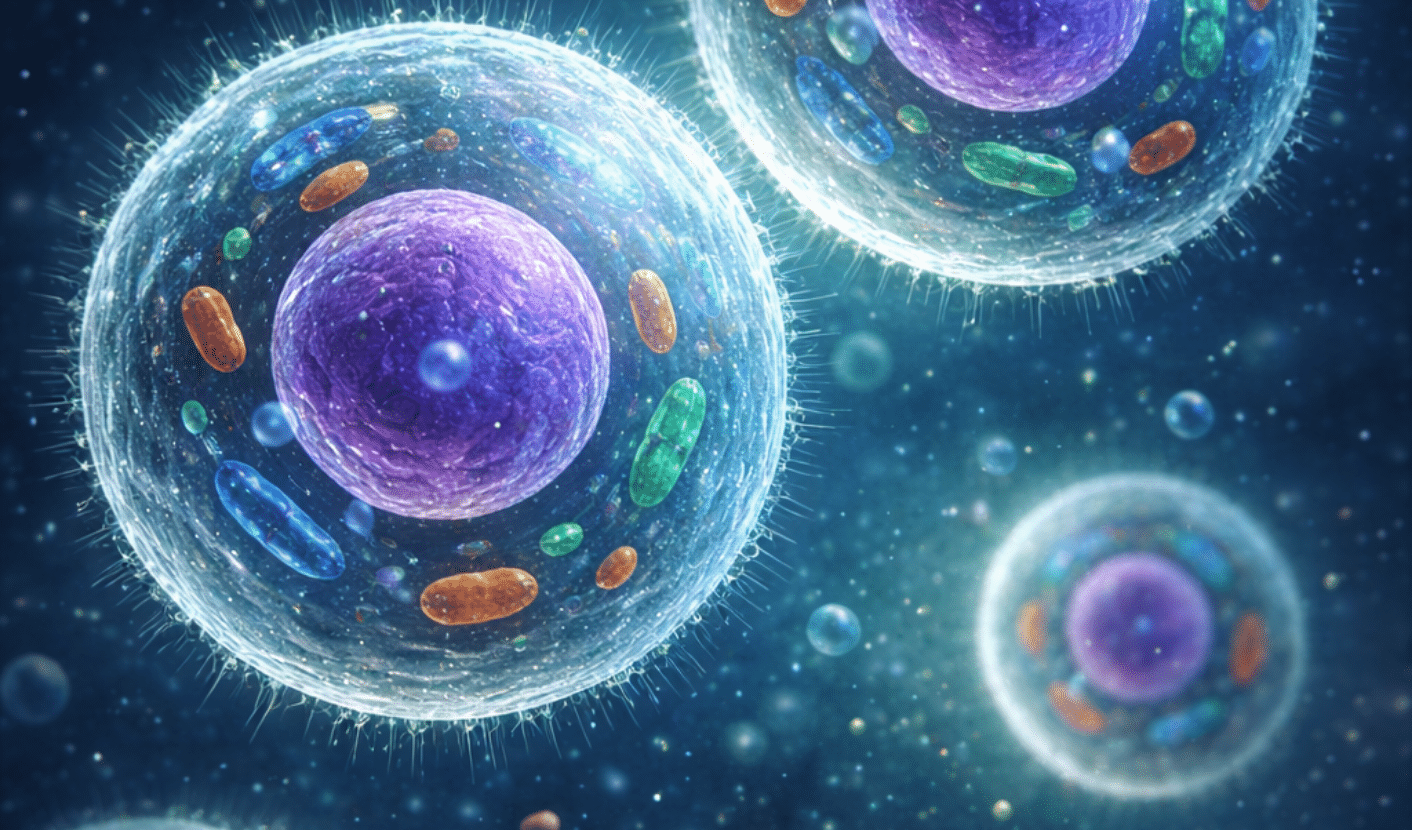
Eukaryotic cells
First fossil animals – Ediacaran fauna
(600 Ma) (20h 50 min AND 00 SEC)
Towards the end of the Precambrian, multicellular life forms became much more diverse. Many soft-bodied multicellular organisms appeared during this period.
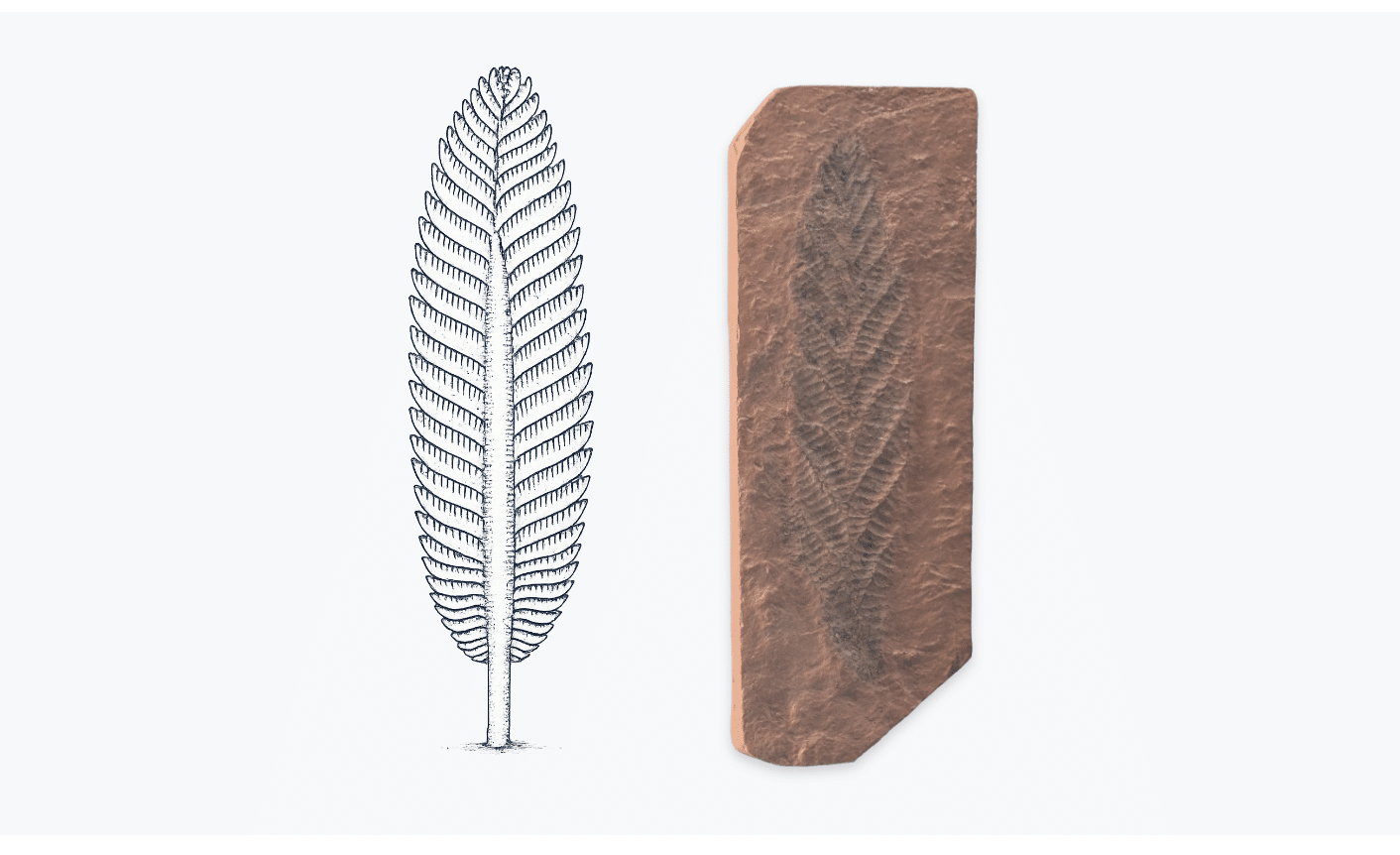
Charnia masoni Ford
Multicellular organism of the Ediacaran fauna that lived attached to the seafloor. Cast: Dr. Frantz Bonn, Germany (about 20 cm)
Life becomes more complex – Cambrian explosion
(540 Ma) (21h 13 min AND 00 SEC)
Early in the Cambrian, life became much more diverse. This is known as the Cambrian explosion. Many groups of animals that still exist today appeared. Among these animals is Pikaia, the most primitive member of the phylum Chordata, which Homo sapiens belongs to. This fauna is found in the Burgess Shale, in British Columbia. (508 Ma)
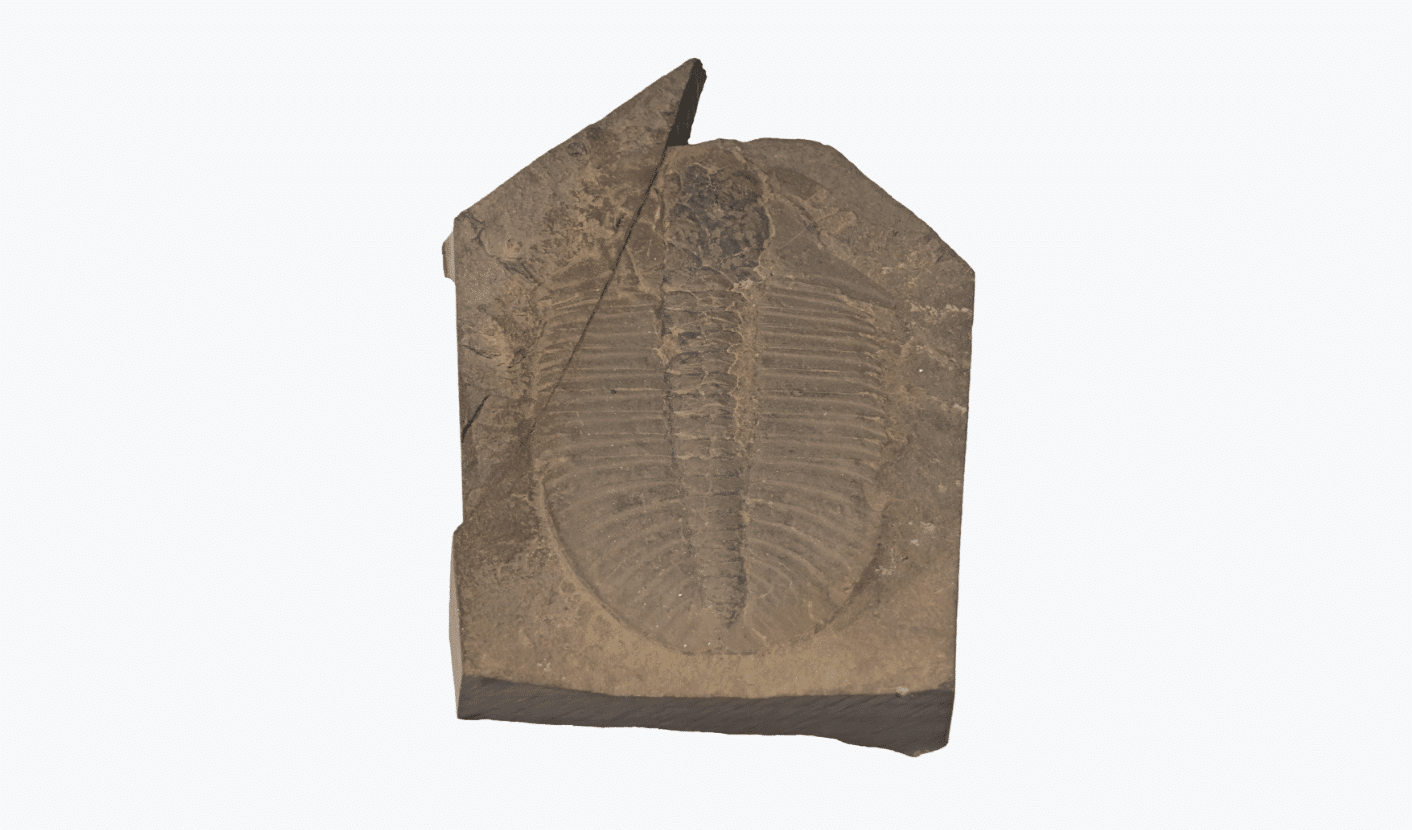
Trilobite. Stephen Formation, Mount Wapta, B.C. Exchange: Royal Ontario Museum, 1978.
First land plants
(475 Ma) (21h 30 min AND 00 SEC)
The appearance of land plants had a major impact on oxygen production and allowed soil to form. This new form of life also had a big impact on the water cycle and opened the way for life on land by providing food and shelter.
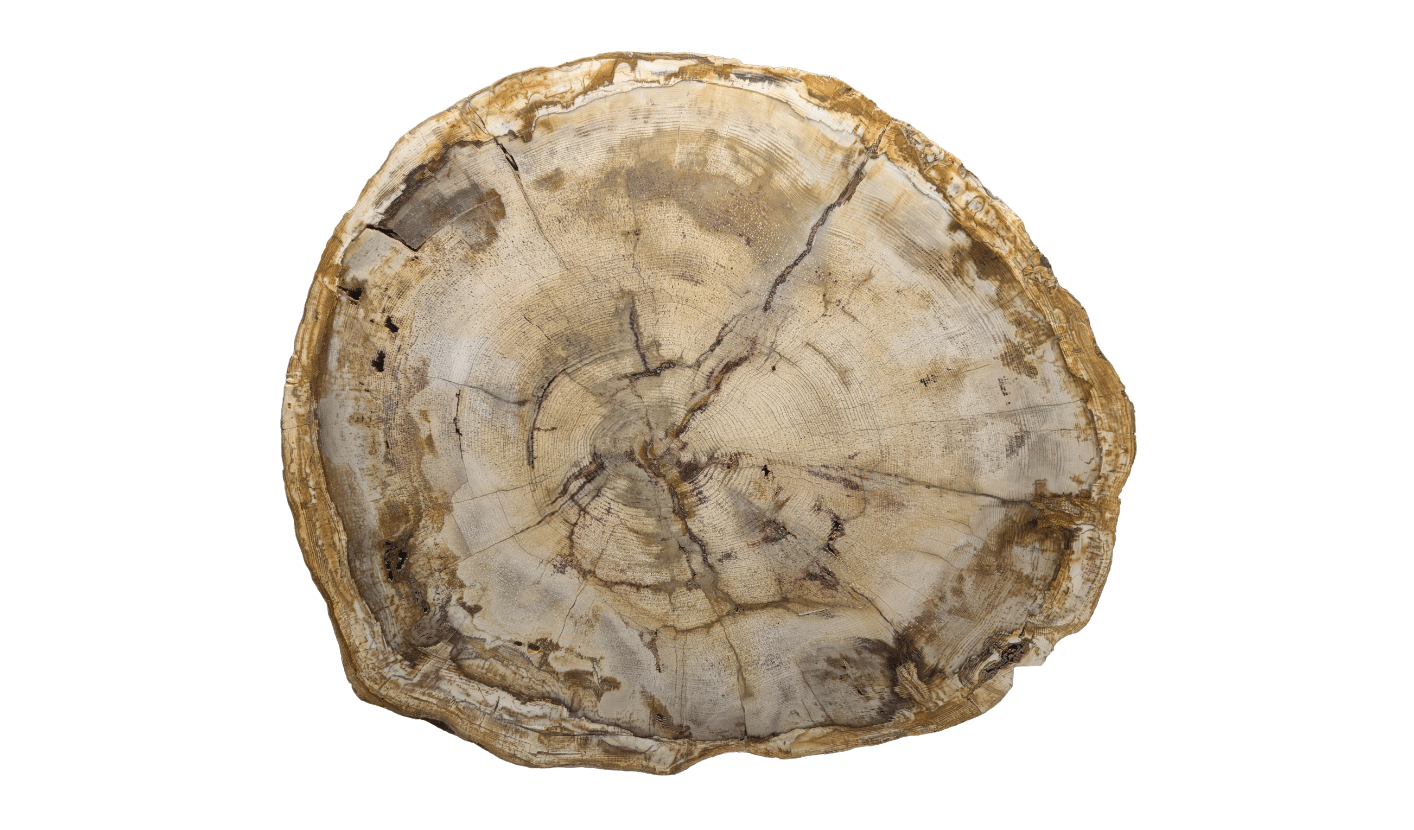
Slice of petrified wood
Pseudotsuga menziesii
A species of today’s Douglas fir, Miocene
Ginkgo Petrified Forest State Park, Columbia River Basalt, Yakima Valley, Vantage, Washington, USA
First fish
(420 Ma) (21h 47 min AND 00 SEC)
The Devonian (419-359 million years ago) is a period nicknamed “the Age of Fishes.” During this period, marine vertebrates became spectacularly diverse. They quickly split into several groups, some of which led to the appearance of tetrapods.
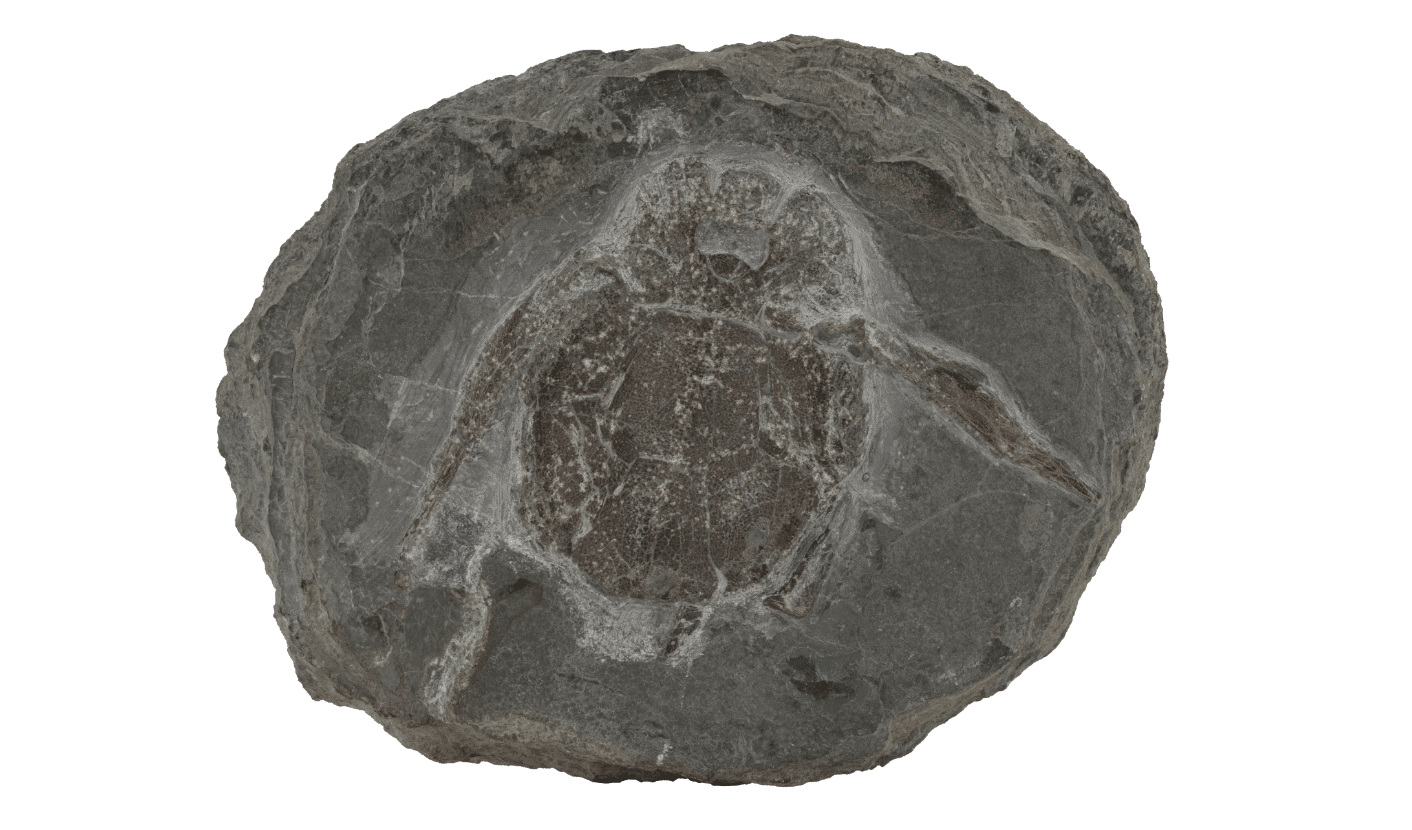
Bothriolepis is a genus of antiarch placoderm, an armored fish from the Devonian (about 380 million years ago). The photo shows Bothriolepis canadensis, found in large numbers in Miguasha National Park in the Gaspé Peninsula.

Vertebrates move from water to land (378 Ma) (22h 00 min AND 00 SEC)
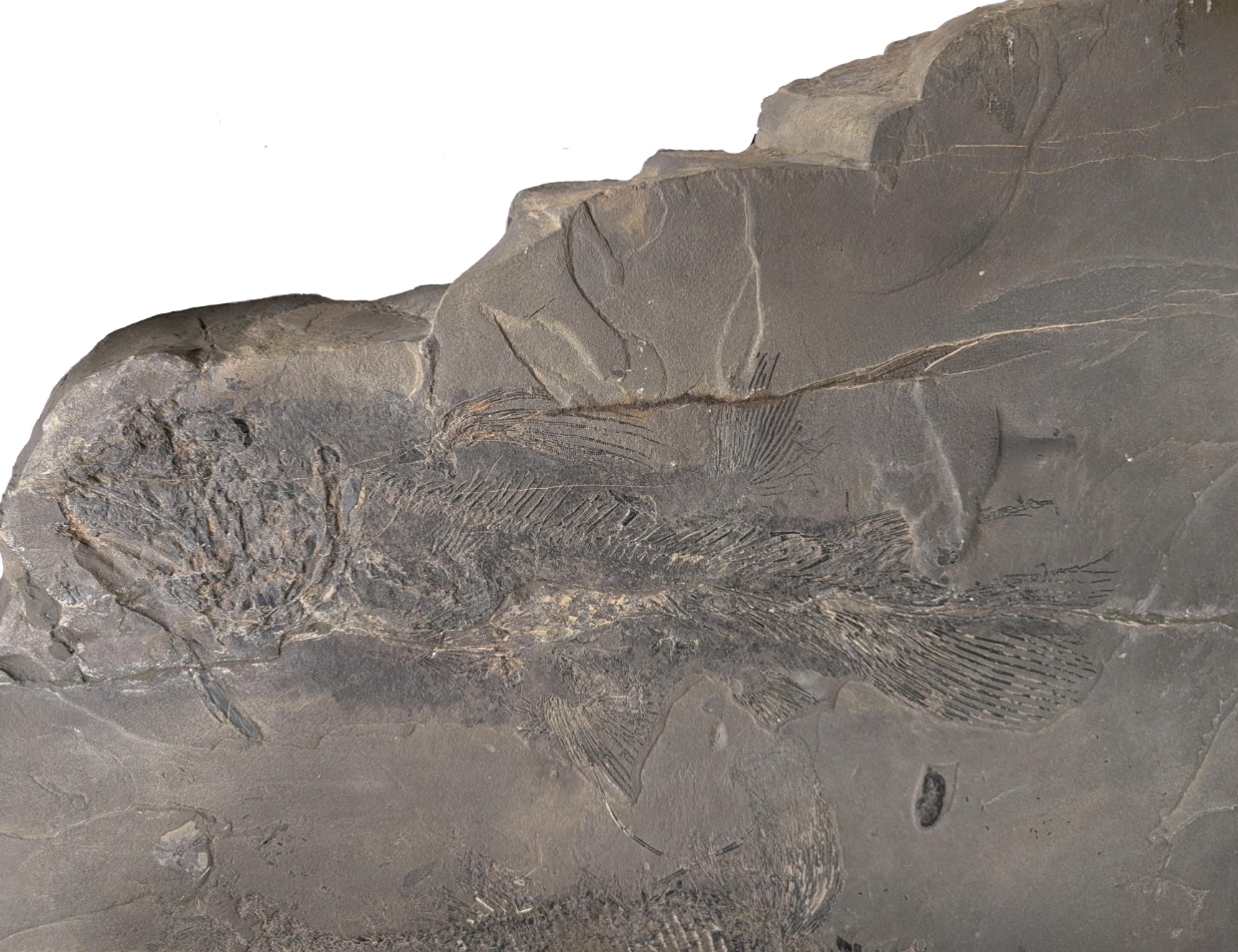
The move of vertebrates from water to land is a key episode in the evolution of vertebrates. The fish that seems closest to this transition is Elpistostege watsoni. A complete specimen of this fish was found in Miguasha National Park in Quebec. At 378 Ma old, it is thought to be the fish closest to tetrapods in evolutionary terms. Photo of Elpistostege watsoni (photos provided by Olivier Matton, credited to Johanne Kerr, Miguasha National Park)
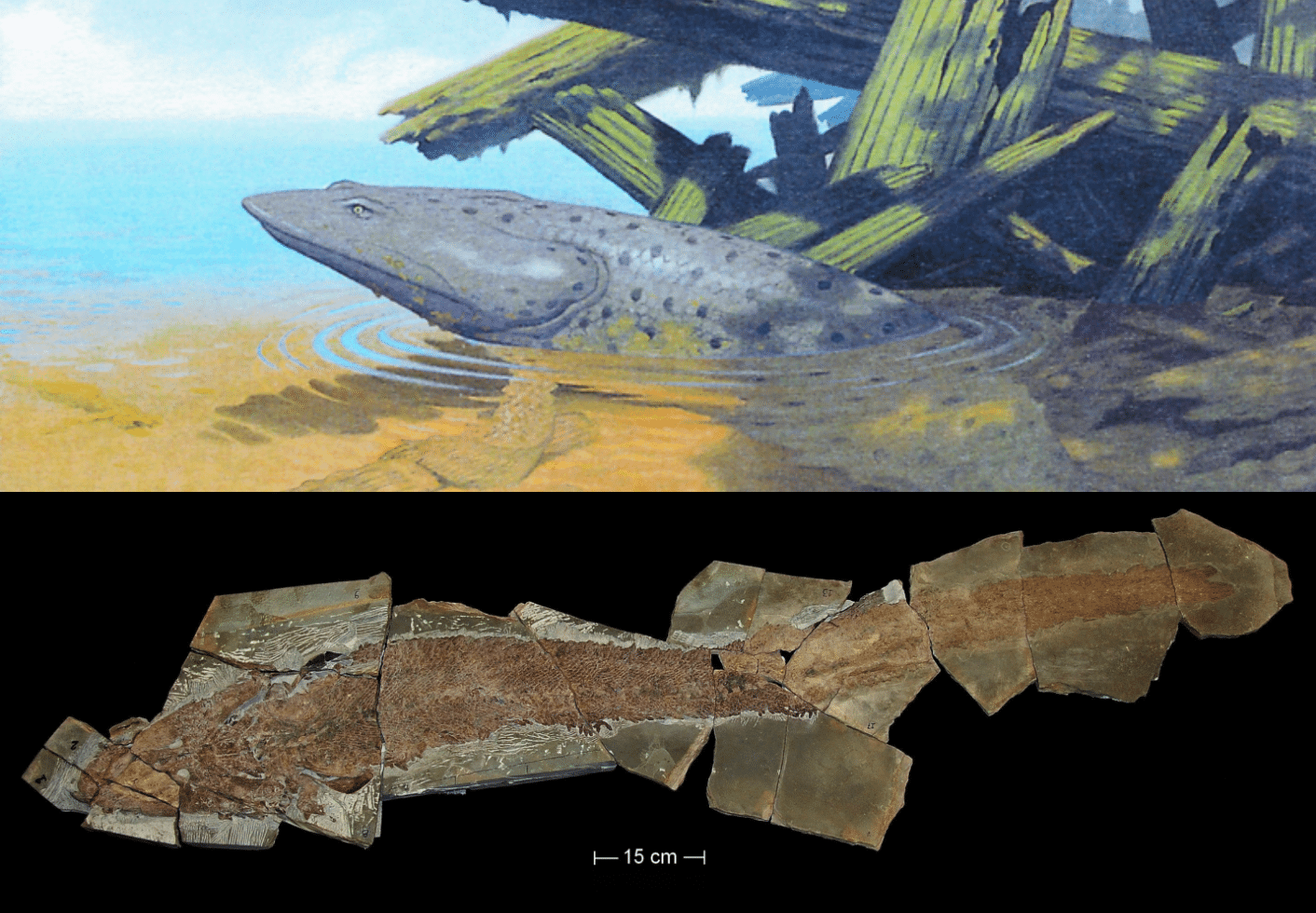
Credit: Johanne Kerr, Miguasha National Park
Permian extinction (251 Ma) (22h 40 min AND 00 SEC)
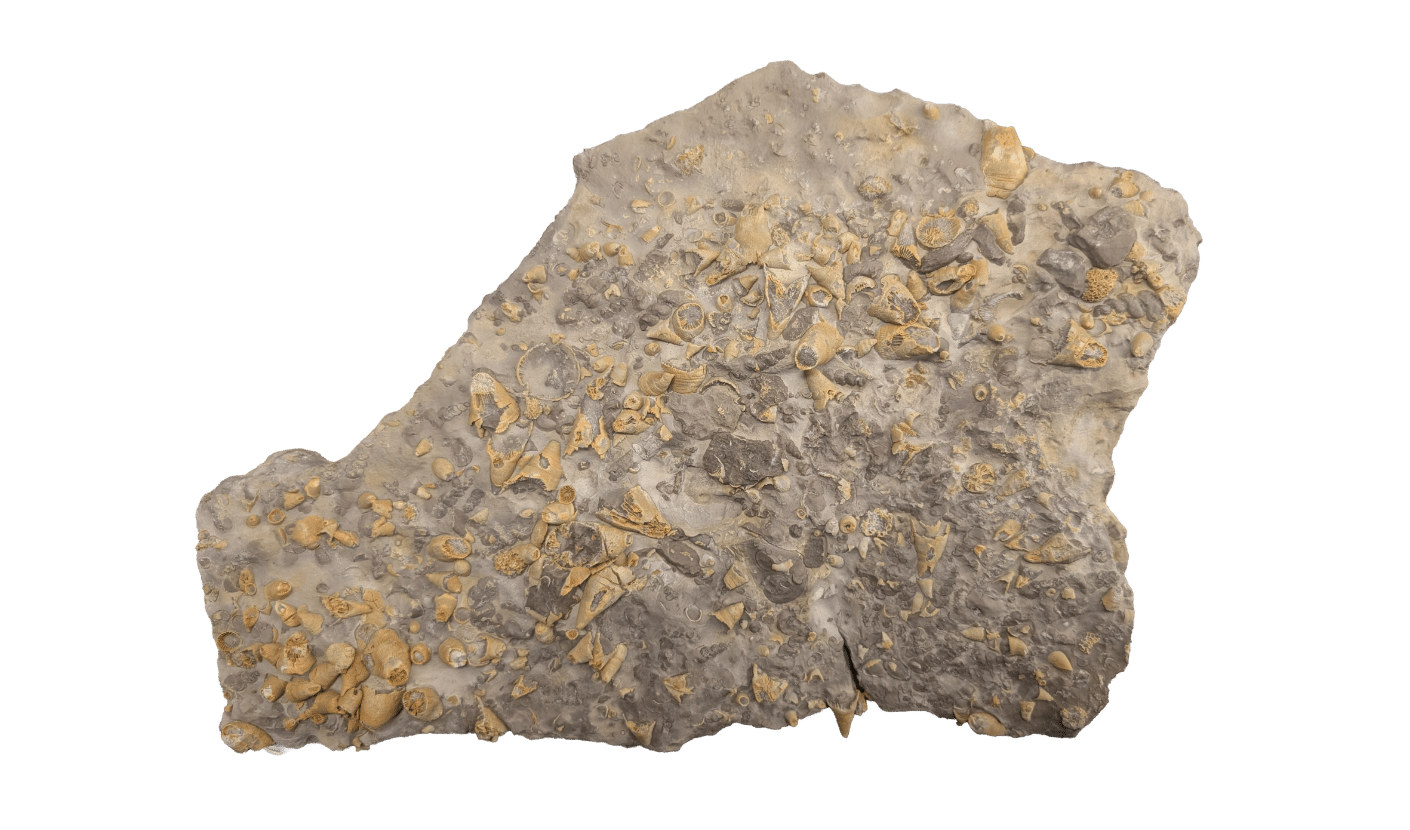
Rugose corals
Age: Lower Silurian (Chicotte Fm.), Anticosti Island
These organisms lived 430 million years ago at the edge of the continental shelf of an ocean that no longer exists: the IAPETUS Ocean.
Pangaea
(250 Ma) (22h 45 min AND 00 SEC)
At the start of the Triassic, all of today’s continents were joined in a single supercontinent called Pangaea. It broke apart about 175 million years ago, slowly giving rise to the continents and oceans we know today.
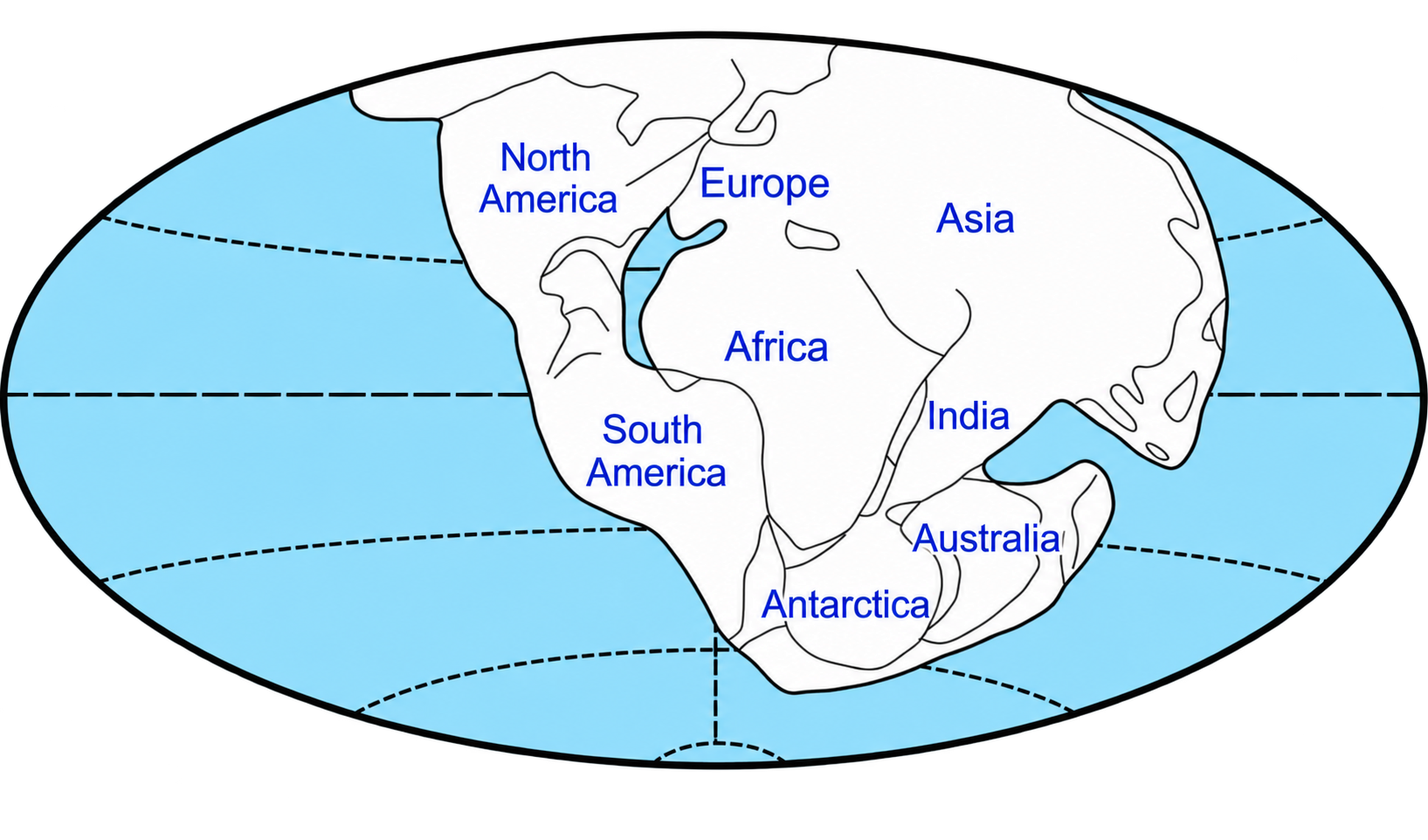
Source: Planète Terre course, U. Laval.
First dinosaurs (230 Ma) (22h 50 min AND 00 SEC)
Dinosaurs lived during the Mesozoic Era. They appeared during the Late Triassic, 230 million years ago. At the end of the Cretaceous, 65.5 million years ago, all non-avian dinosaurs died out. The only dinosaurs that survived this extinction are birds, which are still among us today.
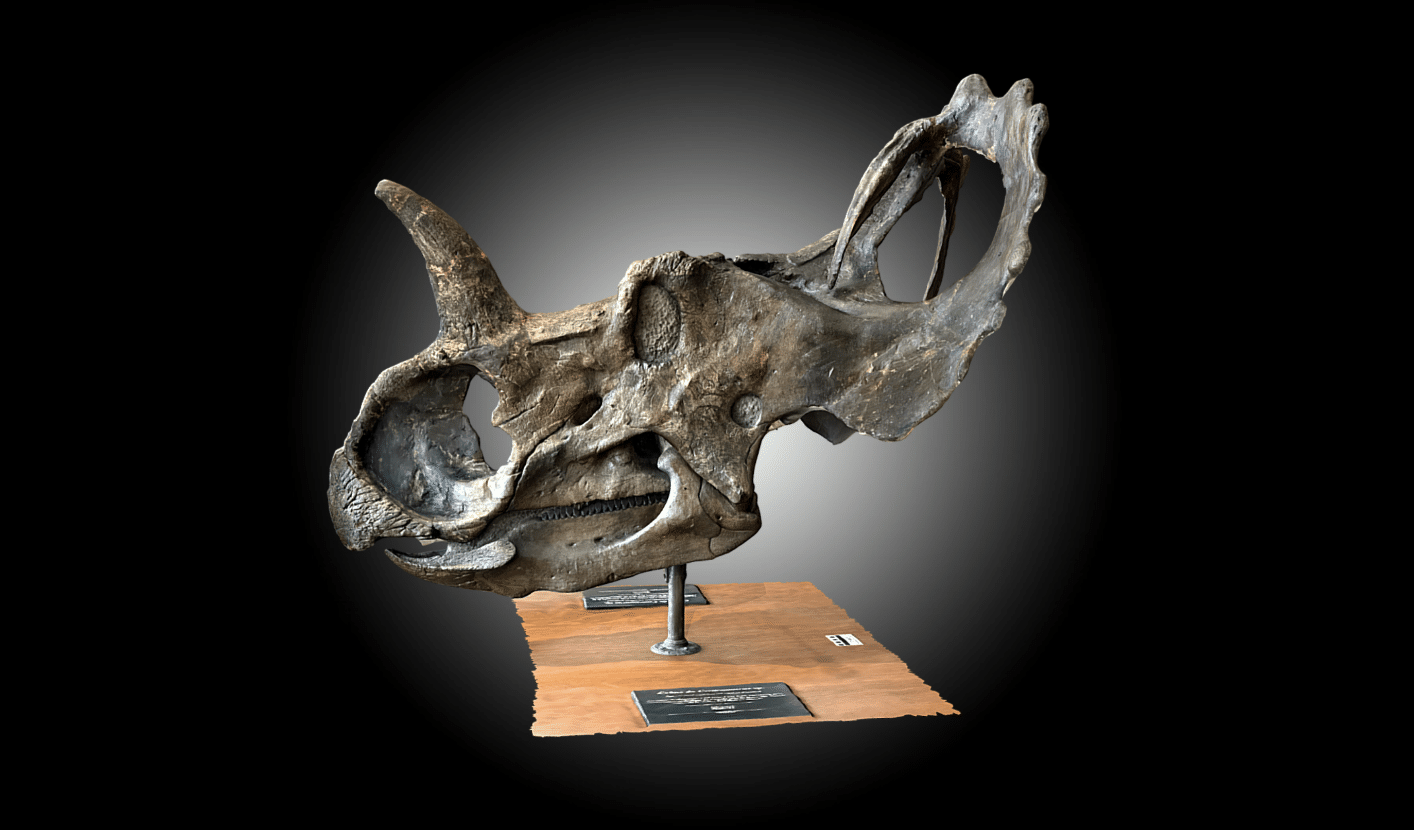
Skull of Centrosaurus, a plant eater from the Cretaceous found in Canada. These dinosaurs were up to 6 m long and weighed one tonne.
First mammals (220 Ma) (22h 53 min AND 00 SEC)
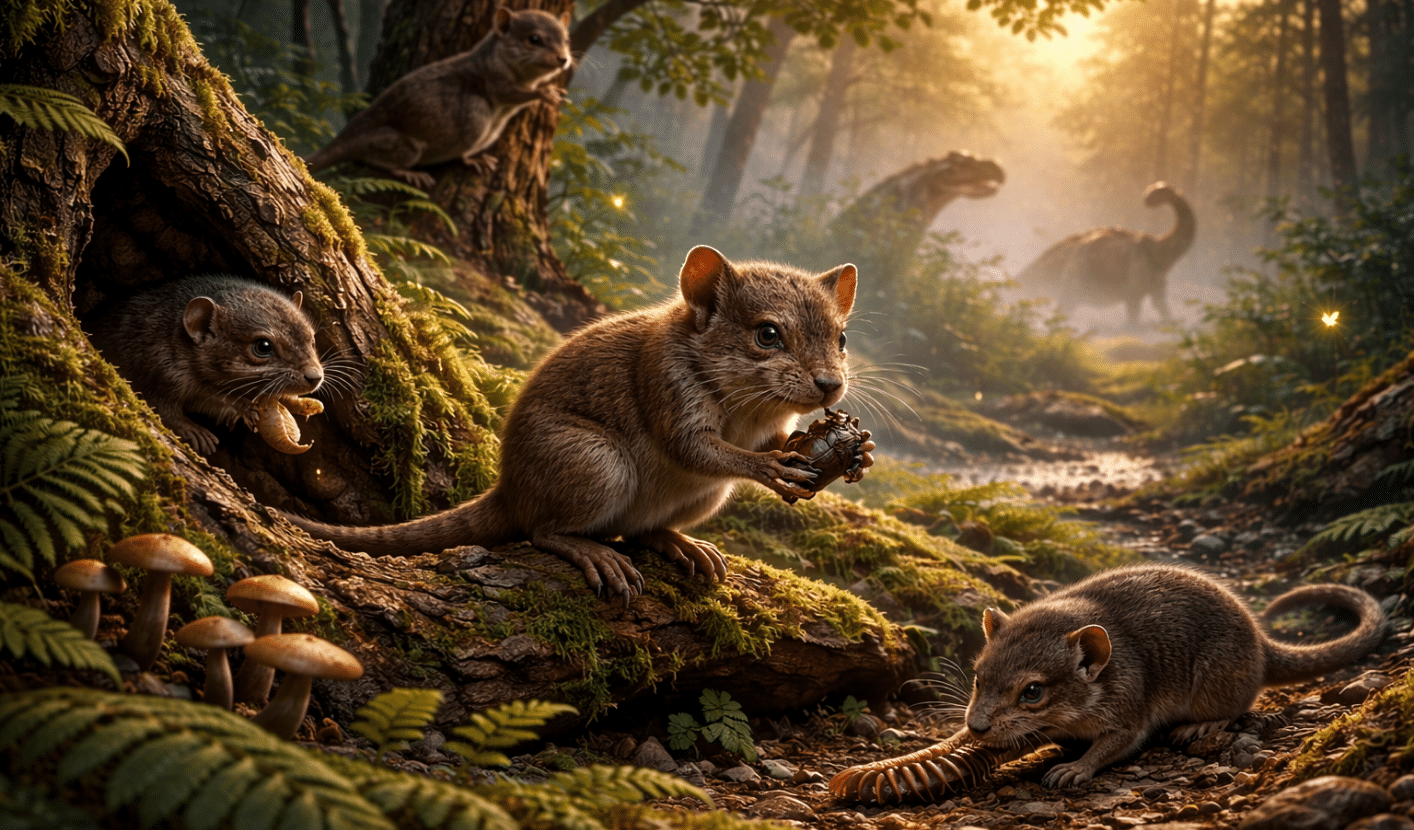
The first mammals appeared about 10 Ma after the dinosaurs. During the Mesozoic, these mammals were small. They had to wait for the extinction at the end of the Cretaceous and the disappearance of the dinosaurs before they could become more diverse.
First birds
(150 Ma) (23h 09 min AND 00 SEC)
Bird fossil, Confuciusornis sanctus
Confuciusornis is the oldest bird fossil with a horn-like beak. Archaeopteryx, the first primitive bird, which lived only 10 to 15 million years earlier, had a reptile-like snout.
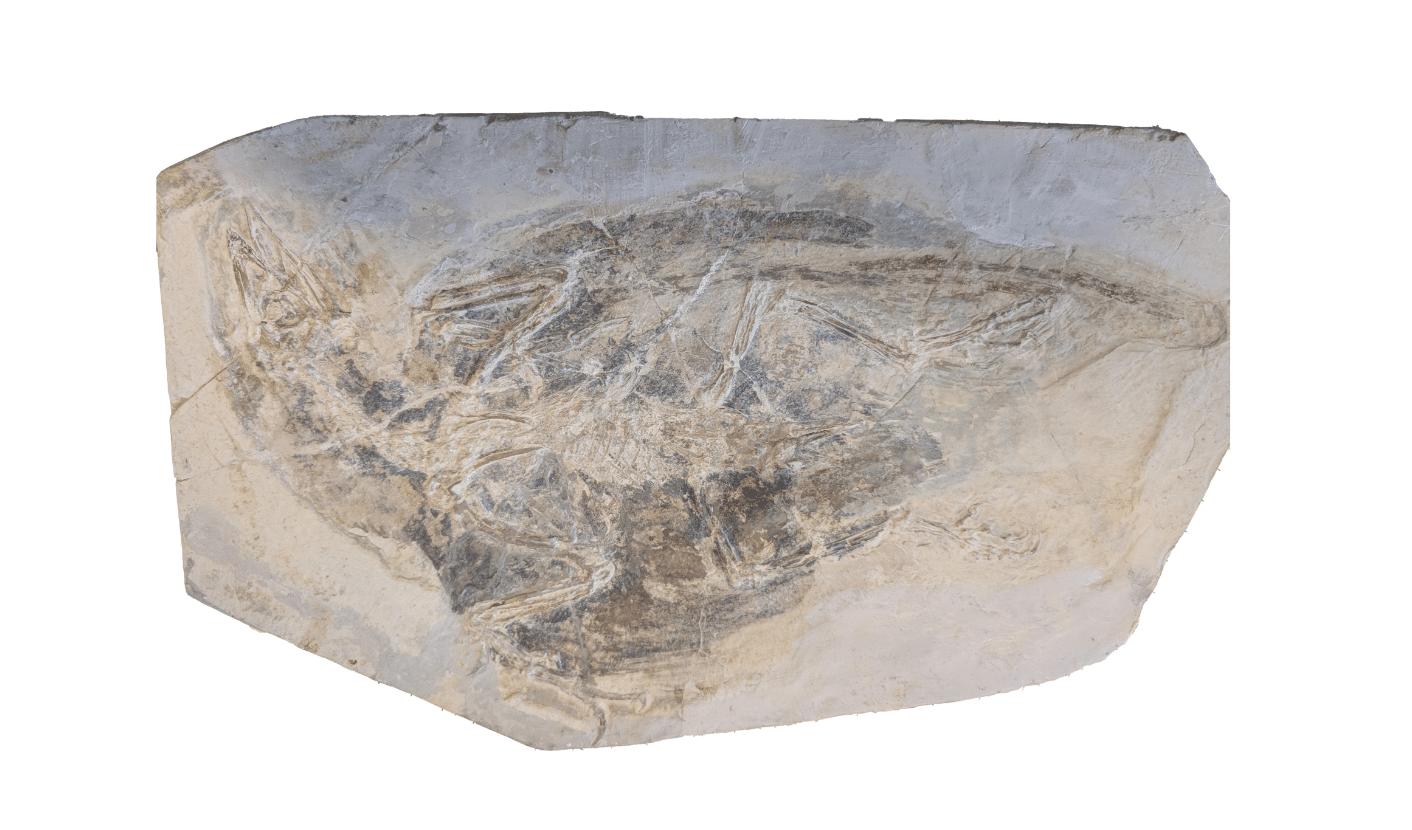
Bird fossil, Confuciusornis sanctus.
Yixian Formation, Sihetun, Liaoning, China. Age: Early Cretaceous, 120 million years. Confuciusornis is the oldest bird fossil with a horn-like beak. Archaeopteryx, the first primitive bird, which lived only 10 to 15 million years earlier, had a reptile-like snout.
Cretaceous extinction (65.5 Ma) (23h 39 min AND 00 SEC)
After a major meteorite impact and intense volcanic activity on Earth, the non-avian dinosaurs and the ammonites stopped existing. After this extinction, mammals took over and were able to become more diverse.
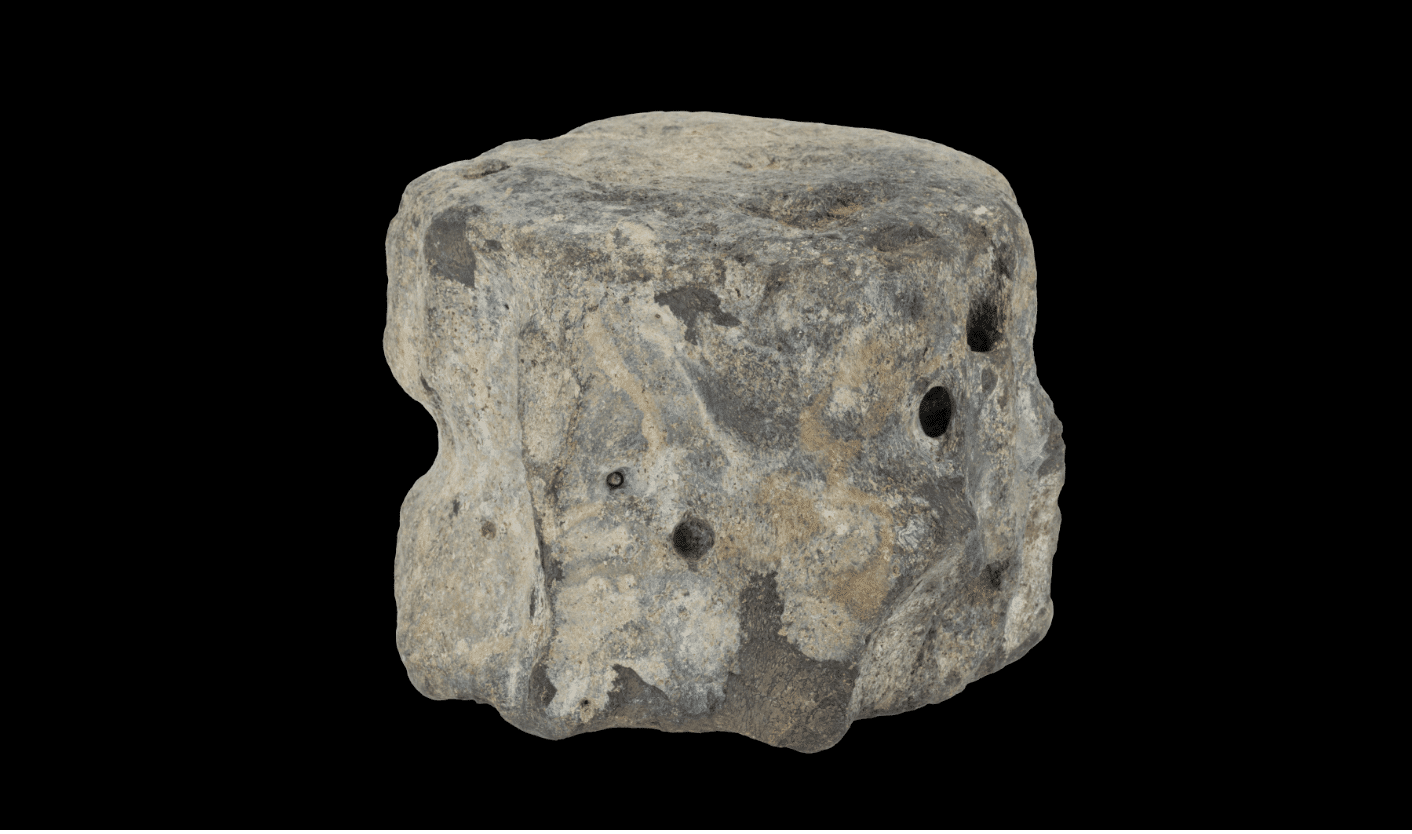
Vertebra of a dinosaur that disappeared during the Cretaceous extinction.
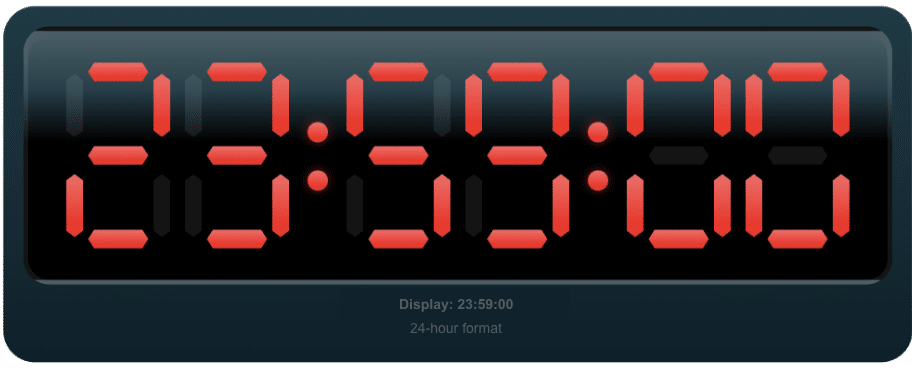
Lucy (3.2 Ma) (23h 59 min AND 00 SEC)
Lucy is the nickname given to a fossil specimen of the extinct species Australopithecus afarensis. Discovered in 1974 at the Hadar site in Ethiopia by an international team, she is dated at about 3.2 million years old.
Lucy is an exceptional fossil because of her age and how well she is preserved — about 40% of the skeleton, or 52 bone fragments. She deeply changed our understanding of human origins. She was the first specimen this complete from such a distant time, giving key clues about walking on two legs and the evolution of the human lineage.
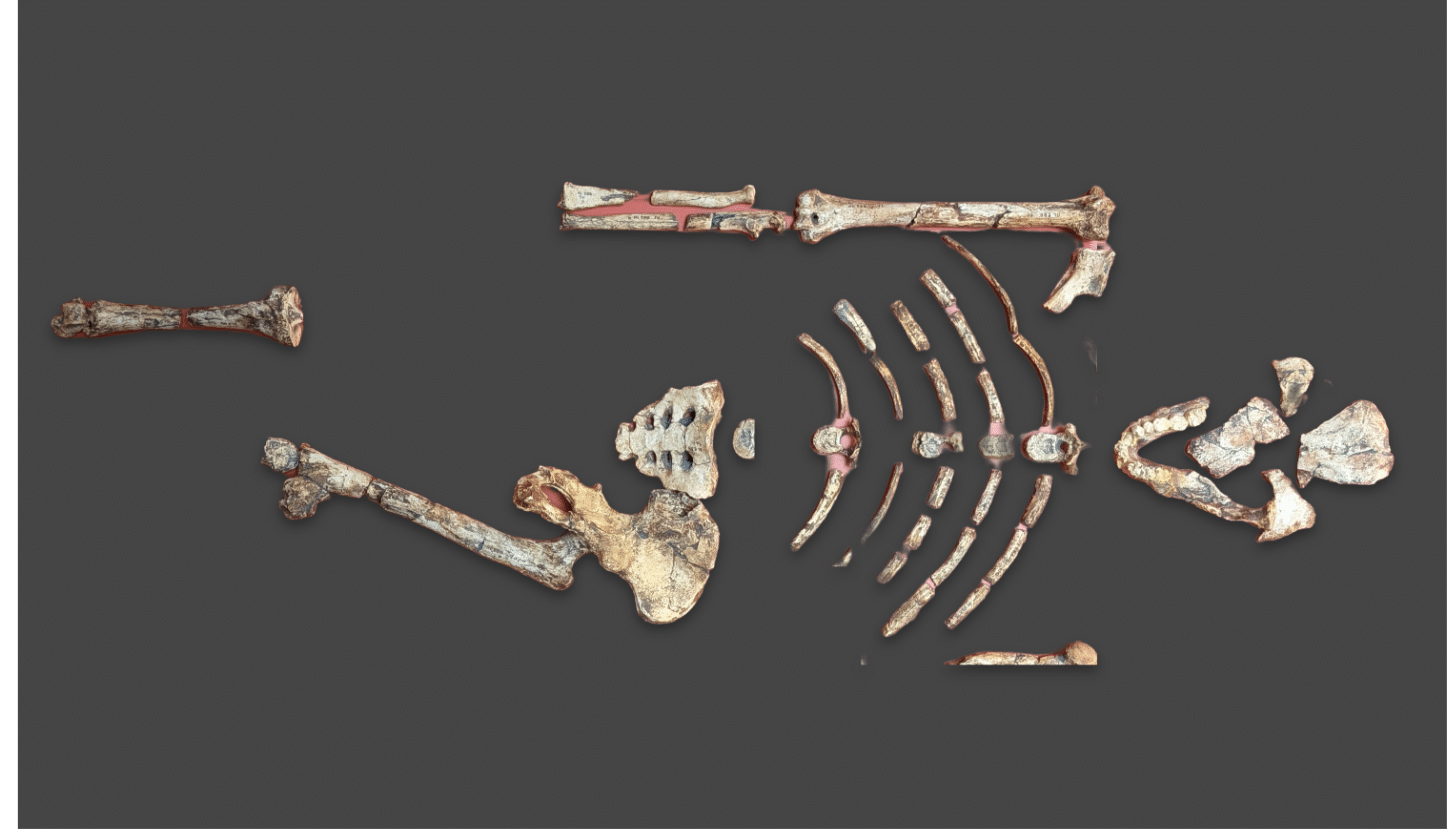
Fragments of LUCY’s skeleton
Accurate plaster reproduction of the Lucy fossil
Did You Know?
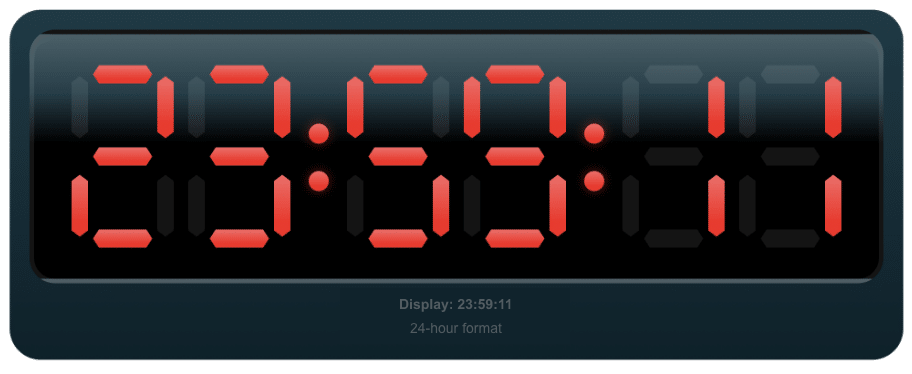
Quaternary glaciations
(2.58 Ma) (23H 59 min and 11 sec)
Over the last 2.5 Ma, North America went through four glacial episodes. The most recent glaciation is called the Wisconsinan glaciation, and it began about 80 ka ago. The Laurentide Ice Sheet, which covered most of Canada at that time, reached its maximum volume about 18 ka ago. The melting of this glacier and its flow greatly reshaped the land. Many post-glacial lakes and seas followed this glacial episode.
Quaternary fauna – Mammoth
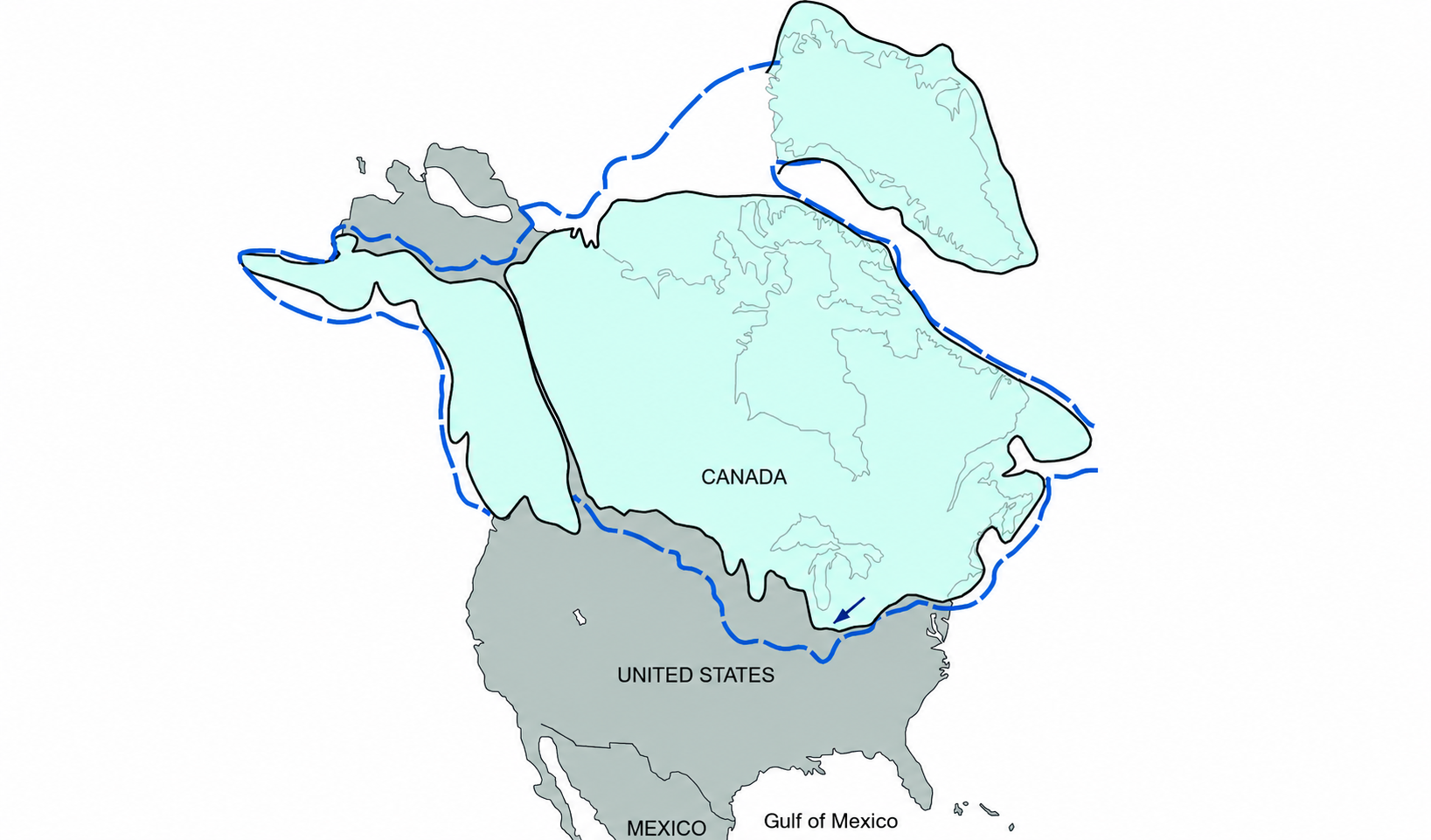
The most recent glaciation is called the Wisconsinan glaciation. It was at its maximum 18,000 years ago.
First Homo sapiens (300 ka) (23h 59 MIN AND 54 sec)
In 2017, the oldest Homo sapiens fossils were found at Jebel Irhoud in Morocco. These fossils are thought to represent the most primitive stages of Homo sapiens. They were dated at 300,000 years, pushing back by about 100,000 years the date of the appearance of Homo sapiens that was generally accepted before this discovery.
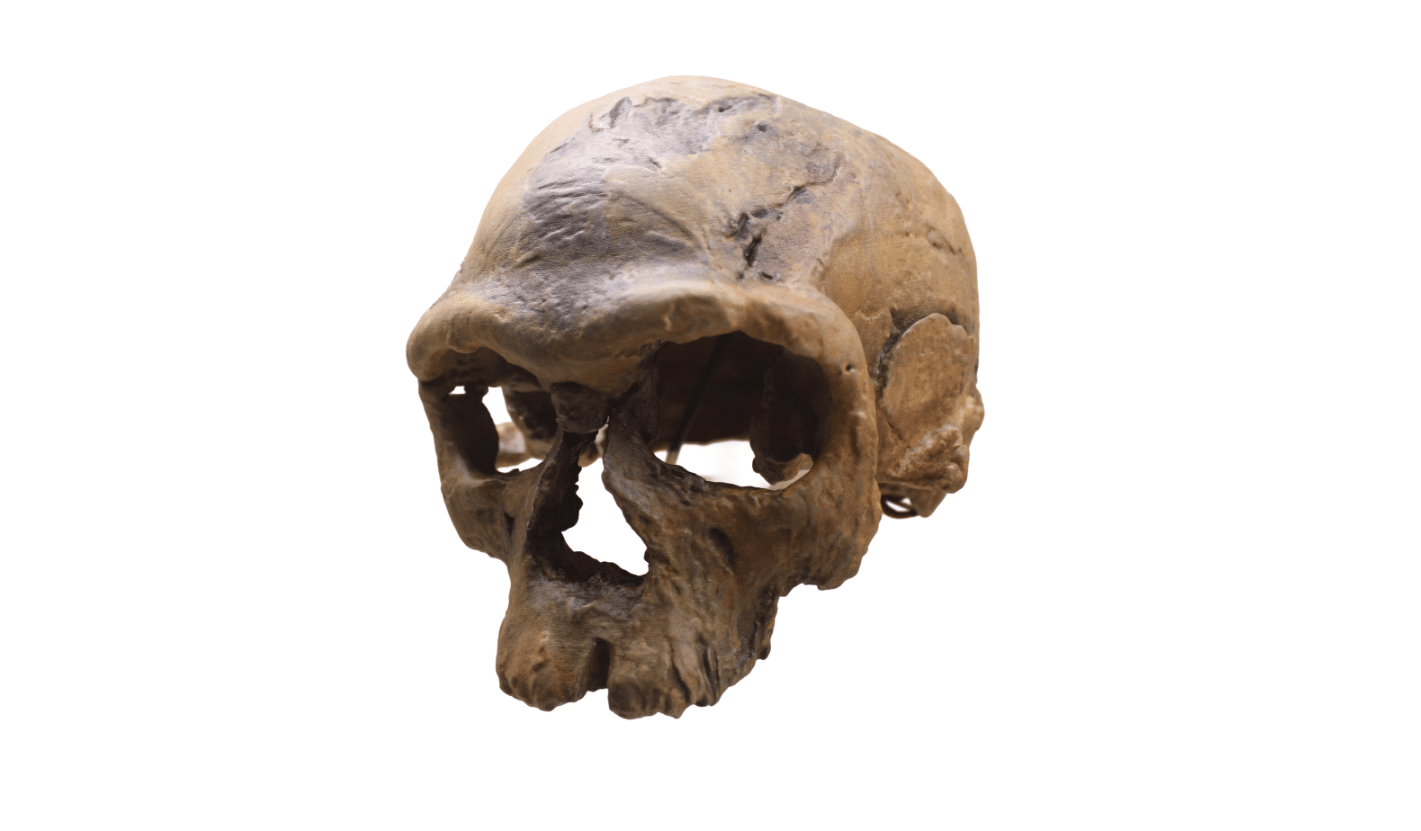
Source: Smithsonian Museum
Post-glacial seas – Champlain Sea (10,000 years) (23h 59 MIN and 59 SEC)
In eastern North America, the last glaciation reached its maximum about 18 ka ago. As the ice sheet melted, the Champlain Sea spread into Quebec. It covered the St. Lawrence Valley and the Ottawa Valley.
Photo of the extent of the Champlain Sea on a map
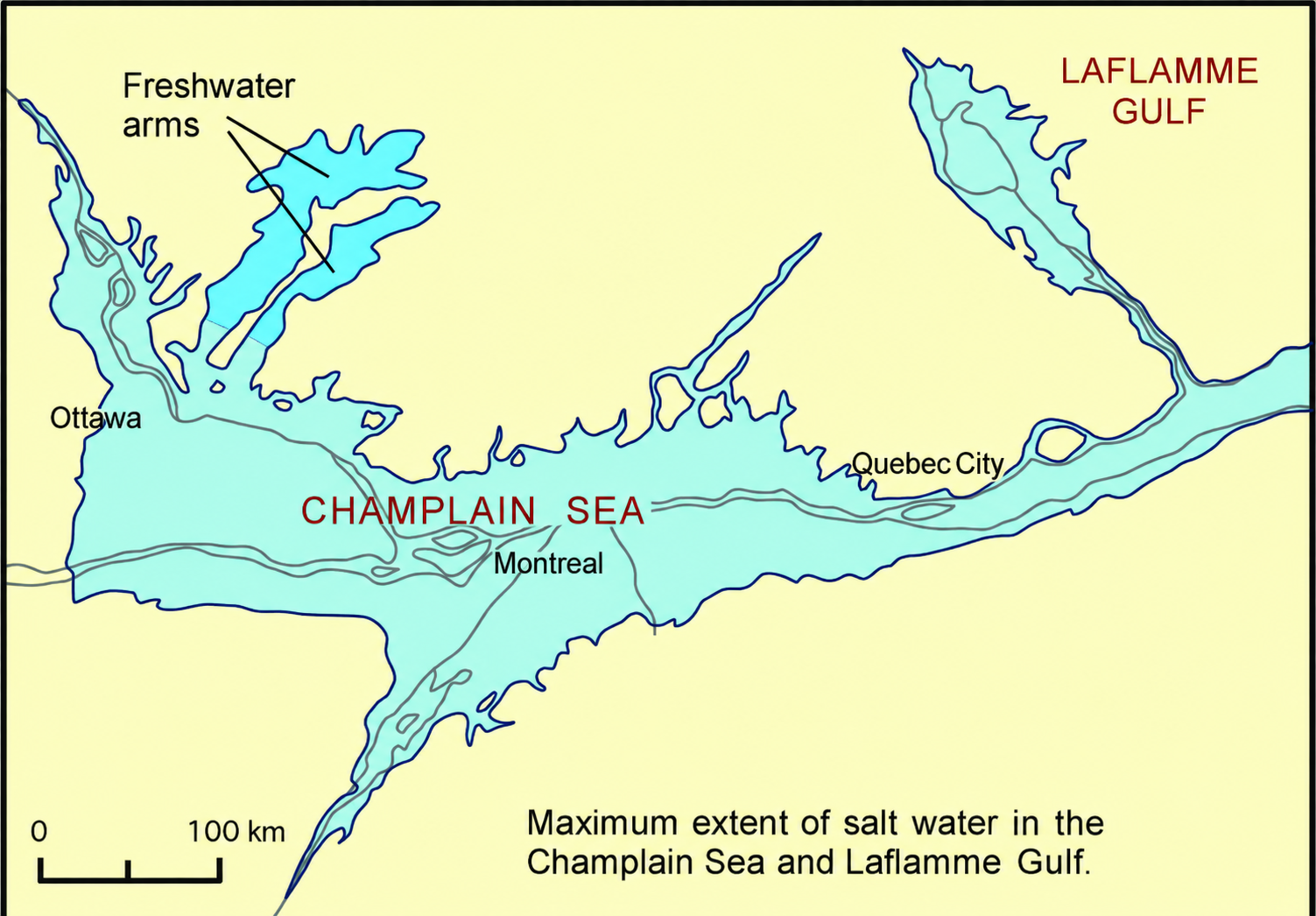
Source: modified from Occhietti, S., Chartier, H., Hillaire-Marcel, C., Cournoyer, M., Cumbaa, S. L. & Harington, R. (2001).
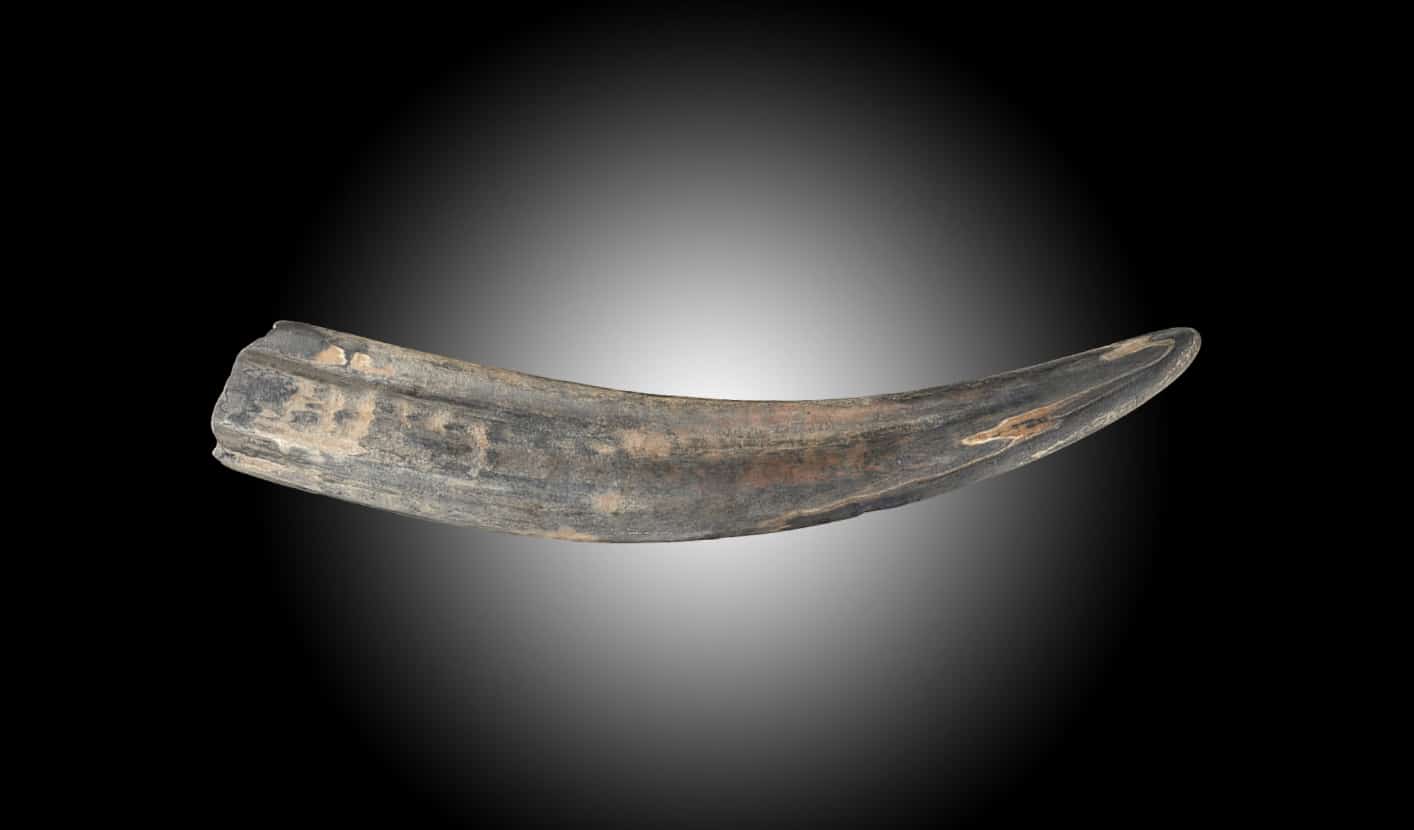
Walrus tusk found in the sediments of the Laflamme Gulf
Human history in Earth’s last seconds (23h 59 min 59 s)
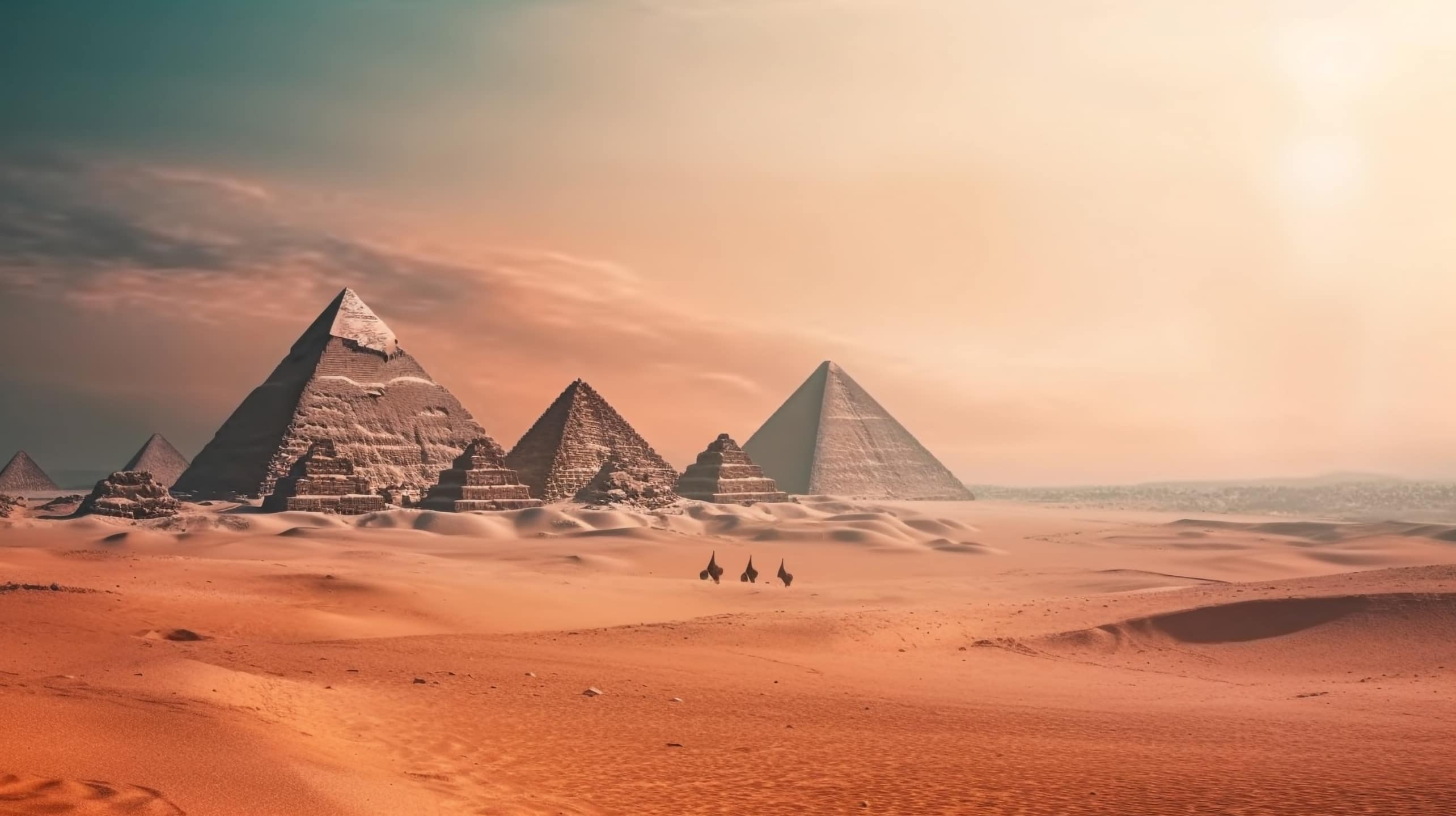
In our planet’s history, modern humans take up only a tiny fraction of time. If Earth’s age were shrunk down to 24 hours, the building of the pyramids of Egypt would fall in the last tenth of a second, and the industrial age would have started only in the last 3.8 milliseconds.
 Did You Know?