

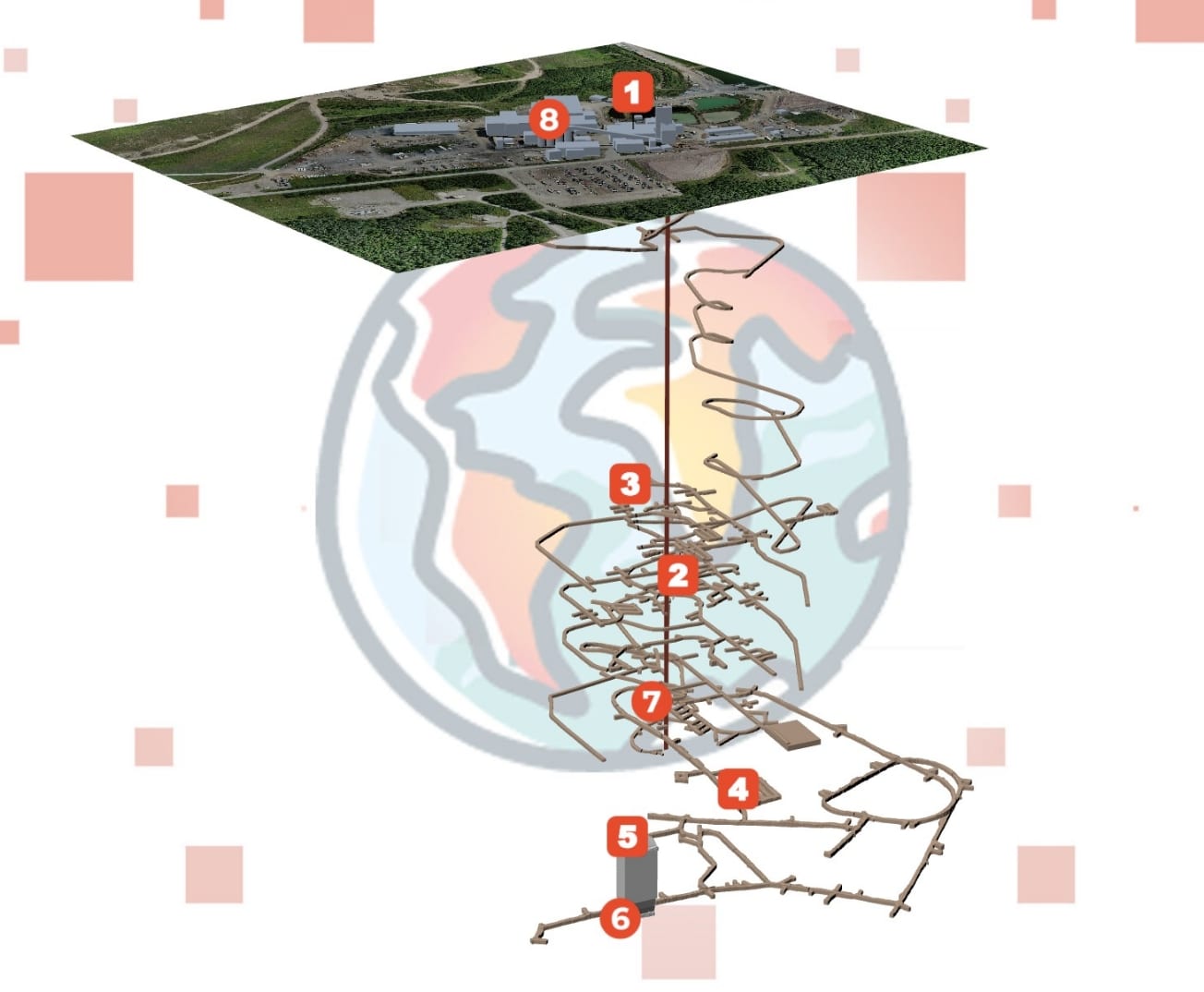
1. Welcome at the mine entrance
2. Arrival underground
3. Exploration drilling and ore body definition
4. Construction of galleries
5. Development of mining stopes
6. Ore extraction
7. Crushing
8. Ore processing
Niobec Mine – Alternative
1. Welcome
Welcome to the Niobec mine, an underground mine where niobium is produced in St-Honoré, Québec!
The tour is divided into two parts:
1. An underground visit that explores the different steps used to extract and bring niobium it to the surface, which is found in the form of pyrochlore (Nb2O5).
2. A visit to the processing plant, where the pyrochlore (Nb2O5) contained in the ore is concentrated and transformed into a metallic alloy called ferroniobium (FeNb), which willl be sold to our customers.
2. Underground
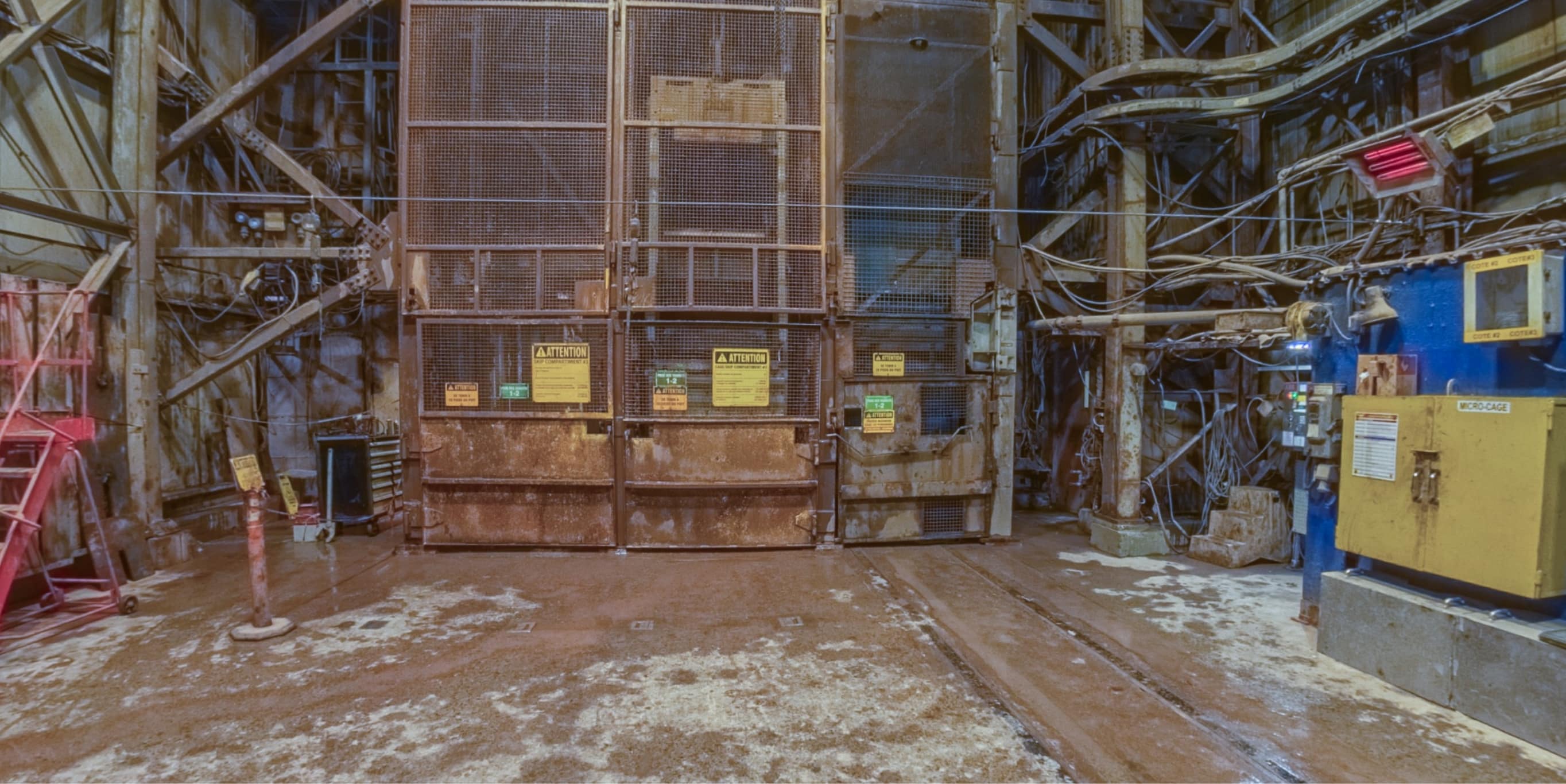
This is the elevator that takes miners down as deep as 730 meters underground. It is called “the cage.” it is also used to bring extracted ore back up.
Here is the route from the surface to level 2400, 730 m underground!
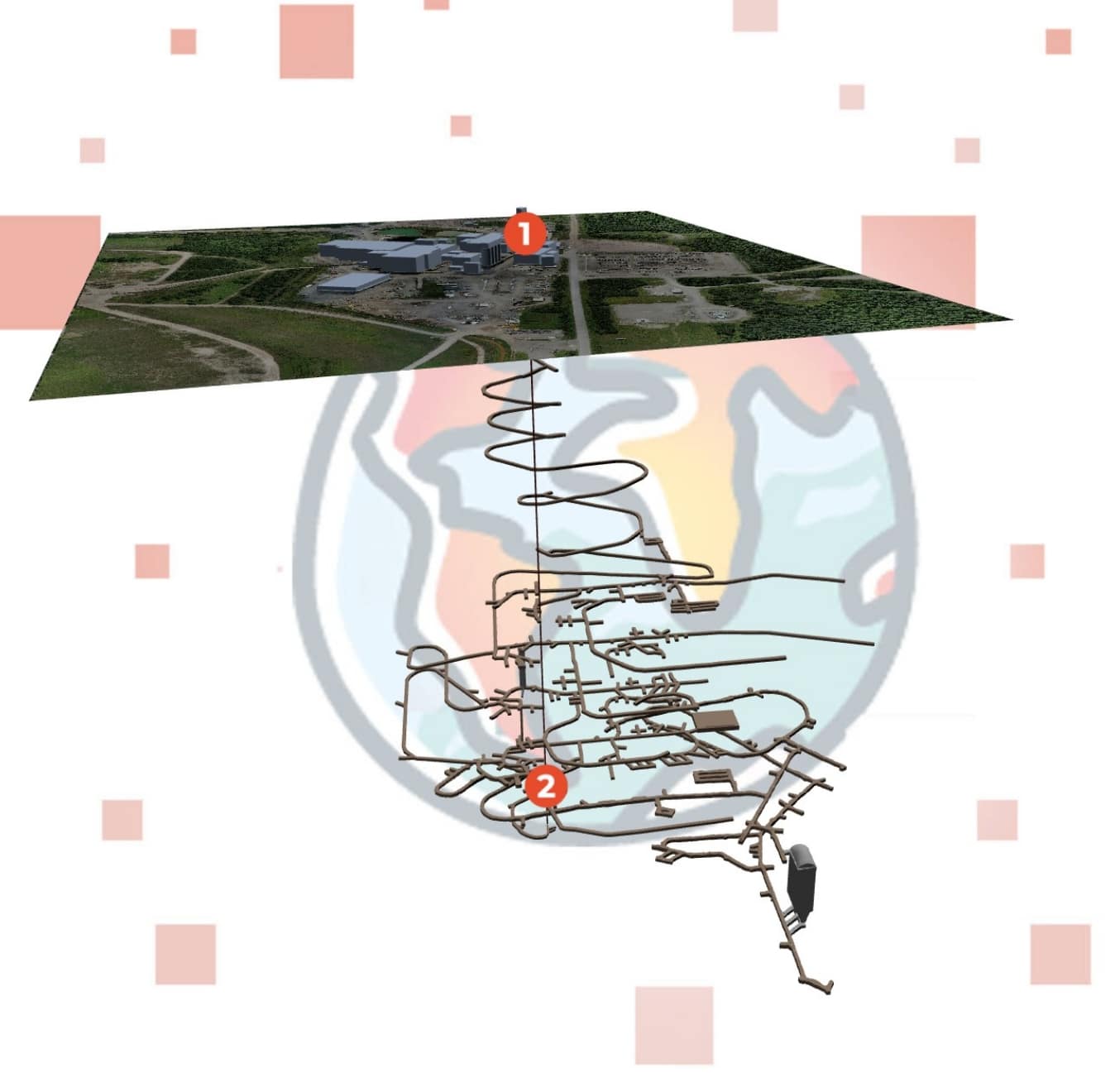
1. Departure from the surface
2. Arrival at level 2400
The underground tour begins with a crucial step in orebody exploitation: defining mineralized zones.
3. Orebody Definition
Drillers make holes that can reach several hundred meters long to locate the ore-rich zones. Exploration drill holes can extend up to about 1 km in all directions and are used to collect rock samples that geologists analyze.

Exploration drill holes
Defining the deposit — Core drilling
Info Box
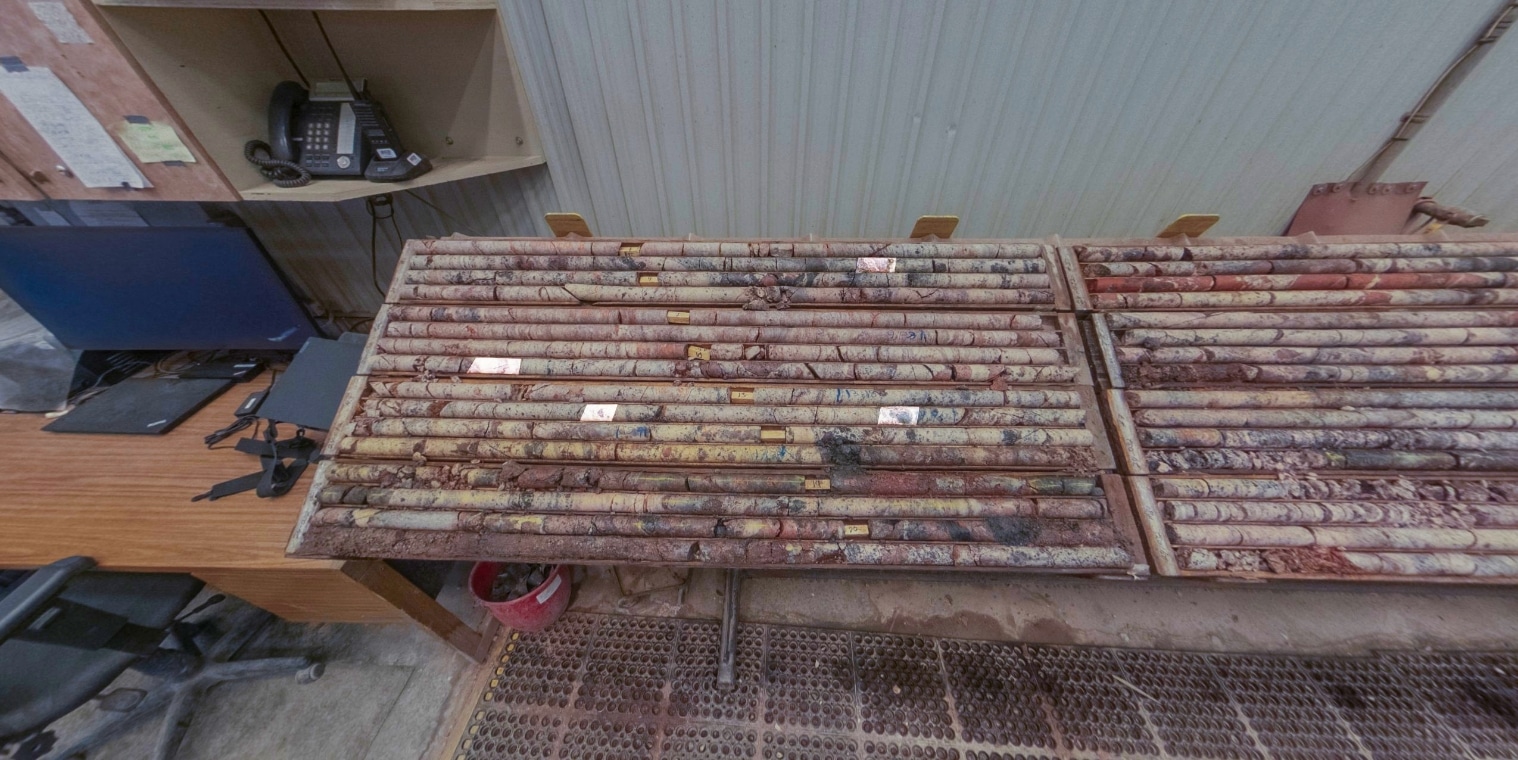
The drills use diamonds set in a metal alloy to wear away the rock. The diamond-tipped bit rotates constantly to cut out a central column of rock. Water is used to cool things down and flush out the drilling mud.
The diamond drill produces cores, which are tubes of rock used to identify the pyrochlore-rich zones. Pyrochlore is a mineral that contains niobium. Each drill hole is analyzed individually to describe the mineral composition, geological features and fracturing. Mining engineers use this data to plan which areas to mine.
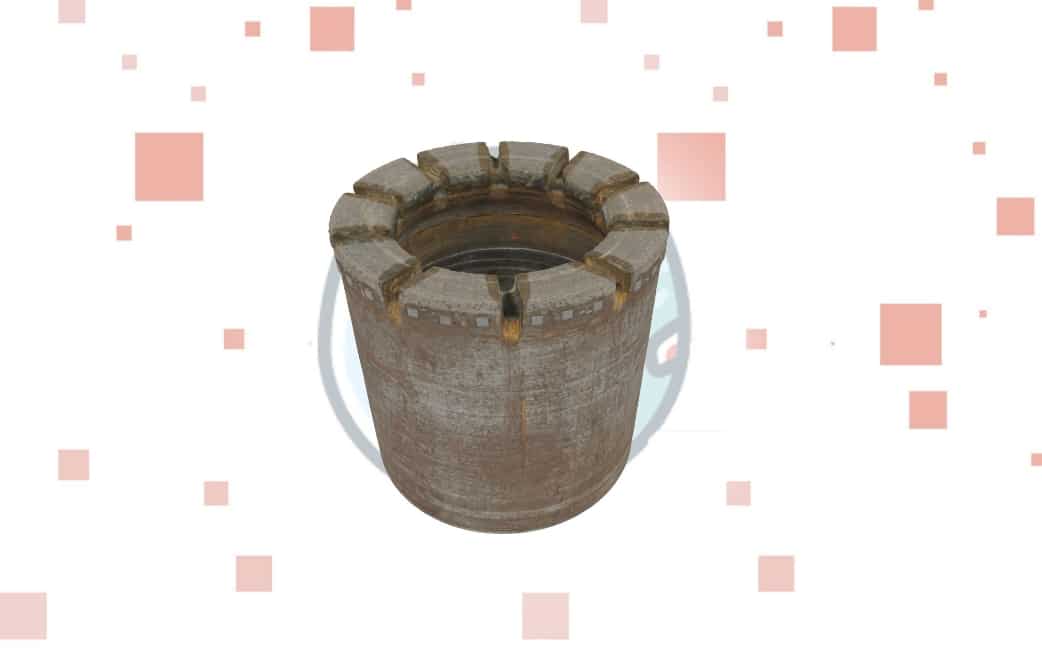
Diamond bit
4. Construction of galleries
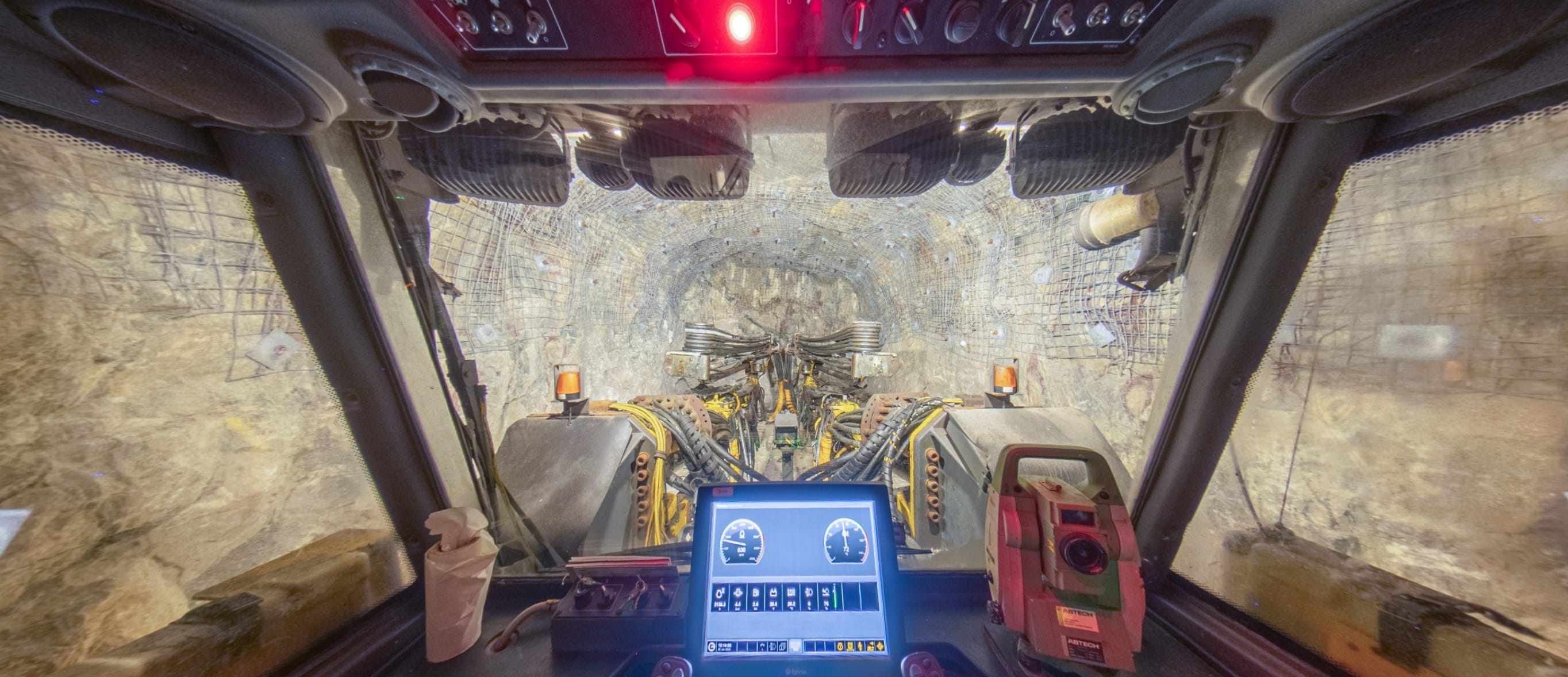
The tunnels are dug horizontally into the rock using a long-hole drill. They have to be wide enough for machinery to move around and for ventilation.
Long-hole drill — Head
The drill has two drill heads. It drills fixed lengths and makes many parallel holes to insert the explosives.
Ground support (wire mesh and bolts) anchored in the walls makes the tunnels safe and holds back loose blocks of rock.
The tunnel moves forward by alternating drilling and blasting.
A series of holes is drilled in a precise pattern to blast the rock face and push the tunnel forward.
5. Mining stopes
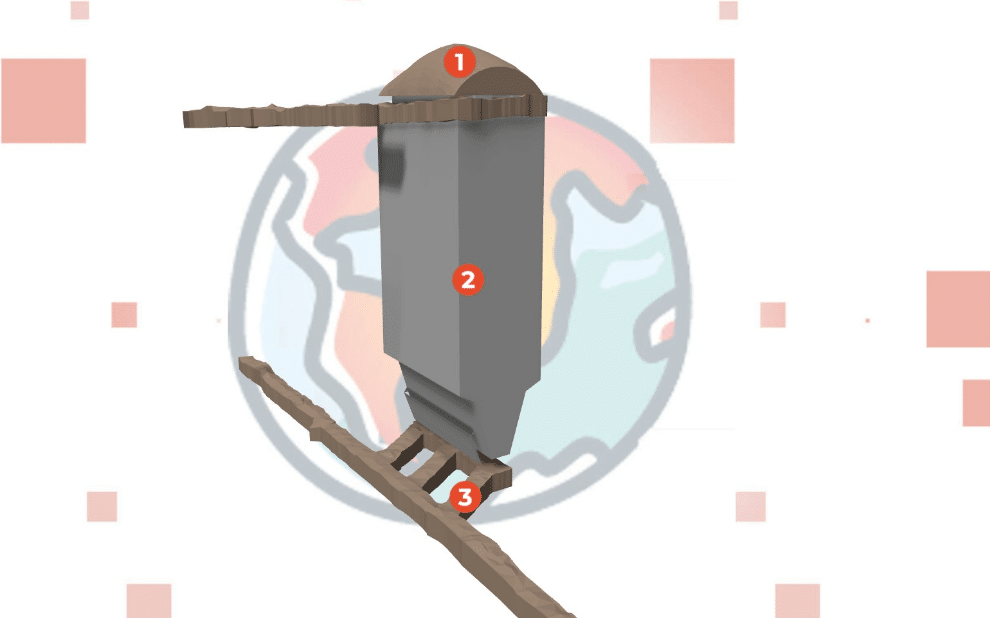
In the upper tunnel of a stope, vertical holes are drilled downward to prepare for blasting. The holes are laid out on a grid at precise angles to create a funnel shape that helps get the ore out.
1. Upper tunnel: drilling and blasting
2. Mining zone: the ore-rich part
3. Draw tunnels: collecting the ore
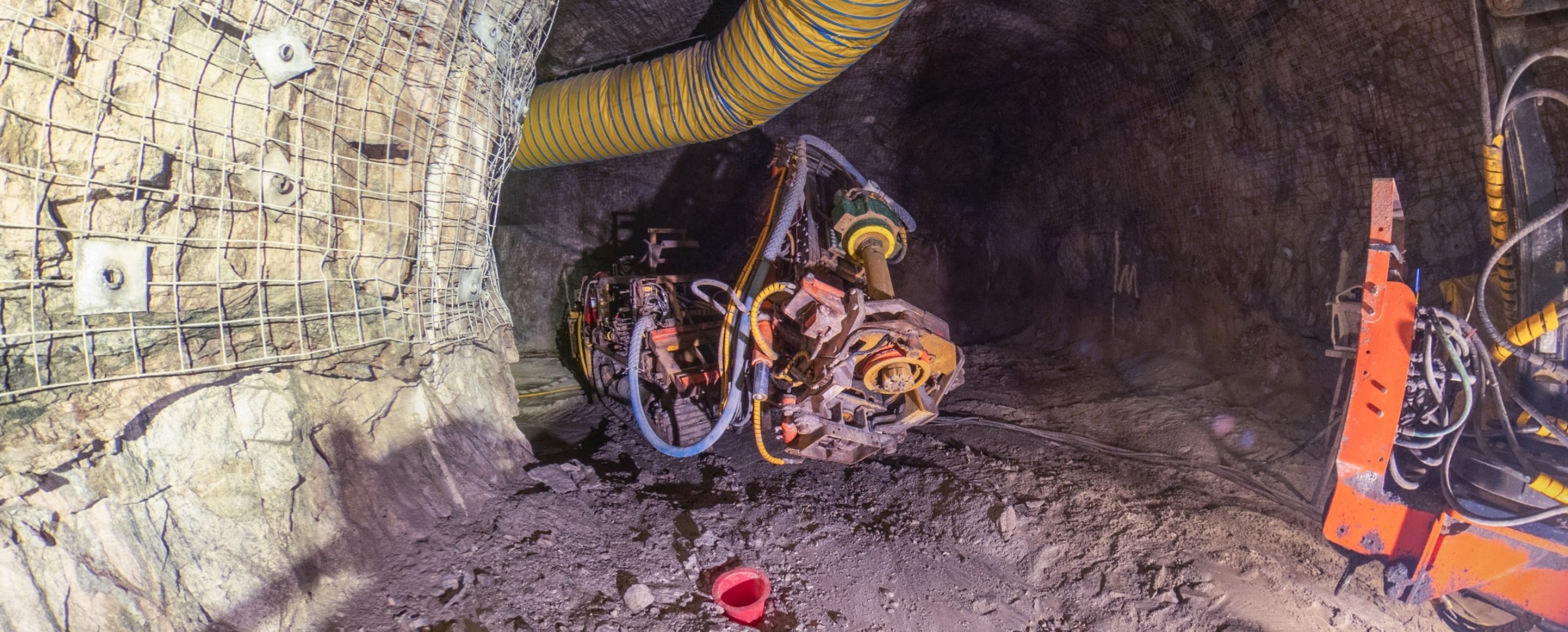
The drill is fed with rod segments that are bigger than the ones used in exploration.
• It is similar to the exploration drill, but it is used for mining.
• The drill bit has carbide tips that grind the rock.
• A mix of air and water is injected to make drilling easier.
• The holes are protected until the explosives are loaded in sequence, so the ore flows out efficiently.
6. Drawing the ore
About 90 meters lower down, the draw points let a shuttle loader move the ore into a dump truck. The truck carries the rock to the last underground step: crushing.
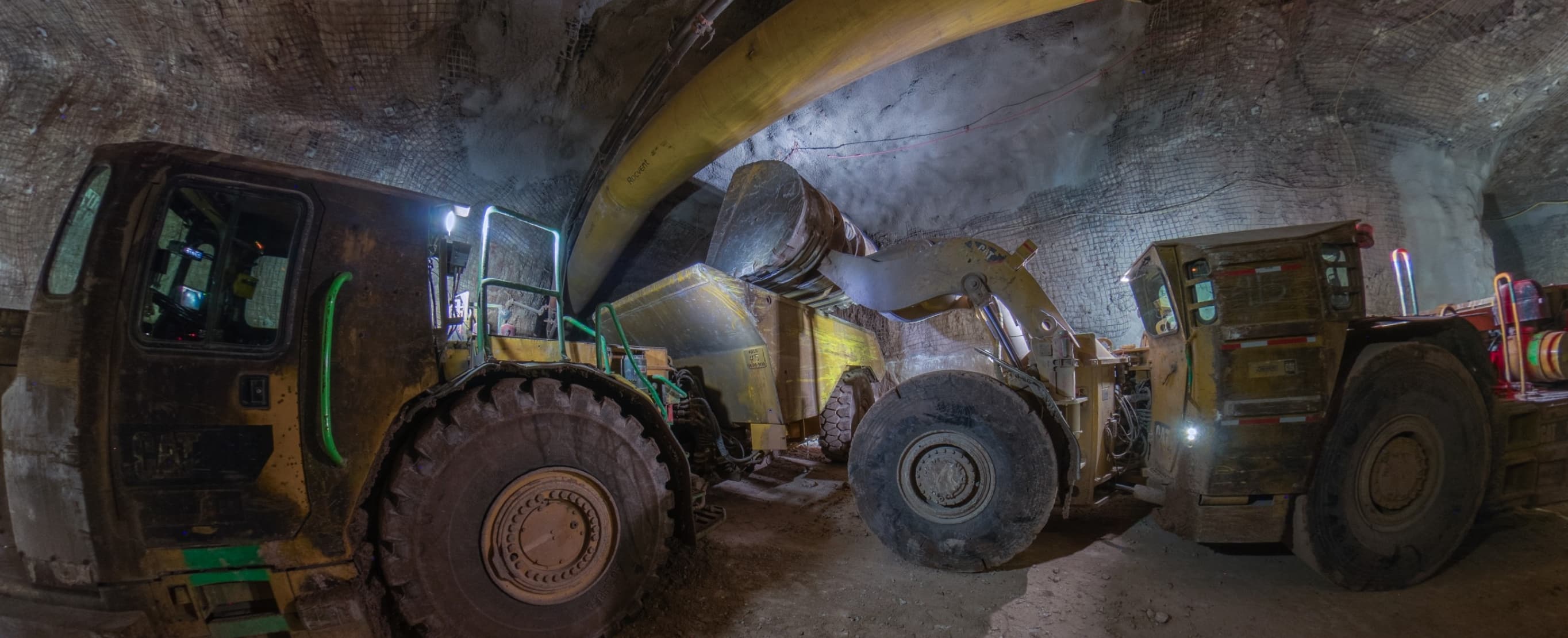
7. Crushing
The truck dumps the ore onto the grate.
The hydraulic hammer breaks up the blocks before they are sent to the surface, where the ore will be processed.
Video showing the underground crushing step: a dump truck drops the ore onto a grate, then a hydraulic hammer breaks up the big blocks of rock before they go up to the surface.
8. Laboratory – Ore processing
The processing plant extracts almost pure pyrochlore, which is then transformed into ferroniobium (an alloy of iron and niobium), mostly for steel mills.
The beakers you see hold samples of the product from each processing step.
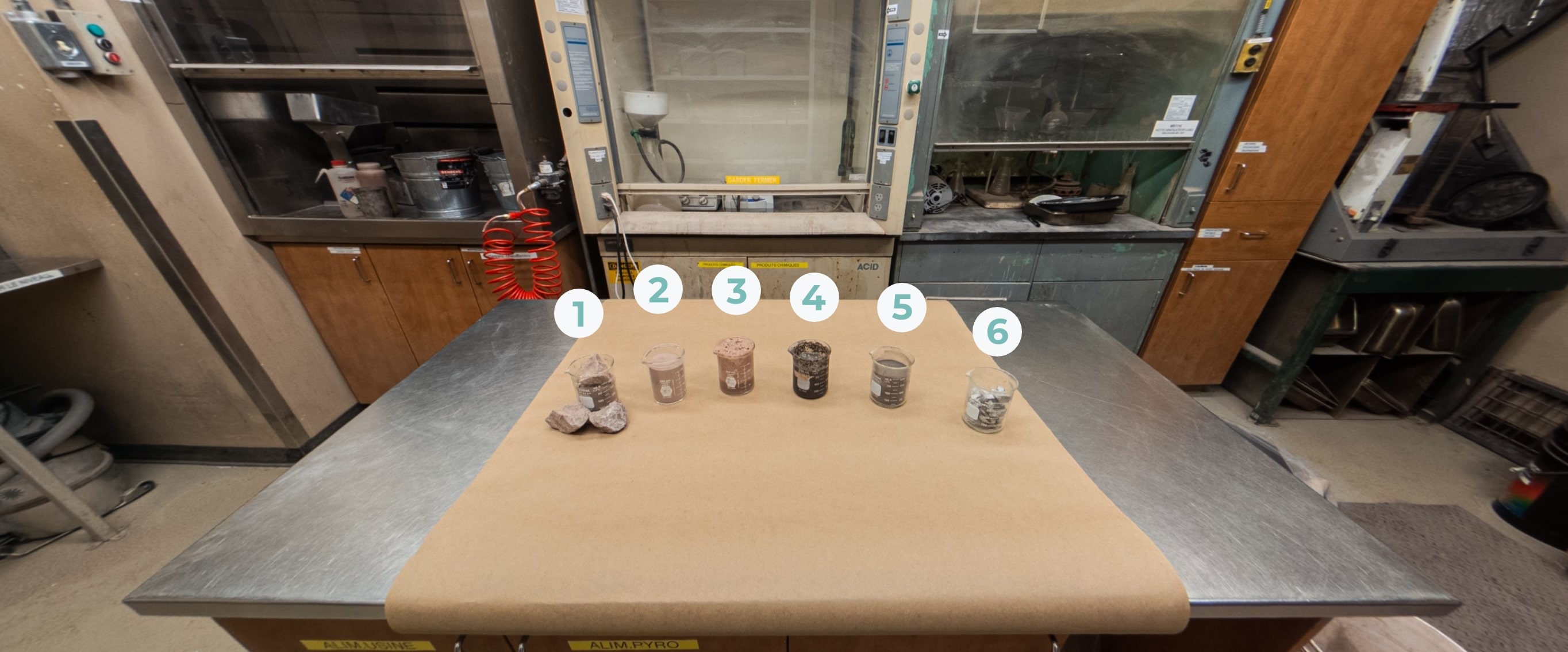
• Beaker 1: rock fragments as they come out of the mine.
• Beaker 2: product of the grinding steps.
• Beakers 3 and 4: results of the flotation steps.
• Beaker 5: result of leaching, which gives a pyrochlore concentrate at 52% Nb₂O₅.
• Beaker 6: ferroniobium, the final product from smelting.
Grinding – Beaker No. 2
First, the ore is made smaller using:
- a rod mill, which holds about 500 steel rods weighing 250 kg each and can process up to 160 tonnes of ore per hour;
- a ball mill, which uses steel balls the size of tennis balls for finer grinding.
The ground ore is then mixed with water to make a slurry that is carried to the next steps. About 700 tonnes of slurry per hour flow through the processing plant. Cyclones sort the particles by size; the contents of beaker No. 2 come from one of these cyclones.
Concentration by flotation – Beakers No. 3 and 4
The ore is ground down to 250 micrometers, about the size of powdered sugar, then concentrated by flotation.
This method combines adding chemicals and injecting air to make bubbles that carry some minerals up, while others stay at the bottom. Several flotation stations separate the minerals and gradually raise the niobium concentration.
- After the fourth cleaning step, the concentration reaches 19% Nb₂O₅.
- The whole process leads to a final concentrate at 52% Nb₂O₅.
Smelting – After beaker No. 5
Once the pyrochlore concentrate at 52% Nb₂O₅ is obtained, its structure is broken down to produce ferroniobium. In a large refractory vessel, the pyrochlore is mixed with aluminum and iron oxide to trigger a very powerful exothermic reaction. This reaction combines the iron and niobium to form ferroniobium.
Video showing the smelting of the pyrochlore concentrate: in a refractory vessel, the mix of pyrochlore, aluminum and iron oxide sets off an intense exothermic reaction that produces ferroniobium.
Beaker No. 6 – Final product and uses of niobium
Niobium is used in several fields:
- Steel: makes it more durable, lighter and stronger.
- Batteries: niobium oxides are being studied to greatly reduce charging time, especially for electric vehicles.
- Medicine: niobium-titanium alloys are used for implants, dental appliances and plates that hold broken bones in place.
Managing tailings – The ponds
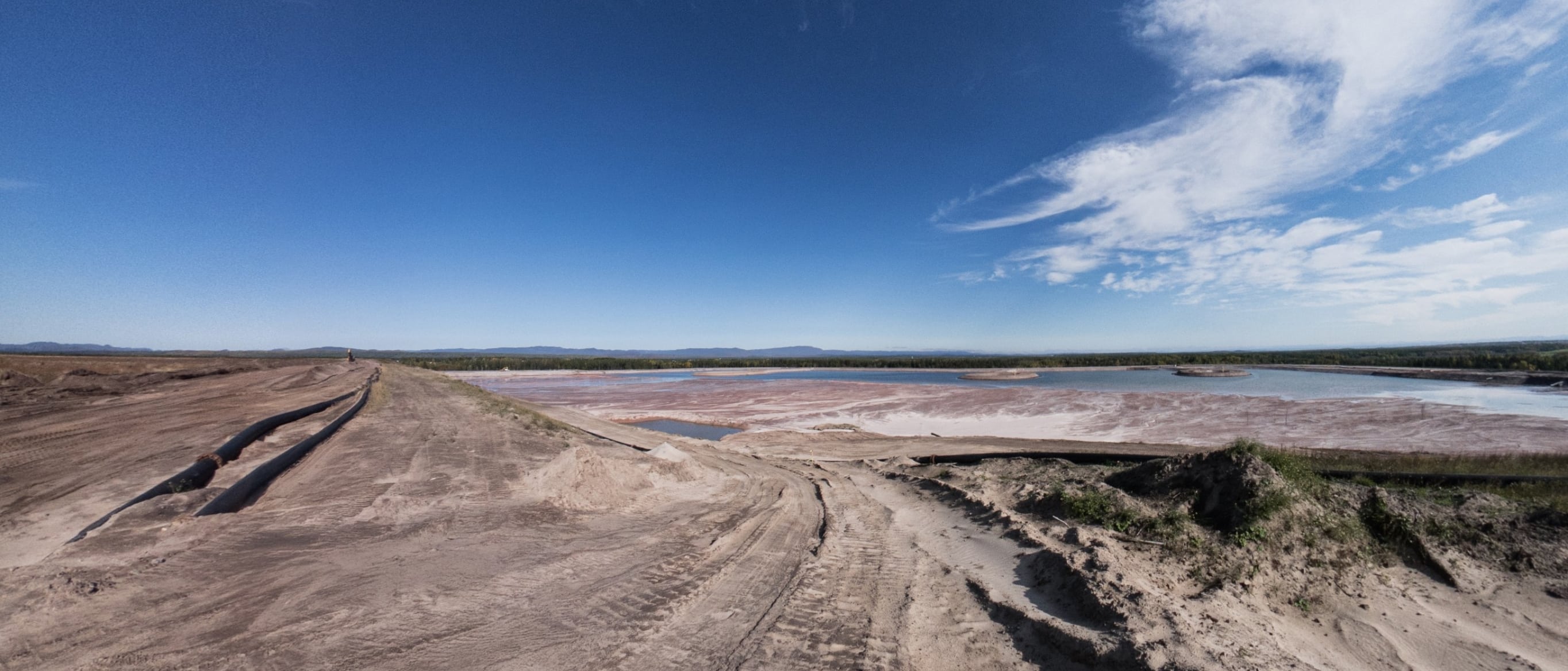
The tailings facilities are used to treat the slurry left over from mining and concentrating the ore. As the solids settle, the water is sent to different ponds to be treated, while the fine and coarse tailings are stored.
- 72% of the water used is recirculated and reused on site.
- 62% of the mine tailings, mostly the coarse tailings, are reused to build the dikes of the tailings facilities or to backfill underground stopes that have already been mined.