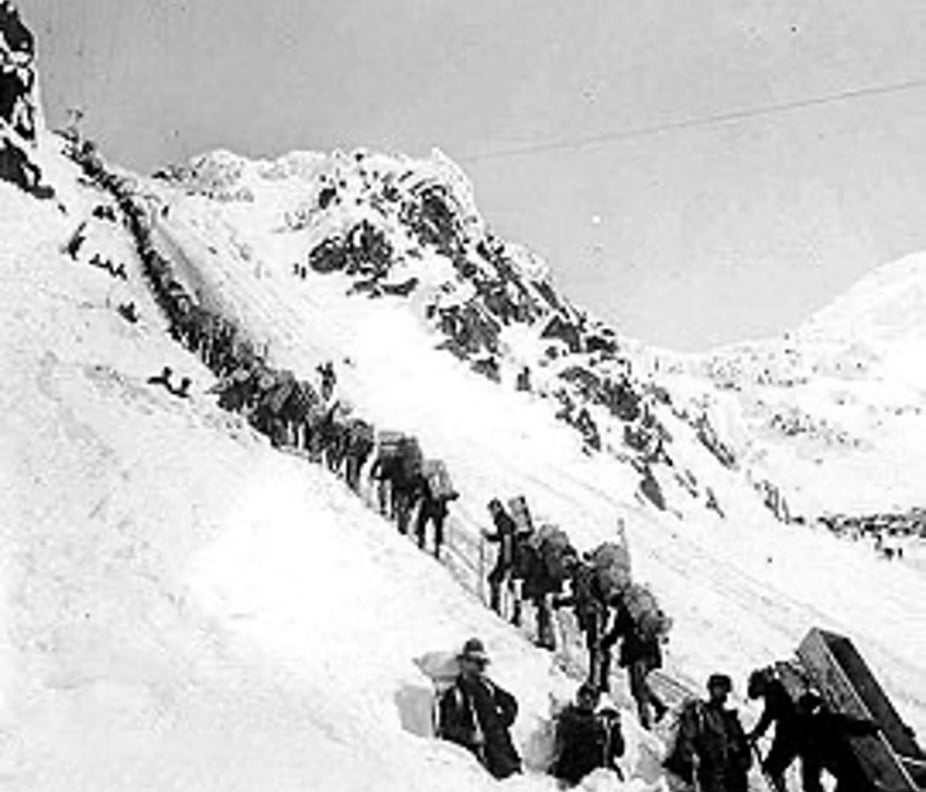

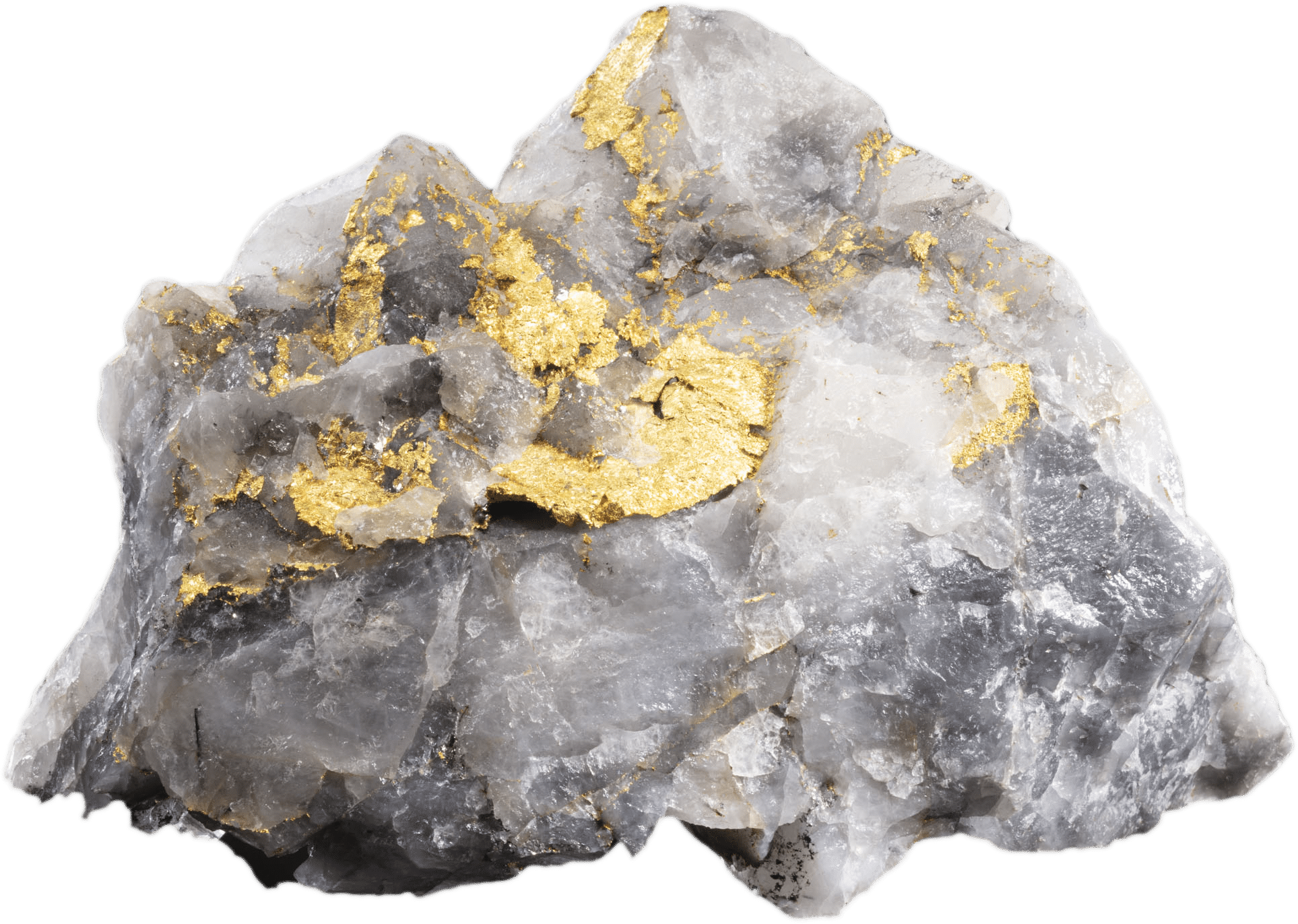
A gold deposit must have a concentration about 1,000 times higher than the average concentration in the Earth’s crust to be considered economically viable..
How does a mineral deposit form?
A mineral deposit is a concentration, by natural processes, of a certain element of economic interest.
The way different types of deposits form varies a lot depending on the commodity and the geological setting.
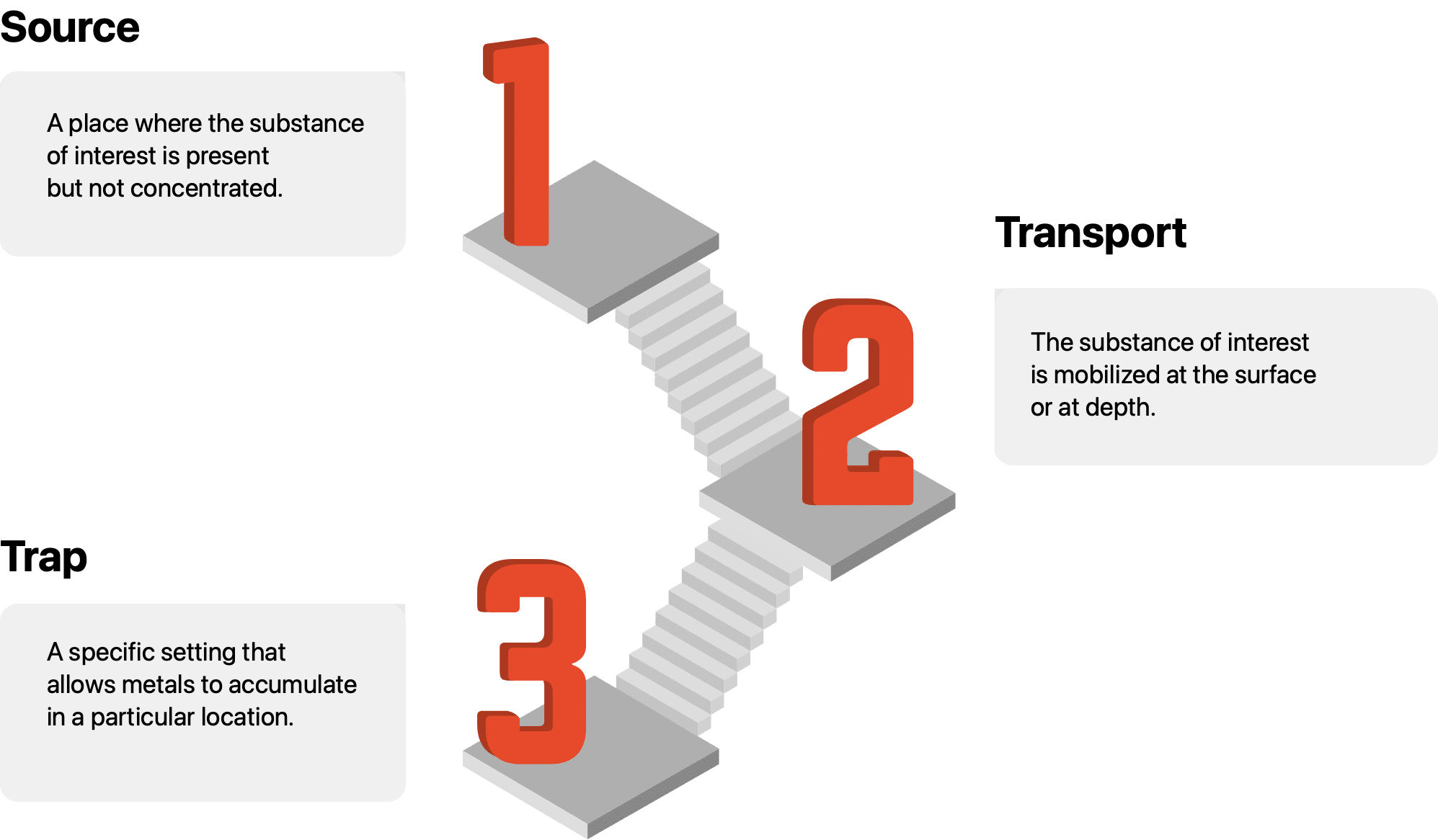
However, no matter how the concentration happens, the same formation steps are always there:
Source
A place where the substance of interest is found, but not concentrated.
Trap
A special setting that lets the metals settle in one specific place.
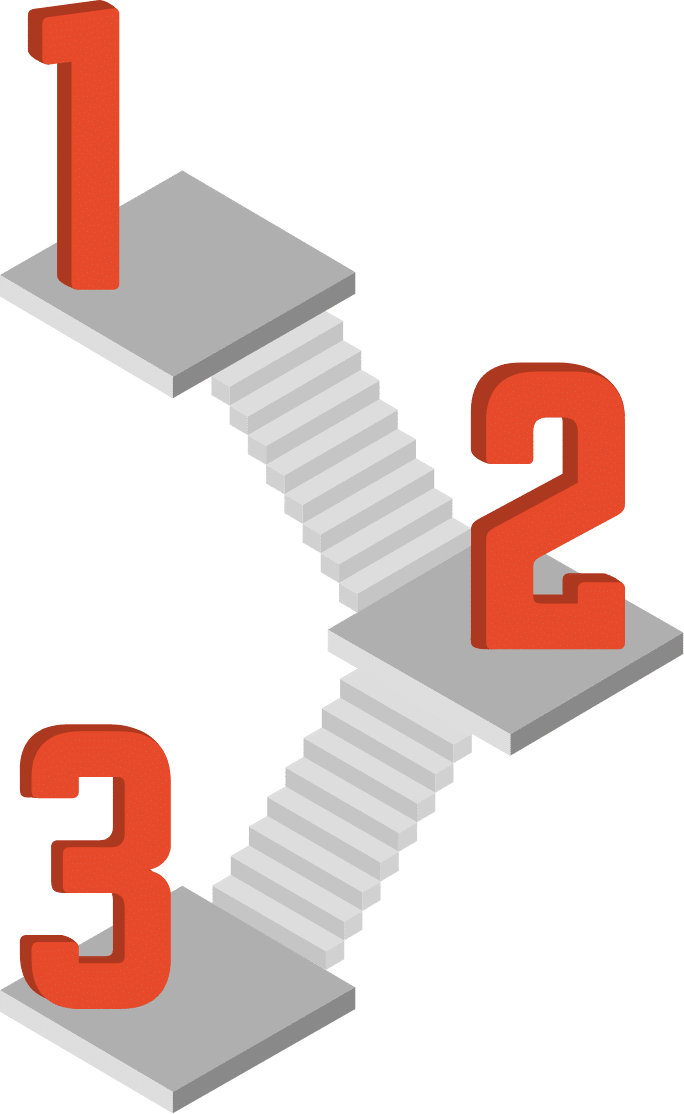
Transport
The substance of interest is mobilized at the surface or deep underground.
Here is an example of how a placer gold deposit forms
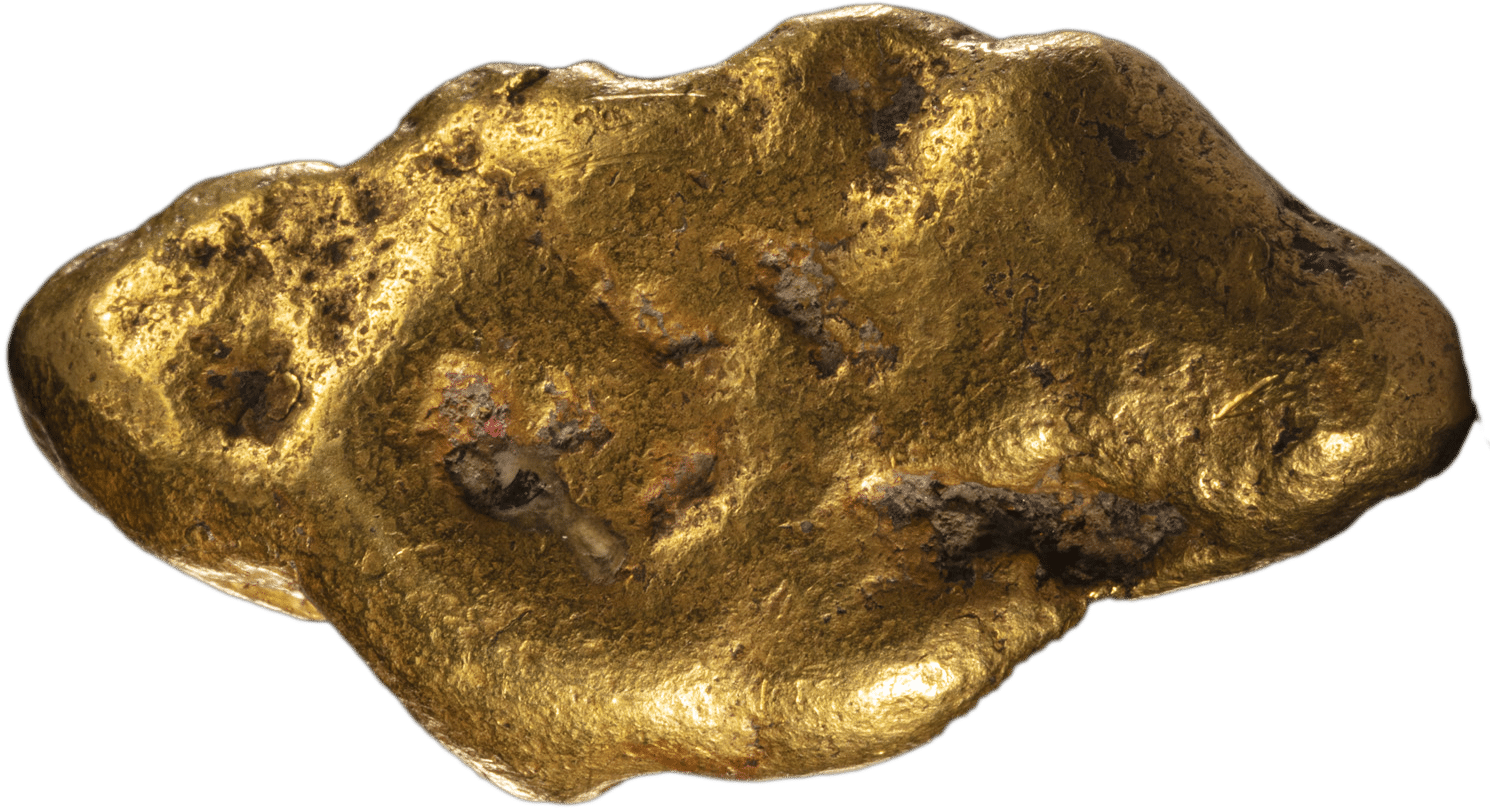
3.5 cm gold nugget from the Yukon region.
Placer gold
Placers, or alluvial deposits, are mechanical concentrations of high-density economic minerals. Among these, you find GOLD.
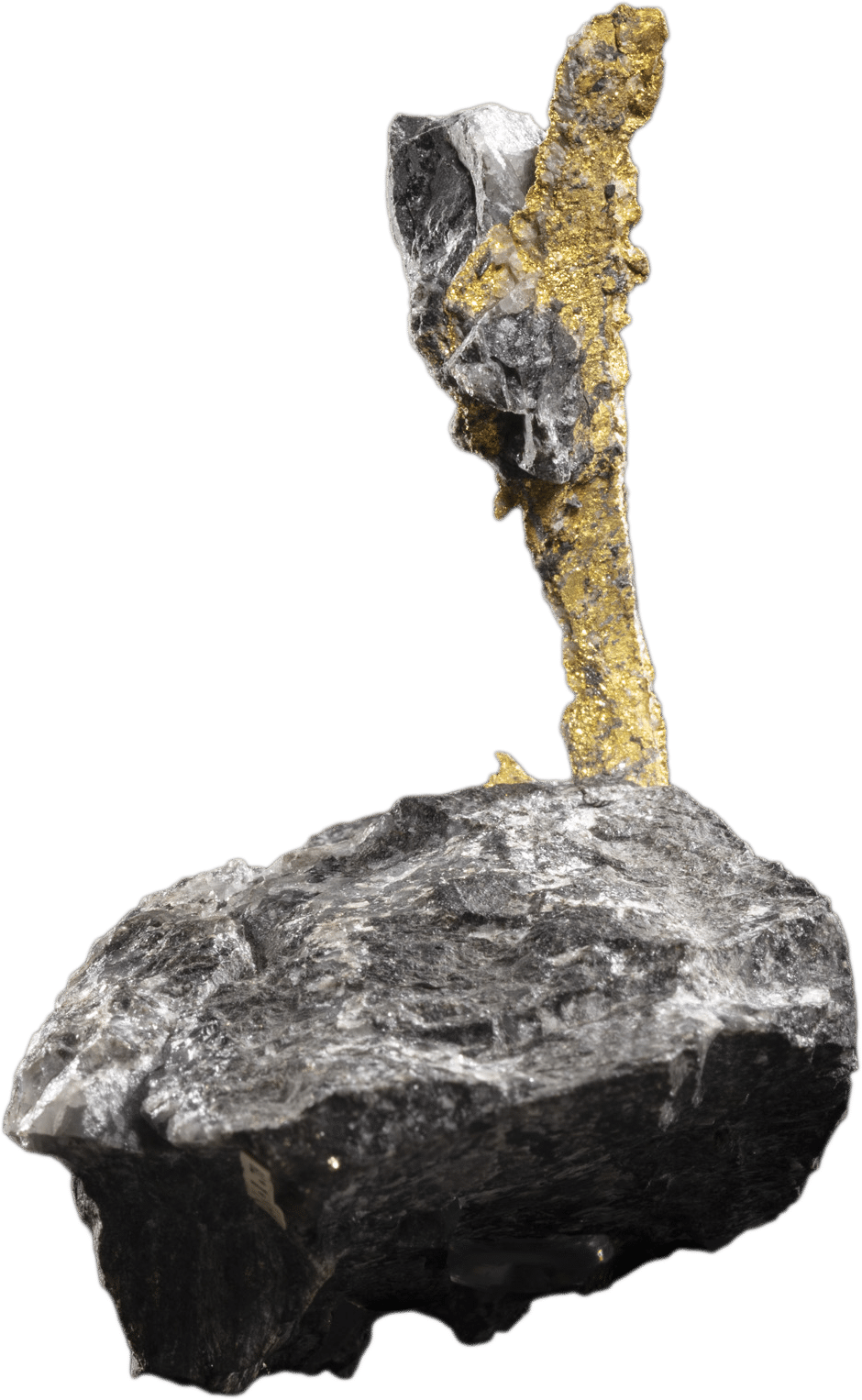
This sample (11 cm tall) comes from the Sigma mine in Val-d’Or (Quebec). You can see native gold trapped in a quartz matrix.

Source
These deposits come from the erosion of primary gold deposits. Erosion frees grains of gold from the bedrock. Erosion is caused by wind, water and freeze-thaw action.

Transport
These small gold flakes are carried by runoff into the network of streams and rivers, along with the rest of the sediment produced by erosion.

Trap
Changes in the current
Once in the stream, gold particles do not behave like the rest of the sediment because of one of its characteristic properties: its density.
Gold has a very high density of 19.3 g/cm3. This means that a cube of pure gold measuring 1 cm on each side weighs 19.3 g. For comparison, the same cube made of quartz would weigh 2.65 g.
Gold tends to concentrate in places where the current is weaker, while the other particles keep moving, suspended in the water. This is a mechanical separation of heavy minerals.
You can see dense minerals concentrating in rivers. It is easy to spot black, iron-rich minerals gathering in certain places because of changes in the strength of the current.
The shape of the stream and any obstacles change the strength of the current.
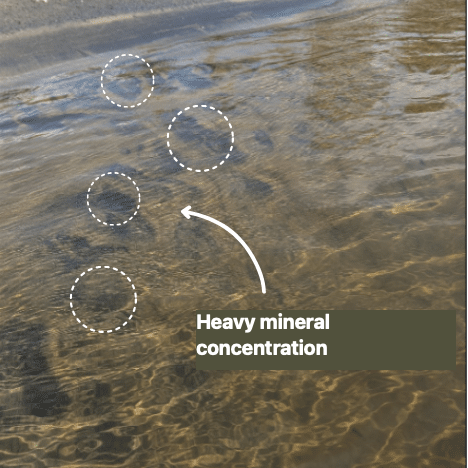
Dense minerals concentrated by the current in the Rivière du Gouffre in Baie-Saint-Paul, Quebec.

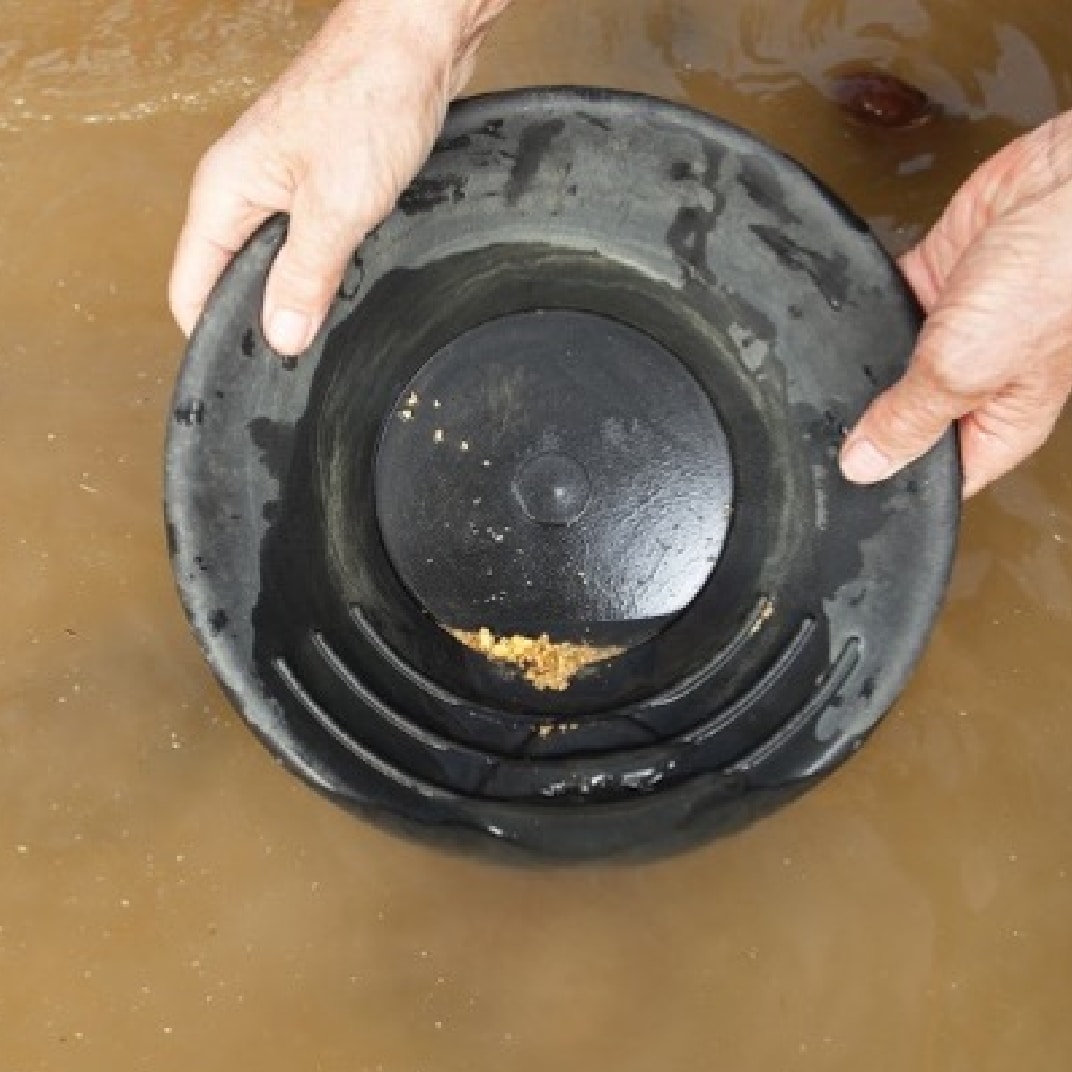
Gold panners also use gold’s high density to separate out the grains by panning with a large dish.
 Did You Know?