

Minerals in Everyday Life – Alternative
Did you know you have more than 70 elements
of the periodic table in your pocket?
At least if you have a cell phone…
This complex and now common piece of technology contains many components that require a large amount of mineral resources.
Discover the mineral linked to each of these elements
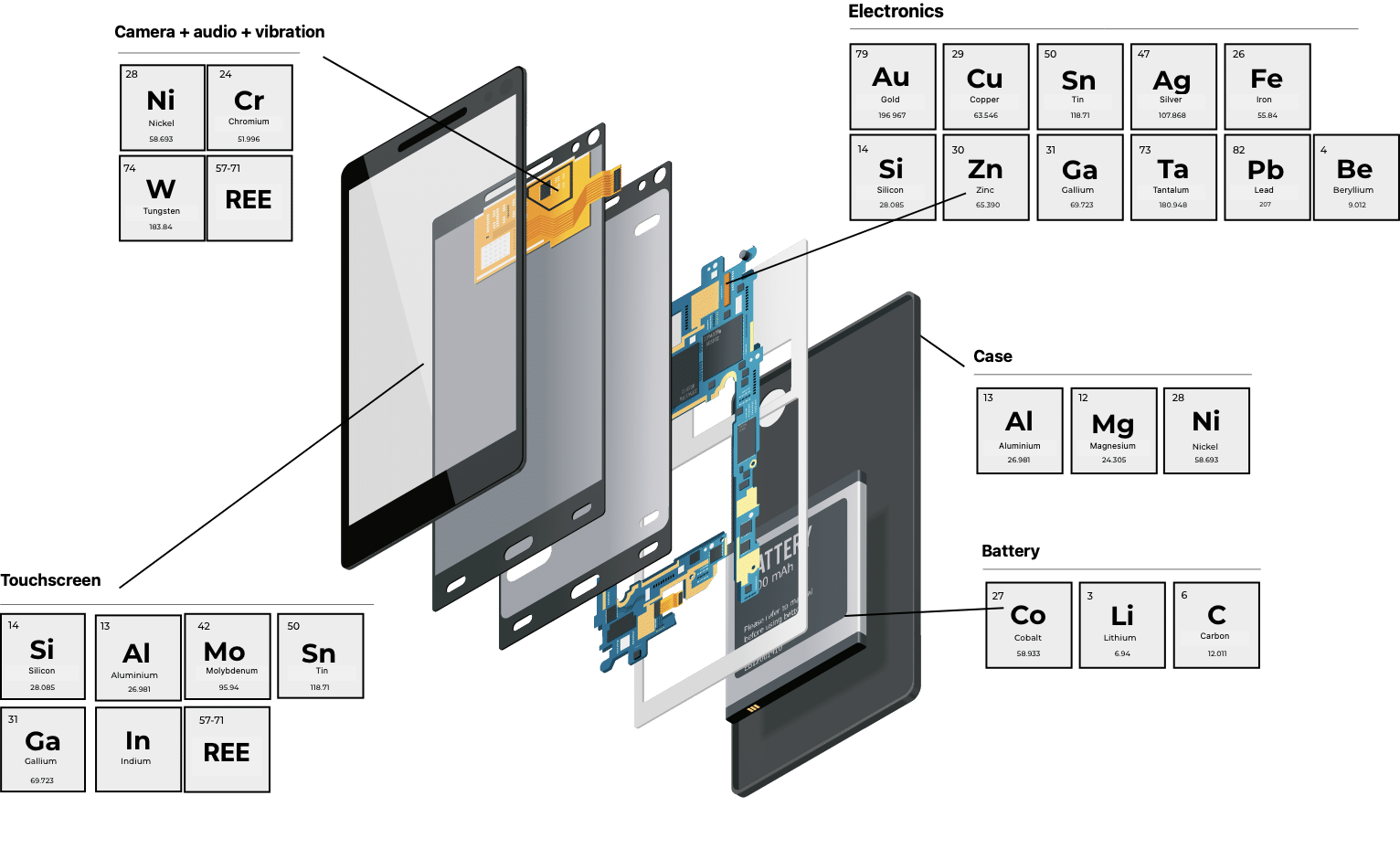
Chemical elements by phone component
Touchscreen: silicon (Si), aluminum (Al), molybdenum (Mo), tin (Sn), gallium (Ga), indium (In), rare earth elements (REE).
Camera, audio and vibration: nickel (Ni), chromium (Cr), tungsten (W), rare earth elements (REE).
Electronics: gold (Au), copper (Cu), tin (Sn), silver (Ag), iron (Fe), silicon (Si), zinc (Zn), gallium (Ga), tantalum (Ta), lead (Pb), beryllium (Be).
Case: aluminum (Al), magnesium (Mg), nickel (Ni).
Battery: cobalt (Co), lithium (Li), carbon (C).
Touchscreen
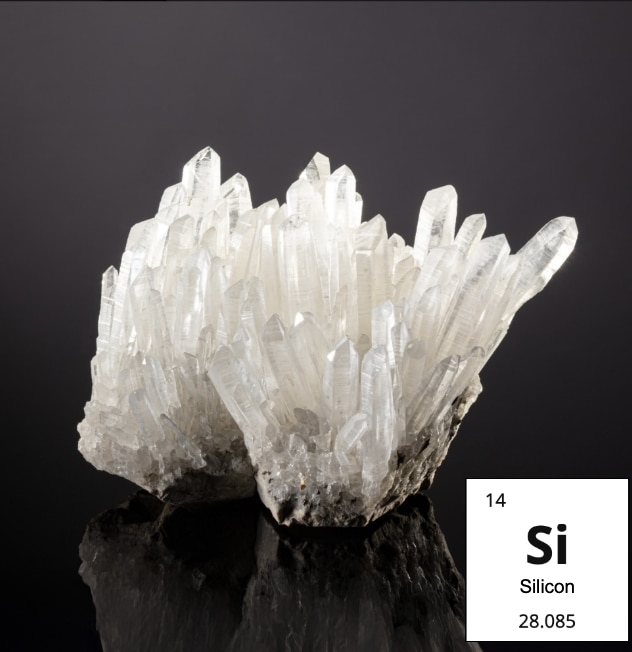
Silicon (Si), atomic number 14, atomic mass 28.085.
Quartz – SiO2
41cm x 35cm x 35 cm
Origin: Huaron, Peru
Besides being useful for making glass and ceramics, quartz is a source of silica, which is used in electronics and to make optical fibers.
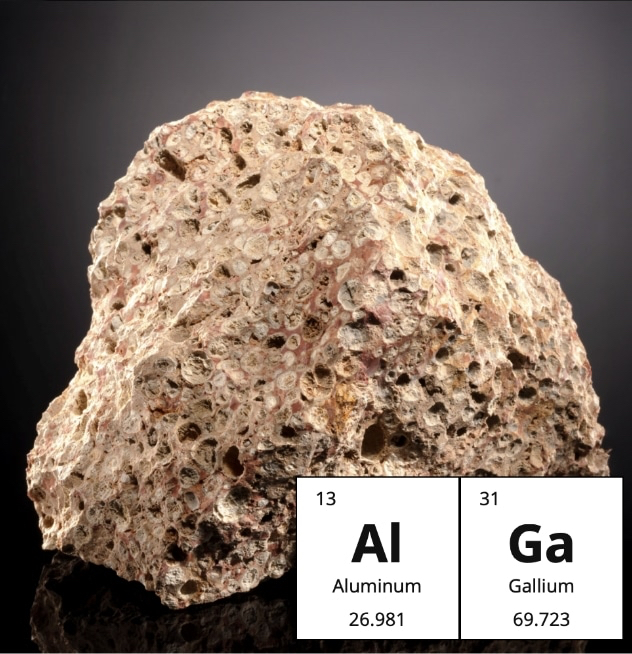
Aluminum (Al), atomic number 13, atomic mass 26.981. Gallium (Ga), atomic number 31, atomic mass 69.723.
Bauxite
16,5 cm x 12,5 cm x 8 cm
Origin: Suriname
This rock contains silica, aluminium hydroxides and iron oxides. Uses: It is the main source of aluminium and one of the main sources of gallium. Bauxite is formed by the weathering of surface rocks by rainwater.
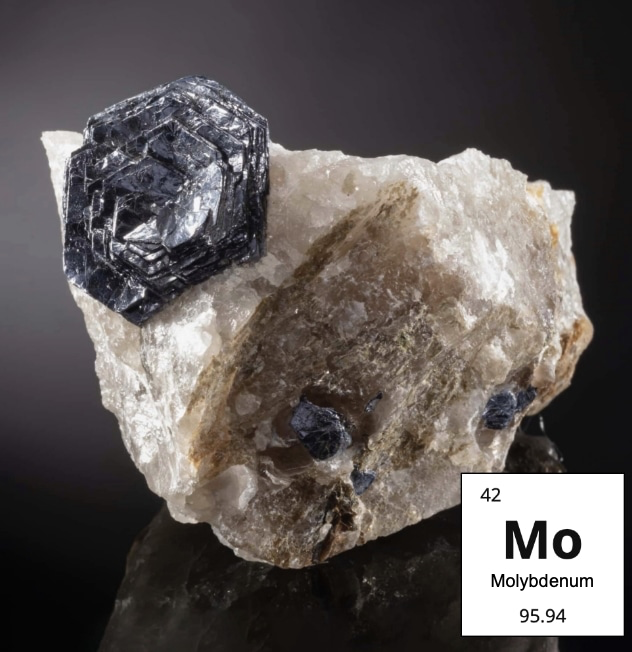
Molybdenum (Mo), atomic number 42, atomic mass 95.94.
Molybdenite
3.5cm x 3.5cm x 1cm (crystal)
Origin: Abitibi, Québec, Canada
A very soft metallic mineral that comes apart in sheets. This mineral is the main source of molybdenum, which is used as a lubricant and in alloys.
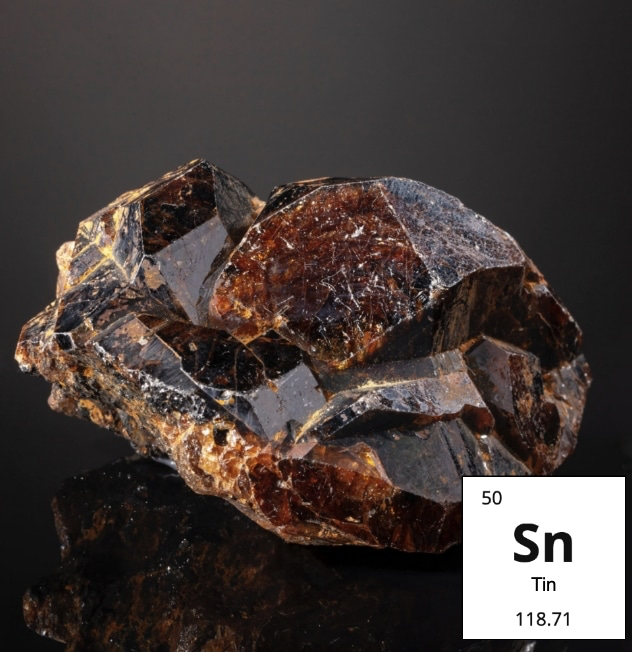
Tin (Sn), atomic number 50, atomic mass 118.71.
Cassiterite – SnO2
4.5cm x 7cm x 6cm
Origin: Rwanda
This is the main ore of tin, a metal with many industrial uses. It is widely used for soldering electronic components, in alloys and in chemical products.
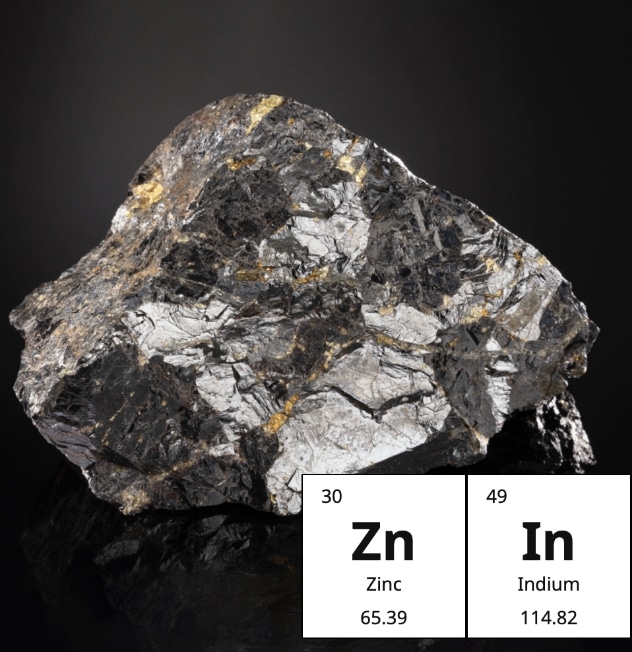
Zinc (Zn), atomic number 30, atomic mass 65.39. Indium (In), atomic number 49, atomic mass 114.82.
Sphalerite – (Zn,Fe)S
11 cm x 8 cm x 6 cm
Origin: Portneuf, Québec
It is the primary ore of zinc, and metals such as indium, germanium, and cadmium are also extracted from it as by-products. Uses: Zinc is used for galvanising (corrosion protection), in alloys such as brass, and in batteries. Indium, for its part, is used in touchscreens, solar cells, the manufacture of semiconductors and in alloys.
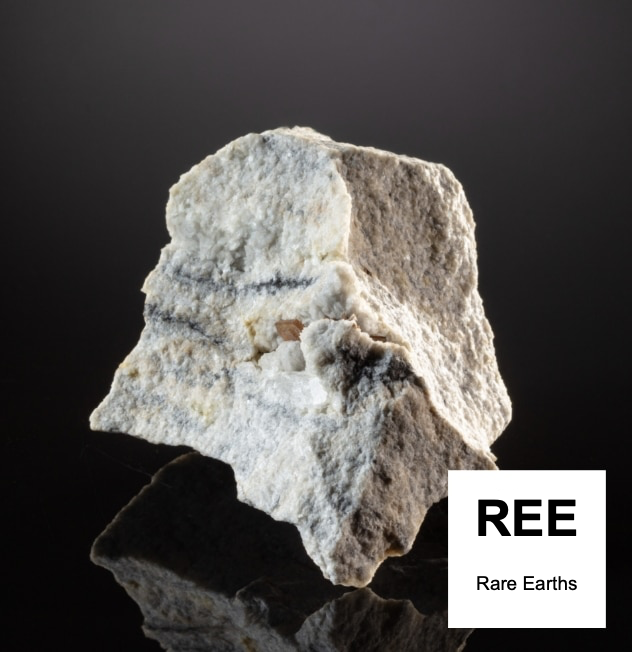
Rare earth elements (REE), atomic numbers 57 to 71.
Bastnäsite – (Ce,La,Y)CO3F
7 cm x 7 cm x 6 cm
Origin: Trimouns, Ariège, France
Rare earth elements are extracted from several minerals, including these ones. This group of elements is essential to many parts of our daily lives and plays a central role in developing advanced technologies: magnets, electronics, medicine…
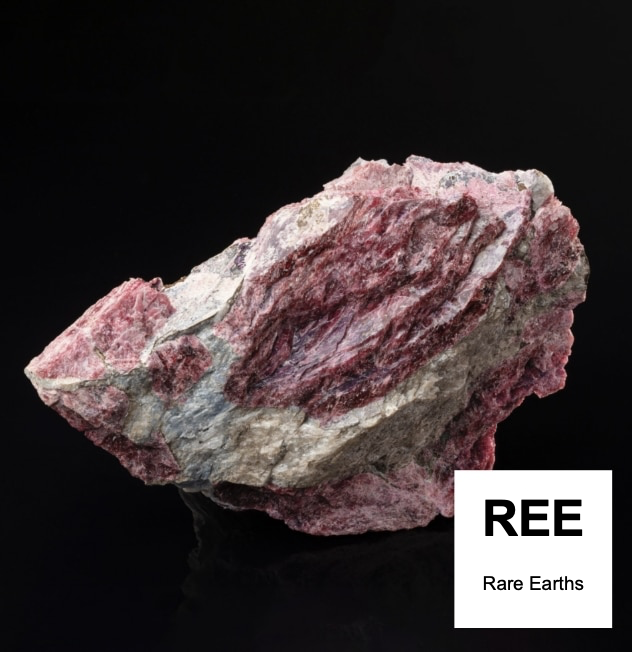
Rare earth elements (REE), atomic numbers 57 to 71.
Eudialyte – (Na,Ca)5(Fe,Mn)ZrSi8O22(OH,Cl)2
25 cm x 18 cm x 12 cm
Origin: Kipawa, Québec
Rare earth elements are extracted from several minerals, including these ones. This group of elements is essential to many parts of our daily lives and plays a central role in developing advanced technologies: magnets, electronics, medicine…
Camera + audio + vibration
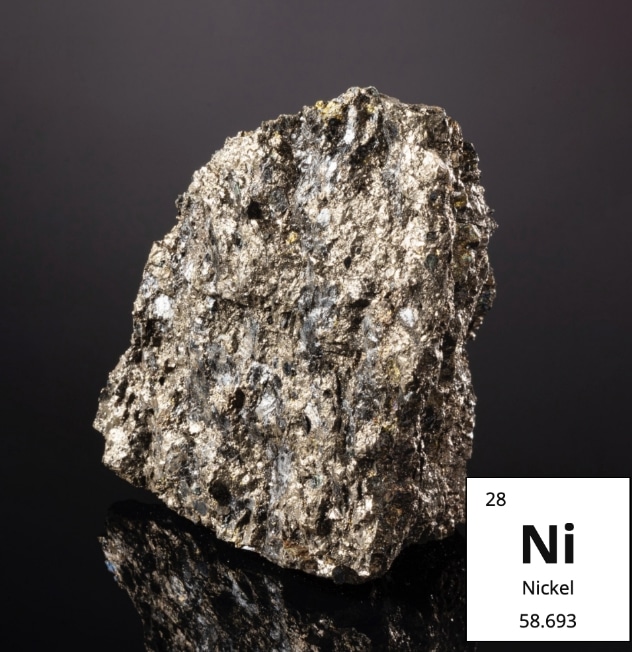
Nickel (Ni), atomic number 28, atomic mass 58.693.
Pentlandite – (Fe,Ni)9S8
13.5cm x 9cm x 7cm
Origin: Sudbury, Ontario, Canada
The main ore of nickel. This metal is an essential part of stainless steel and is used in alloys. It is also used in batteries and to make coins.
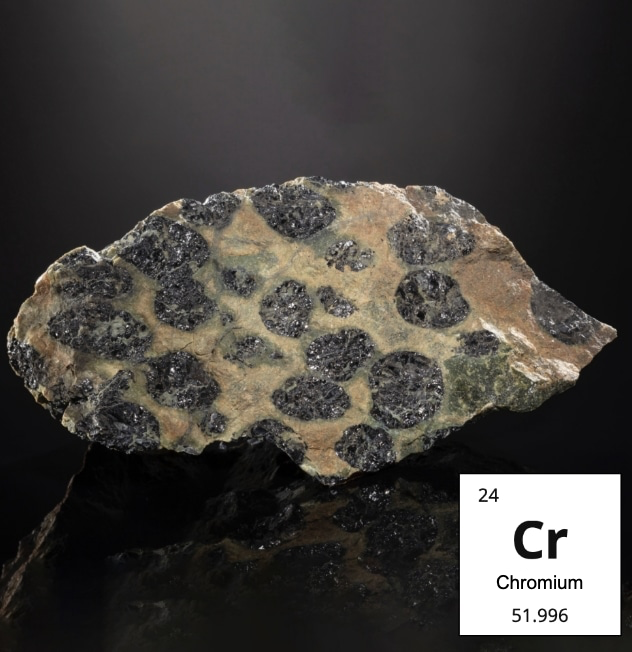
Chromium (Cr), atomic number 24, atomic mass 51.996.
Chromite – FeCr2O4
32cm x 25cm x 12cm
Thetford Mines, Québec, Canada
Chromite is the main ore from which chromium is extracted. Chromium is widely used in metallurgy and to make pigments.
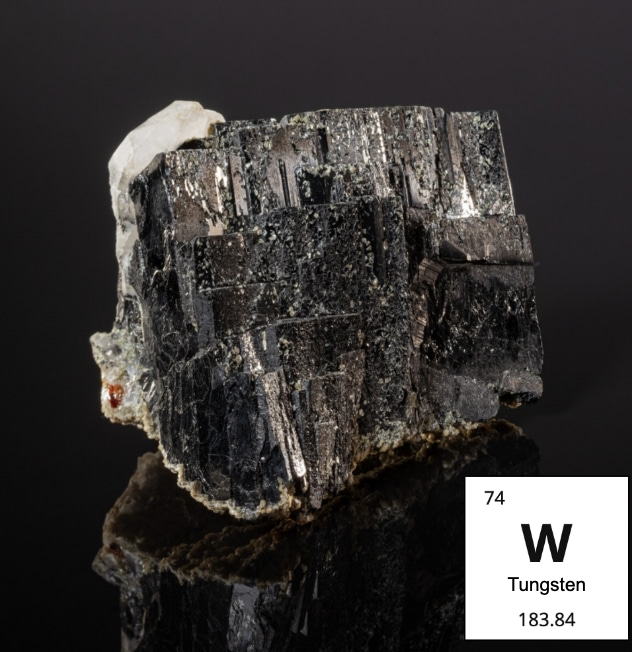
Tungsten (W), atomic number 74, atomic mass 183.84.
Wolframite – (Fe,Mn)WO4
11cm x 8cm x 6cm
Panasqueira, Portugal
One of the main sources of tungsten. This metal has a very high melting point and resists corrosion very well. It is used, among other things, to make specialty steel, filaments in incandescent light bulbs, and welding electrodes.
Rare earth elements (REE), atomic numbers 57 to 71.
Bastnäsite – (Ce,La,Y)CO3F
7 cm x 7 cm x 6 cm
Origin: Trimouns, Ariège, France
Rare Earth Elements
Rare earth elements are extracted from several minerals, including these ones. This group of elements is essential to many parts of our daily lives and plays a central role in developing advanced technologies: magnets, electronics, medicine…
Rare earth elements (REE), atomic numbers 57 to 71.
Eudialyte – (Na,Ca)5(Fe,Mn)ZrSi8O22(OH,Cl)2
25 cm x 18 cm x 12 cm
Origin: Kipawa, Québec
Rare Earth Elements
Rare earth elements are extracted from several minerals, including these ones. This group of elements is essential to many parts of our daily lives and plays a central role in developing advanced technologies: magnets, electronics, medicine…
Electronics
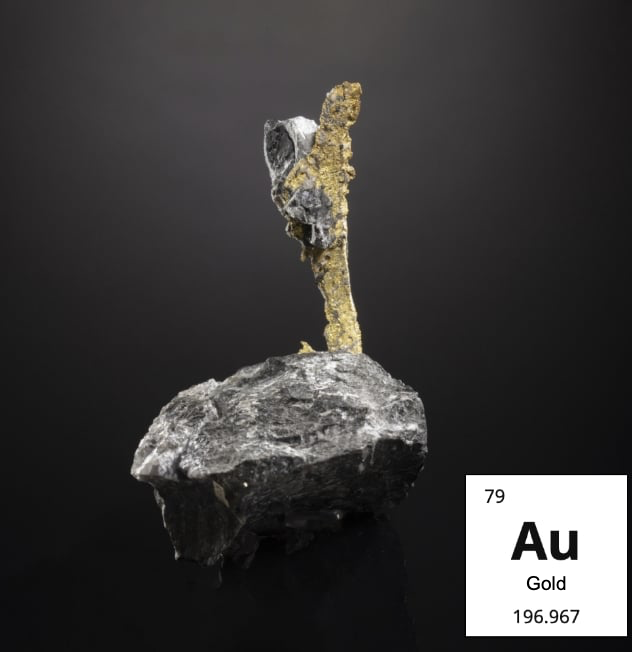
Gold (Au), atomic number 79, atomic mass 196.967.
Native gold – Au
14,5 cm x 11,5 cm x 7 cm
Origin: Val-d’Or, Québec
Utility: Only a portion of gold is used in jewelry, as this very dense yellow metal has numerous applications across many fields, including currency, aerospace, electronics, and medicine.
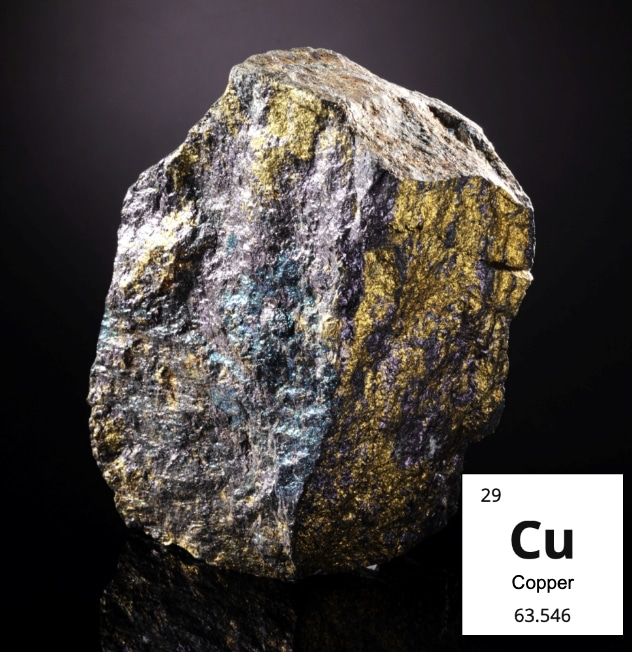
Copper (Cu), atomic number 29, atomic mass 63.546.
Chalcopyrite – CuFeS2
17cm x 13cm x 9cm
Origin: Estrie, Québec, Canada
Chalcopyrite is the main ore from which copper is extracted. Copper is an essential metal in many industries, including electricity, construction, electronics and plumbing.
Tin (Sn), atomic number 50, atomic mass 118.71.
Cassiterite – SnO2
4.5cm x 7cm x 6cm
Origin: Rwanda
This is the main ore of tin, a metal with many industrial uses. It is widely used for soldering electronic components, in alloys and in chemical products.
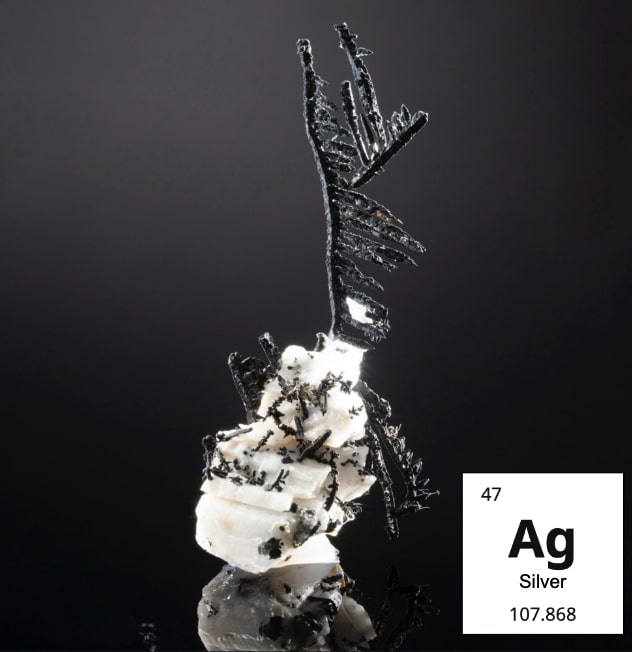
Silver (Ag), atomic number 47, atomic mass 107.868.
Native silver – Ag
5 cm
Origin: Germany
Uses: A precious metal used in jewelry and in industrial processes.
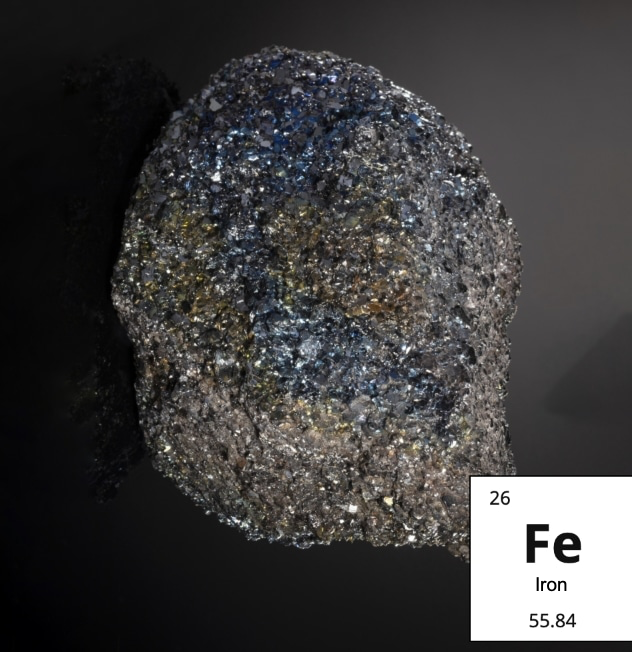
Iron (Fe), atomic number 26, atomic mass 55.84.
Hematite – Fe2O3
15 cm x 8 cm x 8 cm
Origin: Québec Cartier Mine, Québec
This rock is a very common iron ore. When ground into a powder, the mineral turns red and is also used as a pigment; in fact, its name comes from the Greek word “haima,” which means blood.
Silicon (Si), atomic number 14, atomic mass 28.085.
Quartz – SiO2
41cm x 35cm x 35 cm
Origin: Huaron, Peru
Besides being useful for making glass and ceramics, quartz is a source of silica, which is used in electronics and to make optical fibers.
Zinc (Zn), atomic number 30, atomic mass 65.39. Indium (In), atomic number 49, atomic mass 114.82.
Sphalerite – (Zn,Fe)S
11 cm x 8 cm x 6 cm
Origin: Portneuf, Québec
It is the primary ore of zinc, and metals such as indium, germanium, and cadmium are also extracted from it as by-products. Uses: Zinc is used for galvanising (corrosion protection), in alloys such as brass, and in batteries. Indium, for its part, is used in touchscreens, solar cells, the manufacture of semiconductors and in alloys.
Aluminum (Al), atomic number 13, atomic mass 26.981. Gallium (Ga), atomic number 31, atomic mass 69.723.
Bauxite
16,5 cm x 12,5 cm x 8 cm
Origin: Suriname
This rock contains silica, aluminium hydroxides and iron oxides. Uses: It is the main source of aluminium and one of the main sources of gallium. Bauxite is formed by the weathering of surface rocks by rainwater.
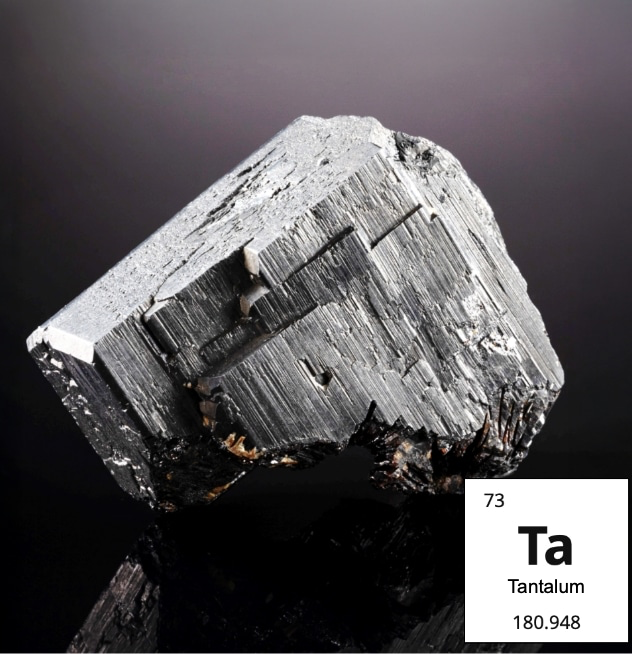
Tantalum (Ta), atomic number 73, atomic mass 180.948.
Manganotantalite (Fe,Mn)(Ta,Nb)2O6
4.5cm x 7cm x 6cm
Brazil
This mineral belongs to a group of minerals whose name is often shortened to “coltan.” It is an ore that contains niobium and tantalum. These two metals are essential to many modern technologies, both in high-performance alloys and in electronics such as capacitors.
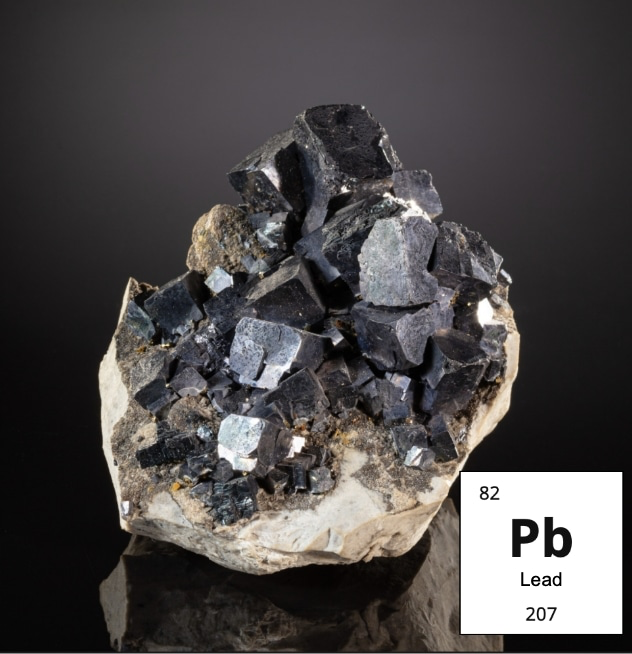
Lead (Pb), atomic number 82, atomic mass 207.
Galena – PbS
13,5 cm x 9 cm x 7 cm
Origin: Illinois, USA
This mineral is the primary ore of lead. Uses: Lead is useful in the manufacture of certain types of batteries or protective sheaths for cables, in soldering, and even in radiation protection, where it serves as a barrier.
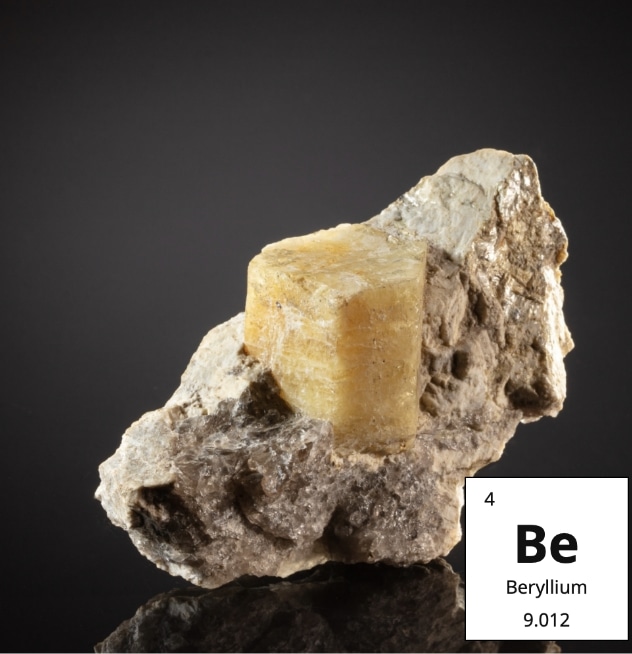
Beryllium (Be), atomic number 4, atomic mass 9.012.
Beryl – Be3Al2Si6O18
8cm
Italy
Uses: Beryl is very hard. Its green variety (emerald) is valued as a precious stone, and its blue variety (aquamarine) as a semi-precious stone.
Battery
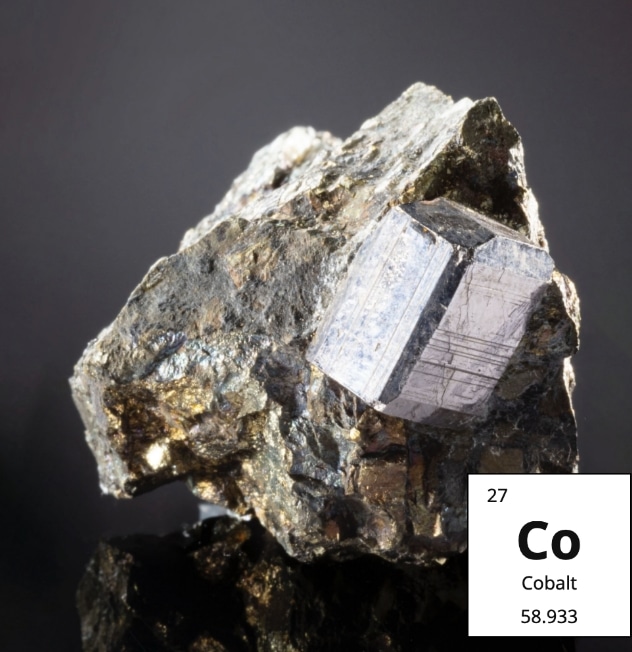
Cobalt (Co), atomic number 27, atomic mass 58.933.
Cobaltite (CoAsS)
1cm x 1cm x 0.5cm (crystal)
Tunaberg, Sweden
An important source of Co. It is often found together with nickel-bearing ores.
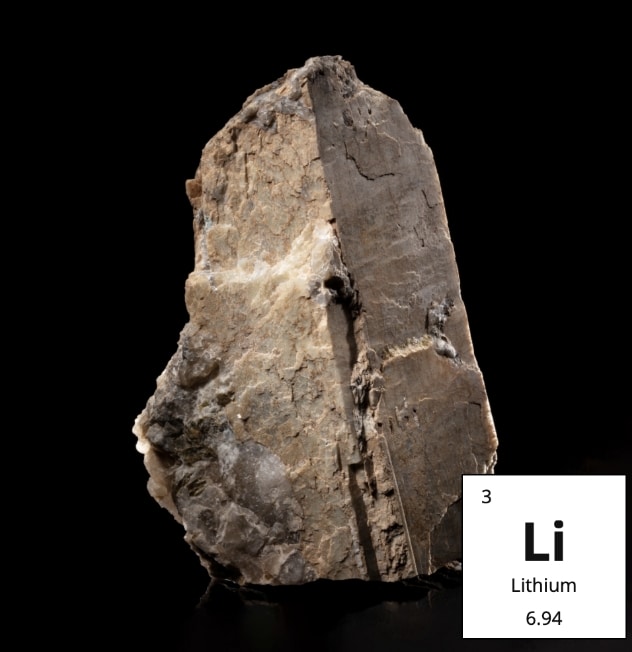
Lithium (Li), atomic number 3, atomic mass 6.94.
Spodumene – LiAlSi2O6
26 cm x 16 cm x 15 cm
Origin: James Bay, Québec
Utility: This mineral is the primary ore for lithium, which is essential for the manufacture of rechargeable batteries—now found in all electronic devices, electric vehicles, and energy storage systems. Certain varieties are also used as semi-precious stones.
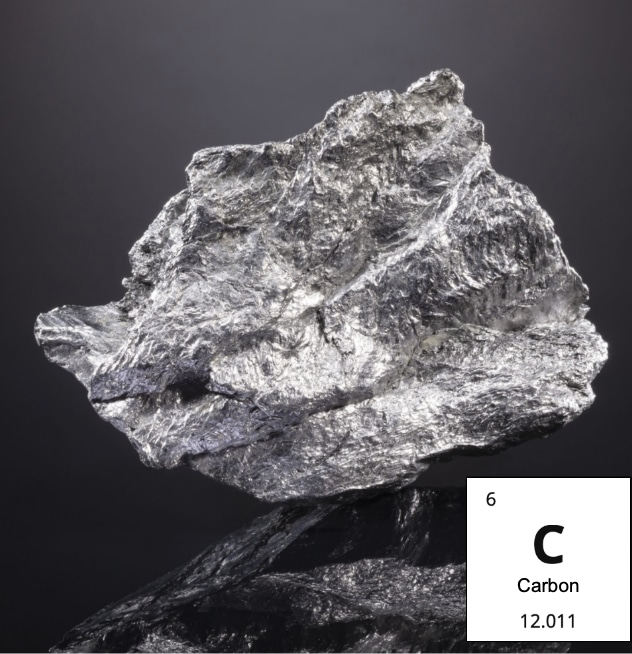
Carbon (C), atomic number 6, atomic mass 12.011.
Graphite – C
17 cm x 16 cm x 7 cm
Origin: Labelle, Québec
This mineral consists of very soft, metallic crystals that separate into thin sheets. Its ability to leave marks on paper is the reason it is used for pencil leads—a property also reflected in its name, which comes from the Greek word “graphein,” meaning “to write.” It is an essential component of modern batteries and is also used as a lubricant and a refractory material.
Case
Aluminum (Al), atomic number 13, atomic mass 26.981. Gallium (Ga), atomic number 31, atomic mass 69.723.
Bauxite
16,5 cm x 12,5 cm x 8 cm
Origin: Suriname
This rock contains silica, aluminium hydroxides and iron oxides. Uses: It is the main source of aluminium and one of the main sources of gallium. Bauxite is formed by the weathering of surface rocks by rainwater.
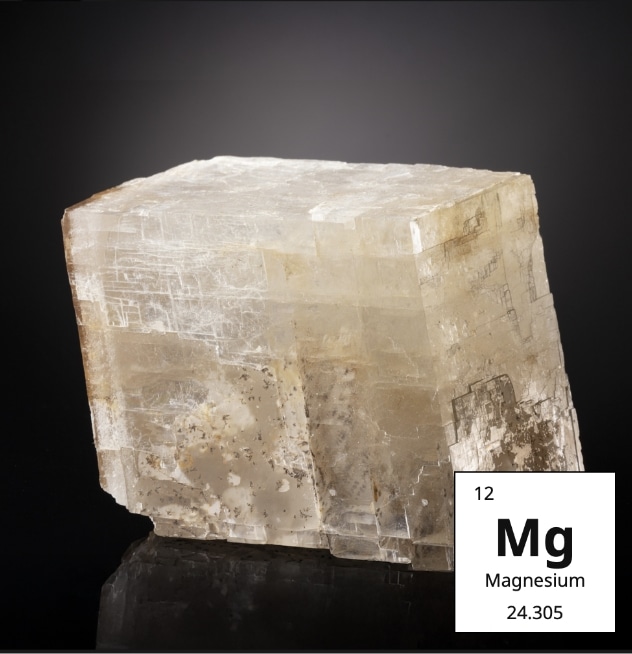
Magnesium (Mg), atomic number 12, atomic mass 24.305.
Magnesite – MgCO3
7cm x 7cm x 7cm
Bahia, Brazil
The main ore of magnesium. This metal is used to make lightweight alloys, to produce electronic components and in the fireworks industry.
Nickel (Ni), atomic number 28, atomic mass 58.693.
Pentlandite – (Fe,Ni)9S8
13.5cm x 9cm x 7cm
Origin: Sudbury, Ontario, Canada
The main ore of nickel. This metal is an essential part of stainless steel and is used in alloys. It is also used in batteries and to make coins.